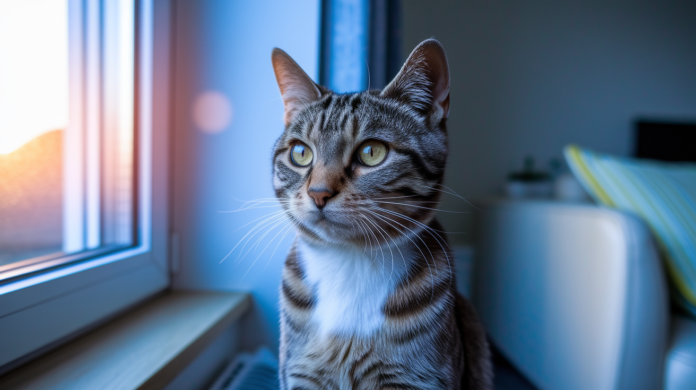

Think your cat is a night owl? Think again.
Most cats aren’t truly nocturnal; they’re crepuscular, which means they’re most active at dawn and dusk instead of staying up all night.
They sleep many short naps through the day and night, so those 3 a.m. zoomies are often instinct, boredom, or a shifted routine—not a fixed nightly schedule.
In this post we’ll explain the science, why your cat wakes you early, and simple fixes you can try at home so you both sleep better.
Understanding Cat Activity Patterns and Whether They Are Truly Nocturnal
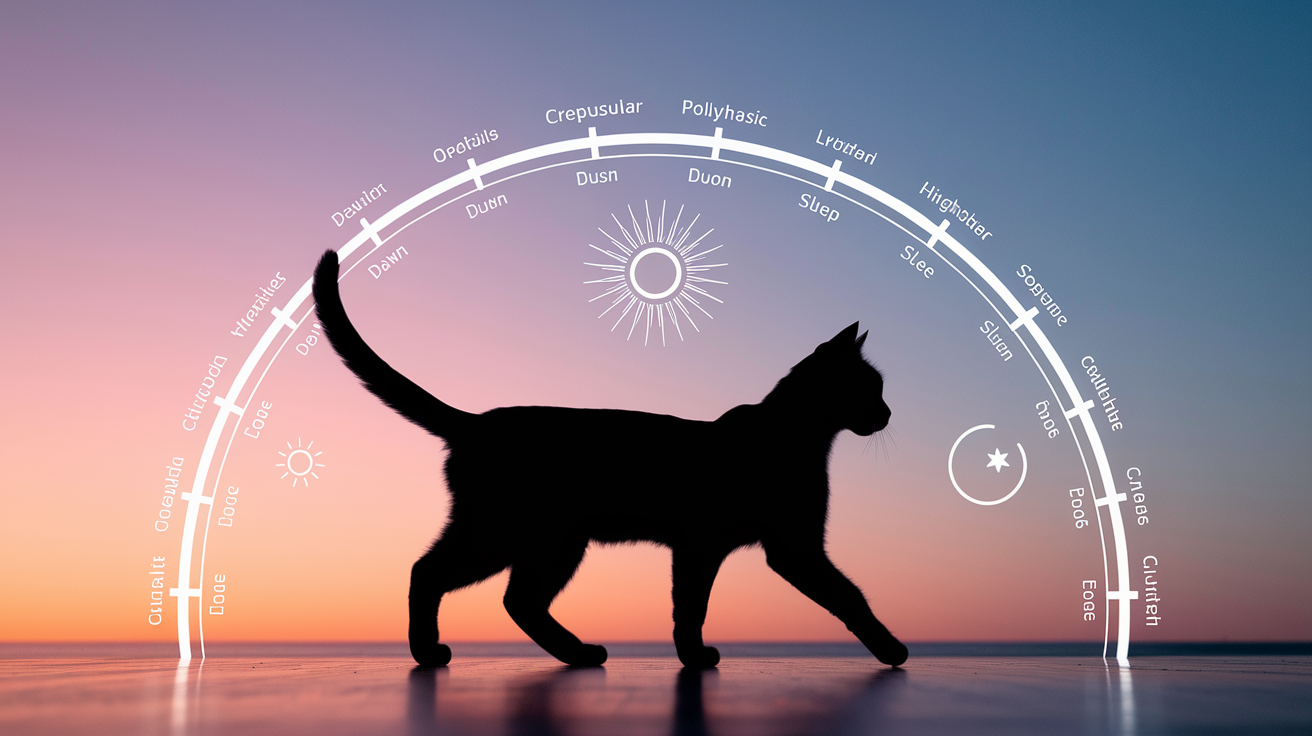
Cats aren’t nocturnal. They’re crepuscular, which means they’re wired to be most active around dawn and dusk, not all night long. Nocturnal animals like owls stay up the entire dark period. Cats don’t do that. Their energy peaks happen during those twilight hours when their natural prey, birds and small rodents, are also moving around. This timing isn’t random. It’s instinct.
Most adult cats sleep somewhere between 12 and 18 hours a day. Newborn kittens can sleep around 22 hours. Senior cats sometimes hit 20. But it’s not one long stretch. Cats are polyphasic sleepers, meaning they take lots of short naps throughout the day and night instead of sleeping in one block like we do. You’ll see your cat dozing off for a few minutes or a couple hours, cycling between light sleep and deeper REM phases where their whiskers twitch or paws flex. Even with all that rest, they’re still primed for quick bursts of activity when the light shifts.
Cats have a circadian rhythm just like we do, except theirs is tuned to a different schedule. Their bodies respond to changes in daylight, waking them up as the sun rises or sets. Evolution shaped this. Domestic cats have vertical-slit pupils, common in predators that hunt during variable light conditions. This lets them control depth perception and adjust quickly between bright daylight and dim evening settings, making crepuscular hunting both efficient and safer.
Main Activity Pattern Differences:
- Nocturnal: Awake all night, asleep during the day (owls, bats).
- Diurnal: Awake during daylight, asleep at night (humans, many birds).
- Crepuscular: Most active at dawn and dusk, quieter midday and overnight (cats, rabbits).
- Polyphasic: Multiple short sleep-wake cycles across 24 hours instead of one long sleep (cats, many small mammals).
Why Cats Seem Nocturnal: Instincts, Hunting Behavior, and Sensory Adaptations
Cats are built to hunt when their prey is out, and for small rodents, birds, and insects, that’s dawn and dusk. Even indoor cats who’ve never missed a meal carry these ancestral hunting instincts. That’s why a cat who naps peacefully all afternoon might suddenly sprint down the hallway at 5 a.m. Their internal clock says it’s time to hunt, even if there’s nothing to catch.
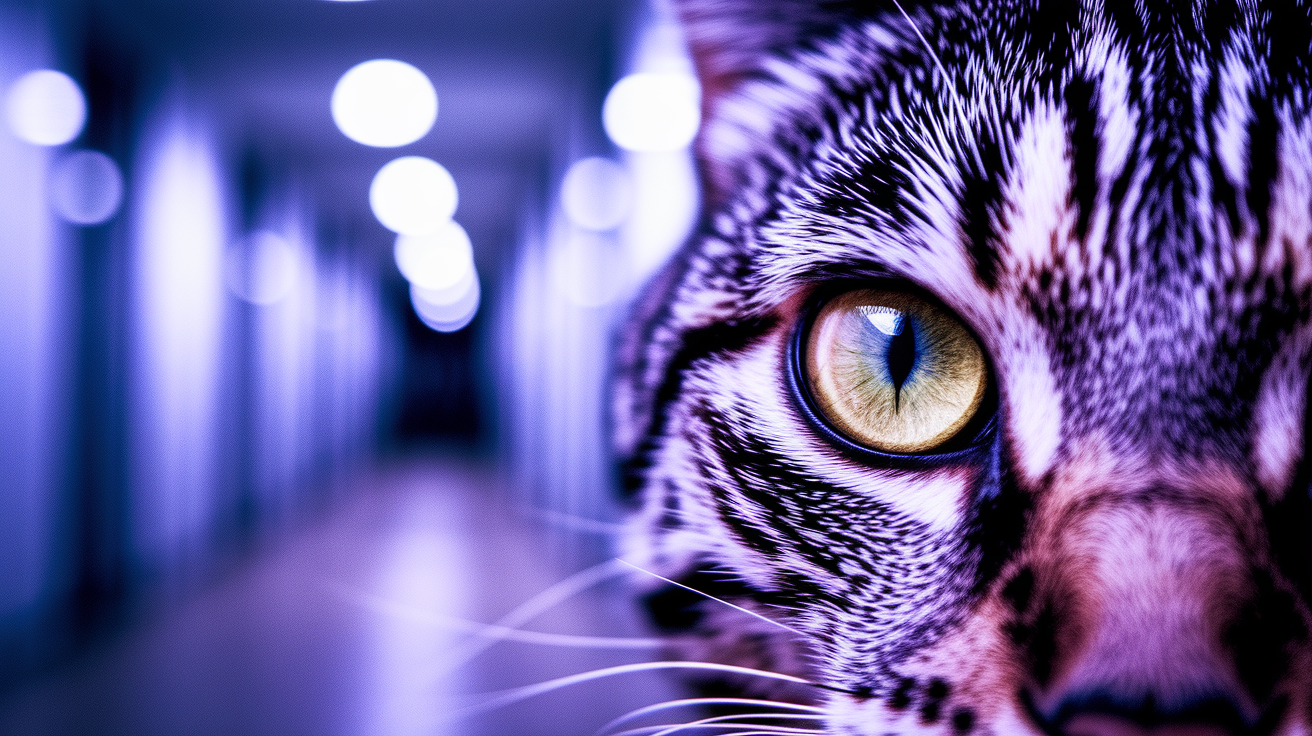
Cats can see in low light better than we can, sometimes up to six times better. The tapetum lucidum, a reflective layer behind the retina, bounces light back through the eye. That’s what creates the eyeshine you see in the dark. Their vertical-slit pupils expand wide in darkness to let in maximum light, then contract to narrow slits in bright conditions for precision focus. Whiskers act as tactile sensors, picking up air currents and obstacles when visibility drops. And their hearing picks up the high-frequency rustling of a mouse from several feet away, even in near darkness. Put it all together and you’ve got a hunter designed for twilight.
Five Reasons Indoor Cats Show Nighttime Activity:
- Hunting instincts that kick in at dawn, dusk, and during quiet overnight hours.
- Boredom or lack of daytime stimulation, leaving extra energy to burn later.
- Irregular exposure to natural light, especially in homes with artificial lighting that doesn’t mimic sunrise and sunset.
- Random nap schedules throughout the day, resulting in wakefulness when you’re trying to sleep.
- Hunger or anticipation of mealtime, particularly if your cat has learned that meowing gets them an early breakfast.
Cat Sleep Patterns and Daily Rhythms
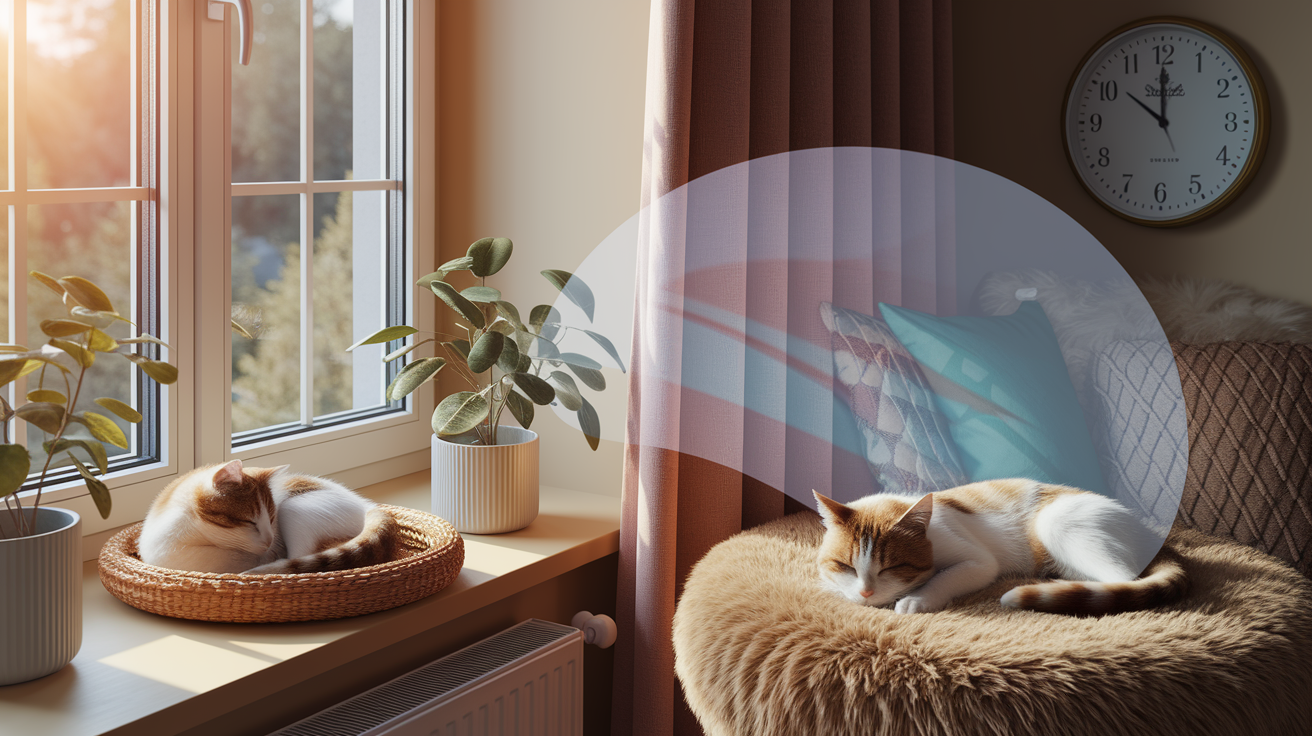
Adult cats sleep around 12 to 18 hours a day, though some hit the higher end if they live in calm, low-stimulation environments. Newborn kittens sleep about 22 hours daily, waking only to nurse. Senior cats often return to longer sleep totals, sometimes around 20 hours, as their energy drops and health conditions like arthritis make rest more appealing.
Cats are polyphasic sleepers. They cycle through many short naps instead of one long overnight rest. A typical nap might last anywhere from 15 minutes to two hours, with cats drifting between light non-REM sleep and deeper REM phases. During REM sleep, you’ll see whiskers twitch, paws flex, ears flick. That’s when they’re dreaming. These cycles repeat all day and night. Most sleep is non-REM, a lighter state where cats stay somewhat alert to sounds and movement. REM episodes are shorter but more intense, and it’s during these phases that you’ll catch your cat acting out hunting sequences. This pattern lets cats rest deeply while staying ready to respond quickly if needed.
Kittens and young cats tend to have more chaotic sleep schedules. High-energy play sessions followed by sudden crashes into deep sleep. Adults settle into more predictable patterns, though it varies by personality. Some cats are naturally more active during the day, others prefer evening and early morning.
Environmental factors shape how and when your cat sleeps. Indoor cats with access to enrichment like puzzle feeders, window perches, and interactive toys are more likely to sync their active periods with your schedule, especially if you structure playtime and feeding around your own routine. Predictable daily rhythms, consistent feeding times, and regular interaction help signal when it’s time to be alert and when it’s time to rest. Cats who lack stimulation or have inconsistent routines are more prone to random bursts of activity, including nighttime zoomies and early-morning wake-up calls.
Nocturnal-Appearing Behaviors: Meowing, Zoomies, and Dawn Wake-Ups
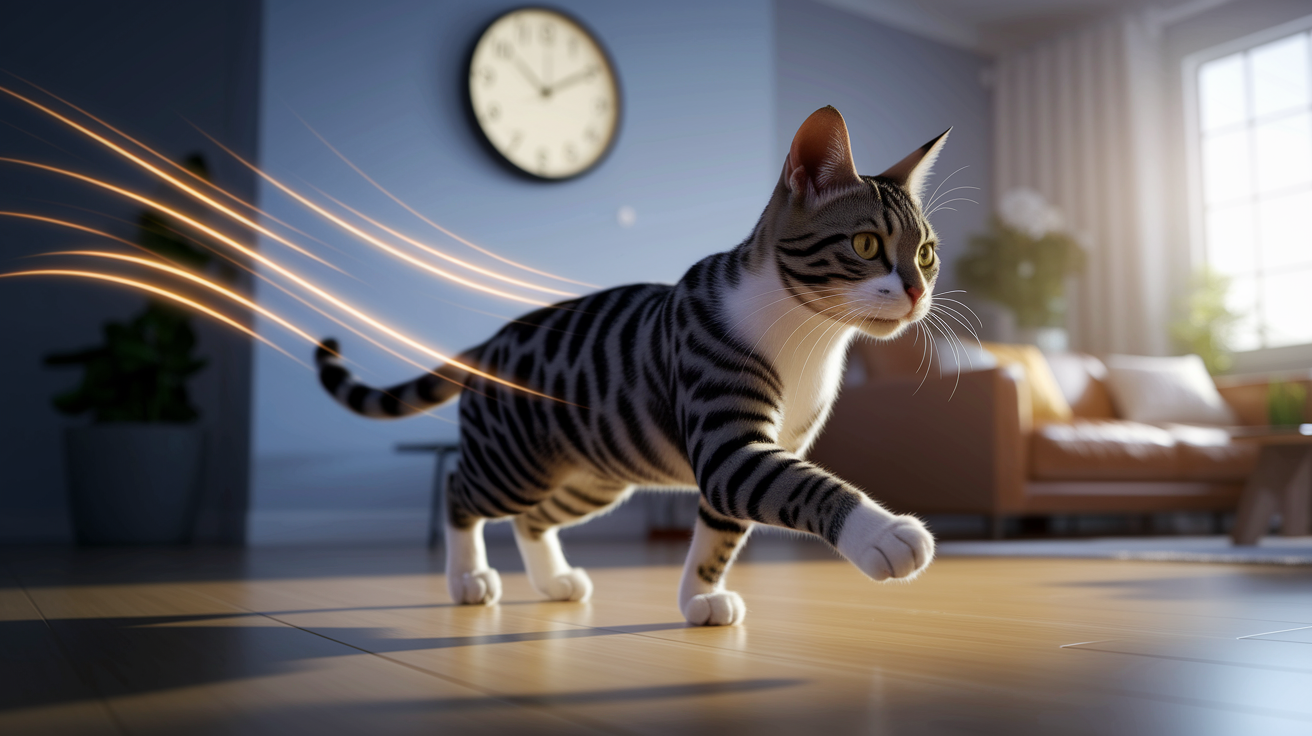
Cats meow at night for a few reasons, most of which come down to learned behaviors or unmet needs. If your cat has figured out that meowing, pawing your face, or jumping on the bed gets them attention, play, or food, they’ll keep doing it. Hunger’s a common driver, especially if their last meal was hours before bedtime and their internal clock signals that dawn, a natural hunting time, has arrived. Some cats vocalize simply because they’re bored and the quiet house amplifies their restlessness. Others meow because of routine. If you’ve historically responded to early-morning calls, your cat now expects interaction at that time.
Zoomies are those sudden high-speed sprints through the house. They’re normal expressions of a cat’s hunting cycle. In the wild, a cat might stalk, chase, pounce, and capture prey in seconds, then rest. Indoor cats without real prey release that same burst of predatory energy in short, intense play sessions or random running. These episodes often happen at dawn or dusk because that’s when a cat’s circadian rhythm naturally ramps up activity. Zoomies typically last just a few minutes and are harmless, though they can be startling when they happen at 3 a.m. on hardwood floors.
Anxiety-related behaviors look different from routine nighttime activity. If your cat’s pacing, hiding, over-grooming, or vocalizing in a distressed tone rather than a demanding one, stress or fear may be the cause. Separation anxiety, changes in household routine, new pets, or environmental stressors can all trigger nighttime restlessness. Red flags include excessive vocalization that doesn’t stop when needs are met, aggression, litter box avoidance, or significant appetite changes. If you see these signs, it’s worth investigating medical or behavioral causes rather than assuming it’s normal crepuscular behavior.
| Behavior | Likely Cause | When to Investigate |
|---|---|---|
| Meowing at dawn | Hunger, learned behavior, natural circadian timing | If it becomes louder, more frequent, or includes distress sounds |
| Zoomies (short sprints) | Predatory energy release, boredom, twilight instinct | If paired with aggression, destruction, or signs of pain |
| Pawing or jumping on owner | Attention-seeking, food anticipation, play request | If the cat seems disoriented, panicked, or unsteady |
| Pacing or restlessness | Anxiety, lack of enrichment, medical discomfort | If it’s a new behavior, lasts more than a few nights, or includes vocalization |
| Excessive vocalization | Cognitive decline, hyperthyroidism, pain, separation anxiety | If it’s sudden, persistent, or accompanied by appetite or litter box changes |
| Hiding or withdrawal | Stress, illness, fear response | If it lasts more than 24 hours or the cat refuses food or water |
Medical and Behavioral Reasons Cats Become More Active at Night
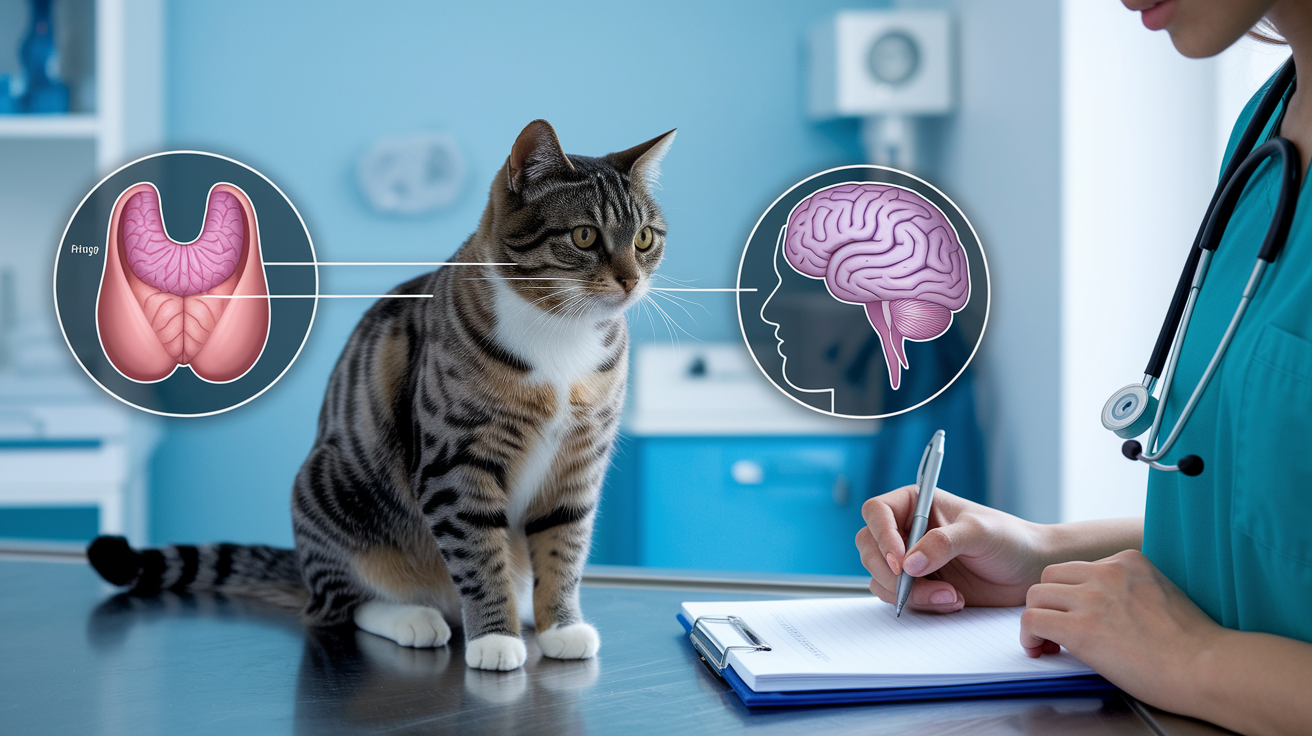
Hyperthyroidism is one of the most common medical causes of increased nighttime activity in middle-aged and senior cats. The thyroid gland produces too much hormone, ramping up metabolism and energy. Affected cats may seem restless, hyperactive, and vocal at night, often paired with weight loss despite a strong appetite. Other metabolic conditions like diabetes or kidney disease can also disrupt sleep by causing increased thirst, frequent urination, or general discomfort.
Pain and cognitive decline are major contributors to nighttime restlessness in older cats. Arthritis, dental disease, and gastrointestinal discomfort can all make a cat reluctant to settle into deep sleep. Cognitive dysfunction syndrome, similar to dementia in humans, affects some senior cats and leads to disorientation, confusion, and nighttime vocalization. You might notice your cat wandering aimlessly, forgetting familiar routines, or crying loudly without clear cause. Sensory decline, including vision and hearing loss, can also increase anxiety after dark, making a cat feel more vulnerable and less able to settle down.
When nighttime activity changes suddenly, becomes more intense, or includes new behaviors like excessive meowing, aggression, litter box accidents, or loss of appetite, contact your veterinarian. A thorough exam typically includes blood work to check thyroid levels, kidney function, glucose, and other metabolic markers. Your vet may also assess neurological function, check for pain responses, and ask detailed questions about behavior changes, appetite, water intake, and litter box habits. Diagnostics help rule out treatable medical conditions and guide next steps, whether that’s medication, pain management, environmental adjustment, or referral to a veterinary behaviorist.
Managing and Reducing Nighttime Activity in Cats
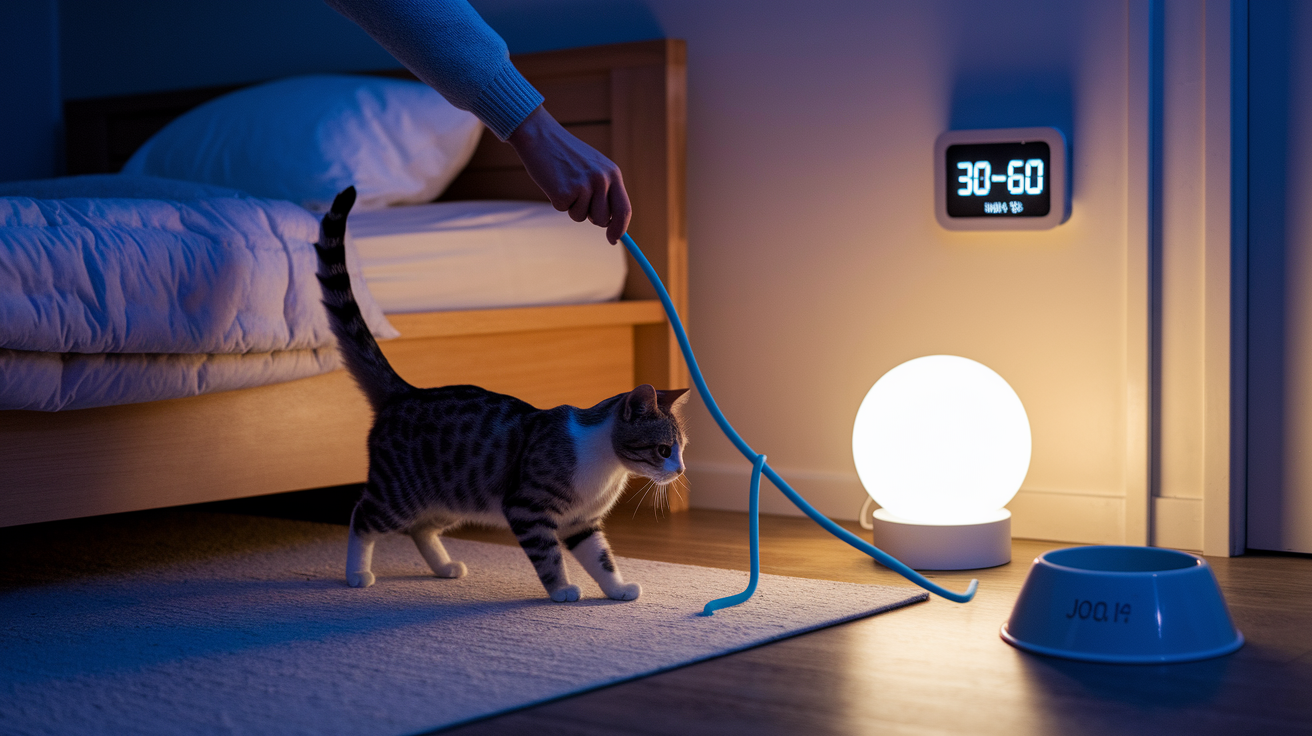
Structured play is one of the most effective tools for reducing nighttime activity. Schedule a vigorous interactive session 30 to 60 minutes before your bedtime, using toys that mimic prey movement like feather wands, laser pointers (always let your cat “catch” a physical toy at the end), or small balls. Aim for 10 to 20 minutes of active chase, pounce, and stalk play that gets your cat breathing harder and moving quickly. This mimics the exertion of a real hunt and helps burn the energy that might otherwise surface at 4 a.m. A second shorter play session in the morning can help establish a rhythm and give your cat a predictable outlet for hunting instincts.
Feeding schedules directly influence sleep patterns. After a hunt in the wild, a cat eats and then sleeps. You can replicate this natural cycle by offering the main or largest meal 30 to 60 minutes after your evening play session, ideally within an hour of your own bedtime. The combination of physical exertion, a full stomach, and post-meal grooming often leads to several hours of uninterrupted sleep. If your cat still wakes you at dawn for food, consider splitting meals into smaller, more frequent portions throughout the day or using a timed feeder to deliver a small breakfast automatically just before sunrise. This removes you from the equation and stops reinforcing the behavior of waking you up.
Behavior training relies on consistency and avoiding unintentional rewards. If your cat meows, paws, or jumps on you at night, ignore the behavior completely. Don’t get up, don’t speak, don’t make eye contact. Any response, even a frustrated one, can reinforce the behavior. If ignoring isn’t enough, calmly place your cat outside the bedroom and close the door. Provide a comfortable bed, litter box, water, and a safe space elsewhere in the home. It may take several nights of persistence, but most cats eventually learn that nighttime demands don’t result in interaction.
Five-Step Evening Routine to Reduce Nighttime Activity:
- Play session (10 to 20 minutes): Use interactive toys to simulate a hunting sequence, ending with a “capture” to satisfy the instinct.
- Feeding (30 to 60 minutes after play): Offer the main meal to encourage post-meal grooming and rest.
- Calm environment: Dim lights, reduce household noise, and avoid stimulating activities near bedtime.
- Redirect to sleeping area: Guide your cat to a comfortable bed or perch away from your bedroom if needed.
- Ignore nighttime requests: Don’t respond to meowing, pawing, or jumping. Wait until morning to offer attention or food.
Feeding Strategies, Timed Feeders, and Nighttime Enrichment
Feeding timing acts as a circadian cue. Cats are cue-driven animals, and regular meal times help anchor their internal clocks. When you feed your cat at consistent times each day, their body begins to anticipate and prepare for those meals, influencing when they feel alert or drowsy. Offering a substantial meal in the evening, particularly after play, signals that it’s time to wind down. Free-feeding, leaving food available all day, removes structure and can lead to grazing behavior that doesn’t support a clear sleep-wake rhythm. If your goal is to reduce nighttime activity, timed meals are a more effective approach than all-day access to food.
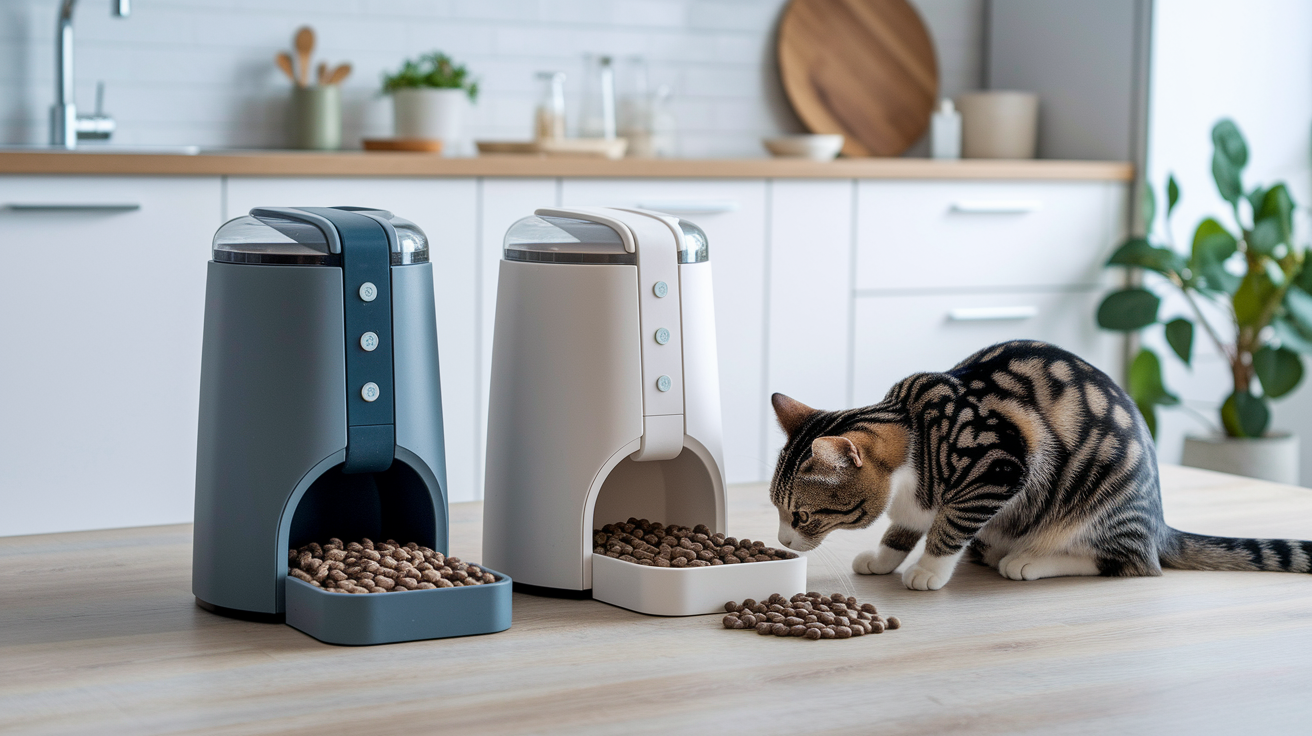
Timed and puzzle feeders add value overnight and during early morning hours. Automatic feeders can dispense a small meal at 5 or 6 a.m., addressing your cat’s natural dawn hunger spike without requiring you to get out of bed. This removes the reward for waking you and gradually shifts your cat’s expectation away from human interaction at sunrise. Puzzle feeders slow down eating and provide mental stimulation, turning mealtime into an activity that occupies your cat’s attention and satisfies hunting instincts. Scattering kibble in a puzzle ball or hiding small portions around the house at night gives your cat something constructive to do during low-activity hours, reducing boredom-driven behaviors like excessive meowing or destructive play.
Four Enrichment and Feeding Tools for Nighttime Use:
- Timed automatic feeders that dispense meals at scheduled intervals, particularly useful for early-morning hunger without owner involvement.
- Puzzle feeders or slow-feed bowls that turn eating into a 10 to 15 minute activity, mimicking the foraging process.
- Treat-dispensing toys that require batting, rolling, or manipulation to release food, providing both mental and physical engagement.
- Scatter feeding (hiding small kibble portions around the home) to encourage natural hunting and exploration during quiet hours.
Outdoor, Feral, and Wild Cat Nighttime Behavior Patterns
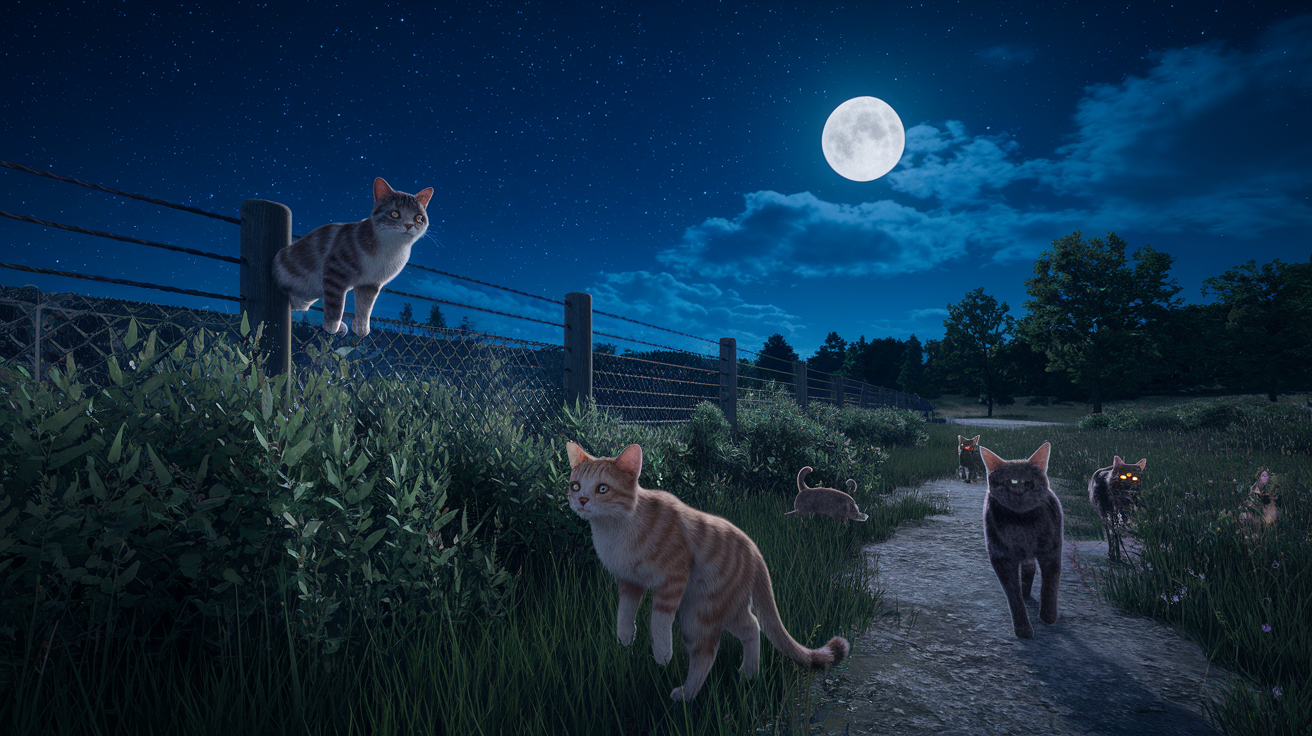
Most sleep research focuses on indoor cats, and outdoor or feral cats often show different patterns due to environmental pressures. Feral cats must hunt for food, avoid predators, find shelter, and navigate territory disputes, all of which influence when and how much they sleep. Access to consistent shelter, safety from traffic and predators, and reliable food sources can stabilize sleep patterns, but many outdoor cats experience fragmented rest due to variable conditions. Feral cats may be more active at true night if their prey is nocturnal or if they need to avoid daytime human activity in their territory.
Shelter quality directly affects sleep and survival, especially in extreme climates. In cold environments, feral cats need covered shelters insulated with clean straw bedding. Straw stays dry and provides insulation, while cloth or blankets can freeze when wet and increase frostbite risk. The shelter should be elevated off the ground, have a small entrance to retain heat, and be placed in a wind-protected area. In hot climates, shade and ventilation are priorities. Shelters should be placed under tree cover or structures that block direct sun, with openings that allow airflow to prevent dangerous heat buildup. Providing water, food, and appropriate shelter can improve a feral cat’s sleep quality and overall health significantly.
Wild felids vary widely in activity patterns depending on species, habitat, and prey. Some large cats like lions are more active at night to avoid midday heat and hunt when prey is less vigilant. Others, including many small wild cats, are crepuscular like domestic cats. Domestic cats evolved from the African wildcat, a crepuscular hunter of small mammals and birds, which is why housecats retain similar dawn-and-dusk activity peaks. Wild cats generally expend far more energy on hunting than indoor cats and often sleep longer after a successful kill, sometimes resting for extended periods after consuming a large meal.
| Cat Type | Activity Pattern | Key Influences |
|---|---|---|
| Indoor domestic cat | Crepuscular, often shifts toward owner’s schedule | Structured feeding, play, artificial lighting, safety |
| Outdoor domestic cat | Crepuscular with some nocturnal activity | Natural light cycles, prey availability, territory behavior |
| Feral cat | Crepuscular to nocturnal, more variable | Hunting necessity, predator avoidance, shelter access, human activity |
| Small wild felids (e.g., African wildcat) | Crepuscular | Prey activity patterns, predator risk, temperature |
| Large wild felids (e.g., lions, leopards) | Nocturnal to crepuscular, varies by species | Heat avoidance, prey behavior, territorial dynamics |
How to Shift a Cat Toward Daytime Activity

Light exposure plays a central role in shaping circadian timing. Cats respond to natural light cues, so increasing your cat’s exposure to daylight during the morning and afternoon can help anchor their wakefulness to daytime hours. Open curtains or blinds to let sunlight in, place perches near windows where your cat can watch outdoor activity, and avoid keeping your home in dim artificial light all day. In the evening, gradually dim lights as you approach bedtime to signal that rest is coming. This mirrors the natural transition from daylight to twilight to darkness and helps your cat’s internal clock sync with your schedule. If you work night shifts or keep irregular hours, consider using timed lights or daylight-spectrum bulbs to create consistent cues.
Consistency is essential for behavior modification. Cats thrive on routine, and shifting their sleep-wake cycle works best when play, feeding, light exposure, and bedtime happen at the same times every day. If you start an evening play session at 9 p.m. one night, aim to repeat it at 9 p.m. every night. Similarly, feeding times, wake-up times, and even when you go to bed should remain as predictable as possible. Avoid rewarding nighttime behaviors like meowing or pawing by giving food, attention, or play. Any response reinforces the behavior, even if your intention is to quiet your cat. Wait until morning to offer interaction, and your cat will gradually learn that nighttime doesn’t lead to rewards.
Six-Step Multi-Week Plan for Shifting Cat Sleep Schedule:
- Week 1, Observe and prepare: Track your cat’s current activity times, identify triggers for nighttime behavior, and gather enrichment tools (toys, feeders, puzzle games).
- Week 1, Introduce evening play: Start a 10 to 20 minute interactive play session 30 to 60 minutes before your bedtime, using toys that mimic prey movement.
- Week 2, Add post-play feeding: Offer the main or largest meal 30 to 60 minutes after play, creating a hunt-eat-sleep cycle. Reduce or eliminate middle-of-the-night snacks.
- Week 2, Increase daytime activity: Add a second play session in the morning or midday, rotate toys to maintain interest, and provide puzzle feeders or window perches for passive enrichment.
- Week 3, Adjust light cues: Open blinds during the day, dim lights in the evening, and keep nighttime environments calm and dark. Use automatic feeders if dawn wake-ups persist.
- Ongoing, Maintain consistency: Stick to the same play, feeding, and bedtime schedule every day. Ignore nighttime requests for attention or food, and gradually extend the time between your cat’s evening meal and any early-morning feeding until the schedule aligns with your preferred wake time.
Final Words
Cats are crepuscular, most active at dawn and dusk, not truly nocturnal. We covered sleep totals — adults 12 to 18 hours, kittens and seniors more — plus polyphasic naps and how light and evolution shape their rhythms.
We explained why they can seem awake at night: hunting instincts, low-light vision, boredom, or health changes. We also shared practical fixes like evening play, timed feeding, and gradual schedule shifts.
If you’re still asking are cats nocturnal, the short answer is no, though they may act that way. Small routine changes can help you both sleep better.
FAQ
Q: Are house cats actually nocturnal?
A: House cats are not truly nocturnal; they are crepuscular, most active at dawn and dusk. They nap many times across the day and usually rest through much of the night.
Q: Is there a 3-3-3 rule for cats?
A: There is no widely accepted 3-3-3 rule for cats; it’s not a scientific guideline. Some owners try short schedules for play, feeding, and quiet time, but tailor routines to each cat.
Q: Do cats ever sleep at night?
A: Cats do sleep at night, but in many short naps. Adults sleep about 12–18 hours a day, with activity peaks at dawn and dusk, so they may still wake overnight.
Q: Why are cats active at 3am?
A: Cats are active at 3am because crepuscular instincts favour low-light activity. Hunger, boredom, or a changed routine can trigger night bursts, seen as short hunting-style play or vocalizing.