

Is your cat secretly plotting to rule the house, or just trying to tell you something?
That 3 a.m. sofa scratch, the sudden hiding, and the long wall stare are not random.
They’re messages in tail twitches, ear shifts, pupil size, and the sounds your cat makes.
This post will give you simple ways to read those signals, what small changes to try, and when to call the vet so you can spot health issues early, cut stress at home, and build a calmer, more trusting bond with your cat.
If you’re unsure, that’s normal.
Why Understanding Cat Behavior Matters

Your cat scratches the sofa at 3 a.m., hides under the bed when guests arrive, and sometimes stares at the wall like it’s the most fascinating thing on earth. These moments aren’t random. They’re your cat’s way of talking to you, showing you what they need, and telling you how they feel.
Cats communicate through body language, sounds, routines, and yes, even those seemingly weird behaviors that make you wonder if they’re plotting something. Learning to read these signals helps you catch health problems early, reduce stress in your home, and build real trust with your cat. A cat who feels understood is calmer, healthier, and easier to live with.
Most adult cats sleep 12 to 16 hours a day. Kittens can sleep up to 20 hours. That leaves only a few active hours, so what your cat does during that time, and how they act when something changes, matters a lot. Small shifts in behavior, like hiding more than usual or skipping the litter box, can be early signs of illness, stress, or pain.
The critical socialization window for kittens is roughly 2 to 7 weeks of age. Cats who miss positive human contact and varied experiences during this time may be more fearful or defensive as adults. But even adult cats can learn new routines and adjust their behavior with patience and the right approach.
Understanding your cat’s body language isn’t about becoming a mind reader. It’s about noticing patterns, responding calmly, and making small changes that help your cat feel safe.
Feline Body Language, How to Read It
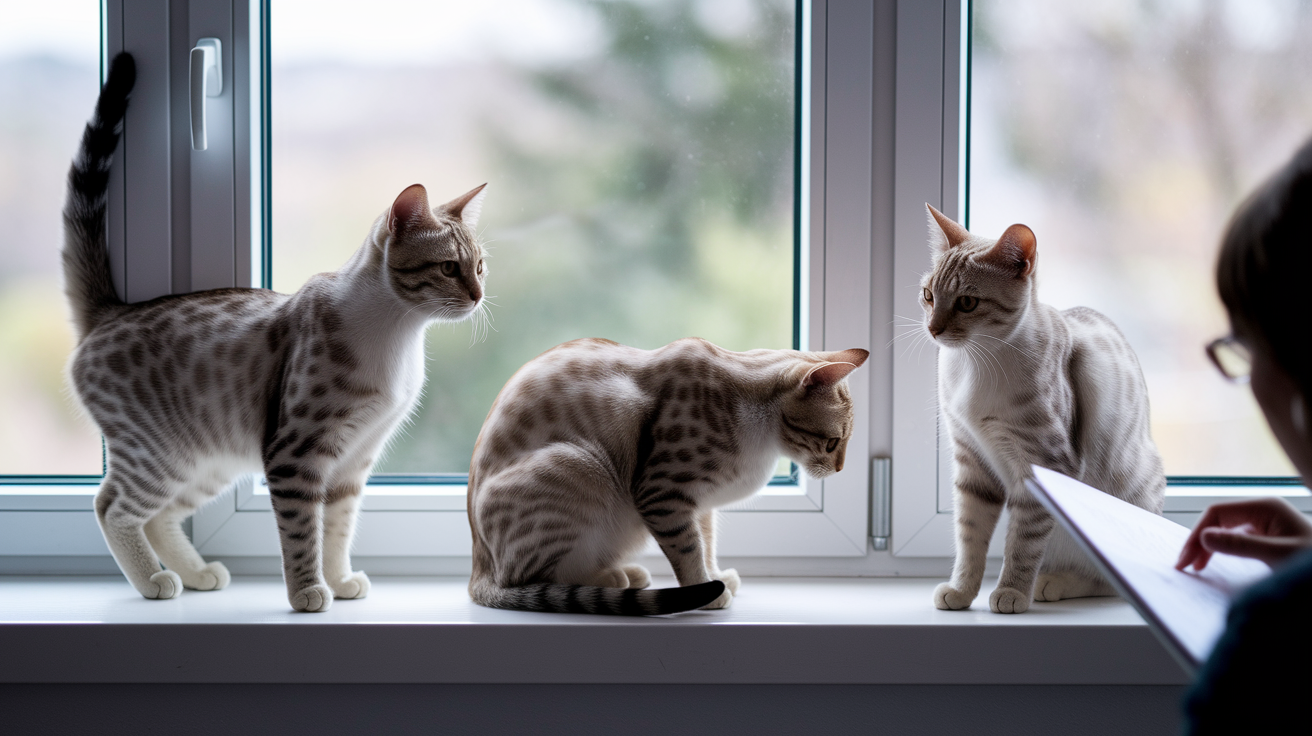
Cats don’t speak in words, but they’re always talking. Their tails, ears, eyes, posture, and sounds form a full communication system. The tricky part is that the same signal can mean different things depending on context. A high tail in your hallway usually means your cat is happy and confident. A high tail when another cat walks by might mean they’re claiming territory or gearing up for a standoff.
Tail Positions
An upright tail with a slight curve at the tip is one of the friendliest signals a cat can give. It’s an invitation to approach or a cheerful greeting. Before you even open the door, your cat’s tail is already saying hello.
A tail tucked between the legs signals fear or submission. If your cat’s tail is low and tight to their body, they’re trying to make themselves small and invisible.
A puffed-out tail, where the fur stands straight up like a bottle brush, means your cat is frightened or highly defensive. This often pairs with an arched back and sideways posture, making the cat look bigger to a perceived threat.
A tail that twitches or flicks at the tip can mean mild irritation, focus during play, or hunting mode. A slow, gentle swish is different from a fast, whipping thrash. The faster and harder the movement, the more agitated or overstimulated your cat is.
A quivering tail held high, with just the tip vibrating, usually signals excitement. You might see this when your cat greets you at the door or right before they spray urine to mark territory, so context matters.
Ear Positions
Forward-facing ears that stand upright mean your cat is calm, alert, and interested in what’s around them. This is the relaxed default position.
Ears that swivel or turn back slightly show your cat is listening to something behind them or trying to track multiple sounds at once. It’s a sign of attention, not alarm.
Flattened ears, sometimes called “airplane ears,” signal fear, anger, or defensive aggression. The flatter the ears, the more worried or upset your cat is. If the ears are pinned tight against the head, your cat is ready to defend themselves.
Eyes and Pupils
A slow blink is one of the clearest signs of trust and affection. When your cat looks at you and slowly closes their eyes, they’re saying they feel safe. You can return the gesture to build connection, it often works.
Dilated pupils can mean excitement, fear, or arousal. Kittens playing often have huge black pupils. But an adult cat with wide pupils staring at another animal might be preparing to fight or flee. Pain and certain illnesses can also cause dilated pupils, so sudden changes are worth noting.
A long, unblinking stare is often a challenge or a sign of tension, especially between cats. If your cat is staring hard at something with tense posture, they’re either hunting or feeling threatened.
Vocalizations
Meowing is mostly used to communicate with humans, not other cats. Adult cats rarely meow at each other. Frequency, tone, and volume all matter. A short, soft meow might mean “hello” or “I’d like attention.” A loud, repeated meow can signal hunger, stress, or a medical problem like pain or cognitive decline in older cats.
Purring usually means your cat is content, especially if they’re kneading or resting on you. But cats also purr when they’re in pain, sick, or anxious. Always check the rest of their body language and behavior.
Trilling is a short, chirping sound that rises at the end. Mother cats use it to call kittens, and friendly adult cats trill to greet their favorite humans or animal companions.
Growling, hissing, and yowling are clear warnings. A growl says “back off.” A hiss is a defensive threat, often paired with flattened ears and an arched back. A yowl or shriek means your cat is terrified, in pain, or in a serious fight.
Chattering or chirping at birds through the window is thought to be a mix of excitement and frustration, hunting behavior without the ability to chase.
Posture Cues
A cat lying on their back with their belly exposed can mean they feel safe and relaxed. But it’s not always an invitation for belly rubs. Many cats will grab or bite if you touch their stomach, even when they seem calm. This is sometimes called the “Venus Cat Trap,” a belly displayed in trust but defended on contact.
A crouched, low posture with the body close to the ground signals fear, readiness to flee, or stalking during play. If your cat freezes in this position with wide eyes and flat ears, they’re scared.
A cat standing tall with an arched back and fur standing up (piloerection) is trying to look bigger and more intimidating. This is a fear response or a defensive display before a fight.
Loafing, where the cat sits with all four paws tucked under their body, is a relaxed position. It means they feel safe enough to settle in one spot for a while.
Head bunting, when your cat bumps their head or cheek against you, furniture, or other pets, is a scent-marking behavior. Cats have scent glands on their cheeks and head. This is a friendly, bonding gesture that says “you’re part of my group.”
| Signal | Relaxed/Happy | Alert/Interested | Fearful/Defensive | Aggressive |
|---|---|---|---|---|
| Tail | Upright, slight curve | Upright or twitching tip | Tucked or puffed | Thrashing or puffed |
| Ears | Forward, relaxed | Forward or swiveling | Flattened back | Flattened tight |
| Eyes | Slow blink, normal pupils | Wide, dilated pupils | Dilated, avoiding eye contact | Staring, dilated |
| Posture | Relaxed, loafing, or stretched | Standing, alert | Crouched, frozen | Arched back, sideways stance |
| Vocalizations | Purr, trill, soft meow | Chirp, chatter | Hiss, growl | Yowl, shriek |
Common Cat Behaviors Explained
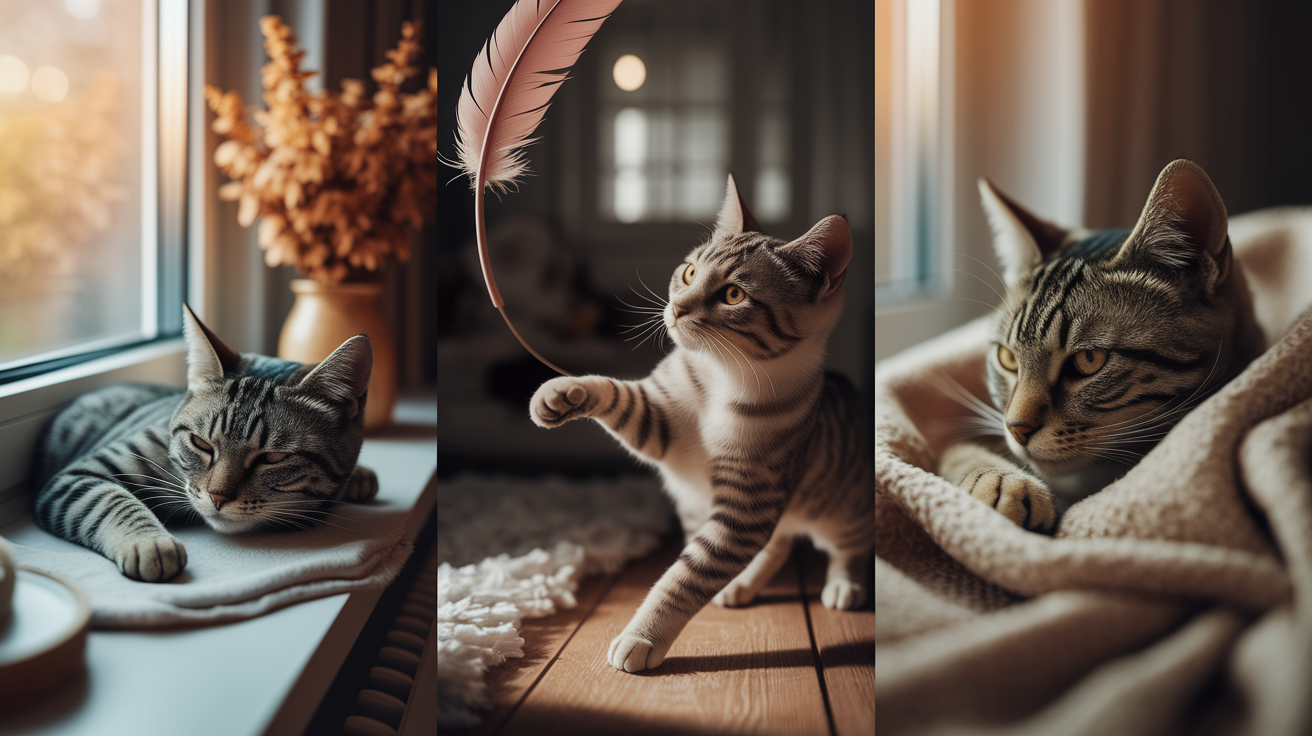
Sleeping and Napping
Cats are built to sleep. A typical adult cat sleeps 12 to 16 hours a day. Kittens and senior cats sleep even more, sometimes 18 to 20 hours. This isn’t laziness, it’s biology. Cats are crepuscular, meaning they’re naturally most active at dawn and dusk. The rest of the day is for conserving energy.
Where your cat sleeps matters. A cat who chooses high perches, sunny windowsills, or your lap is telling you they feel safe. A cat who hides in closets, under furniture, or behind appliances for most of the day might be stressed, sick, or in pain.
Changes in sleep patterns are worth tracking. If your cat suddenly sleeps much more, seems hard to wake, or stops using their usual favorite spots, check with your vet.
Hunting, Play, and Zoomies
Even indoor cats have strong hunting instincts. Play is practice hunting. The stalk, pounce, grab, and kick sequence you see during toy time is the same pattern wild cats use to catch prey.
“Zoomies,” also called FRAPs (Frenetic Random Activity Periods), are bursts of high-speed running, jumping, and wild behavior. They’re completely normal and most common in the early morning or evening when your cat’s energy peaks. Kittens and young cats zoom more often, but adult cats do it too.
If your cat chatters or chirps at birds through the window, they’re locked into prey mode. It’s thought to be excitement mixed with frustration, the thrill of seeing something they can’t catch.
Providing structured play, 10 to 15 minutes twice a day with a wand toy or laser pointer, helps burn off that hunting energy in a healthy way. It also reduces nighttime zoomies and rough play with your hands or feet.
Scratching
Scratching is not misbehavior. It’s how cats stretch their muscles, mark territory with scent glands in their paws, and maintain their claws by removing the outer sheath.
Cats need to scratch. If they don’t have the right surfaces, they’ll use your couch, carpet, or doorframes. The solution isn’t punishment, it’s providing better options and making furniture less appealing.
Offer at least one scratching post per cat, plus one extra. Posts should be sturdy and tall enough for your cat to fully stretch, at least 70 to 90 cm (about 28 to 35 inches). Some cats prefer vertical posts, others like horizontal scratchers or angled ramps. Try different materials like sisal, cardboard, carpet, or wood.
Place scratchers near where your cat already scratches, near sleeping areas, and along common pathways. Reward your cat with treats or play when they use the post. Use deterrents like double-sided tape or foil on furniture.
Kneading
Kneading, when your cat pushes their paws in and out against a soft surface, comes from kittenhood. Nursing kittens knead their mother’s belly to stimulate milk flow. Adult cats knead when they’re deeply relaxed, content, or settling in for a nap.
Some cats knead with claws out, which can be painful if they’re on your lap. Trimming claws, placing a thick blanket between you and the cat, or gently redirecting them to a soft bed helps.
Kneading is almost always a good sign. It means your cat feels safe and happy.
Head Bunting, Scent Rubbing, and Slow Blinking
Head bunting, when your cat bumps their forehead or cheek against you, is a scent-marking and bonding behavior. Cats have scent glands on their face, and rubbing transfers their scent to you or objects in their environment. It’s a way of saying “this is mine” or “you’re part of my family.”
Scent rubbing on furniture, doorways, and corners of walls serves the same purpose. It helps cats feel secure in their space.
Slow blinking is a deliberate, affectionate gesture. When your cat looks at you and slowly closes their eyes, it’s a sign of trust. You can slow blink back, it often prompts them to blink again or approach you.
Meowing
Adult cats use meowing primarily to communicate with humans, not each other. The meaning depends on tone, volume, and frequency. A short, quiet meow might be a greeting. A loud, insistent meow usually signals a need, like hunger or a request to open a door.
Some breeds, like Siamese and Burmese, are naturally more vocal. Senior cats sometimes meow more due to cognitive changes, hearing loss, or medical issues like hyperthyroidism or high blood pressure.
Excessive meowing, especially if it’s new, constant, or happens at night, warrants a vet visit to rule out pain, illness, or anxiety.
Litter Box Use
A healthy adult cat typically urinates 2 to 4 times a day and defecates 1 to 2 times a day. Kittens and senior cats may go more or less often.
Normal litter box behavior is quick and quiet. Your cat enters, digs, eliminates, covers, and leaves. Any change, like straining, vocalizing in the box, going more or less often, or eliminating outside the box, is a red flag.
Provide at least one litter box per cat, plus one extra (N + 1 rule). For two cats, that’s three boxes. Place them in quiet, accessible locations on each floor of your home if possible.
Scoop daily. Do a full litter change and box wash weekly, more often in multi-cat homes. Use 2 to 3 inches of litter. Most cats prefer unscented, clumping litter, but preferences vary.
Box size matters. The box should be at least 1.5 times your cat’s body length. Kittens and elderly cats need low sides for easy entry.
Problem Behaviors, Causes and Step-by-Step Solutions
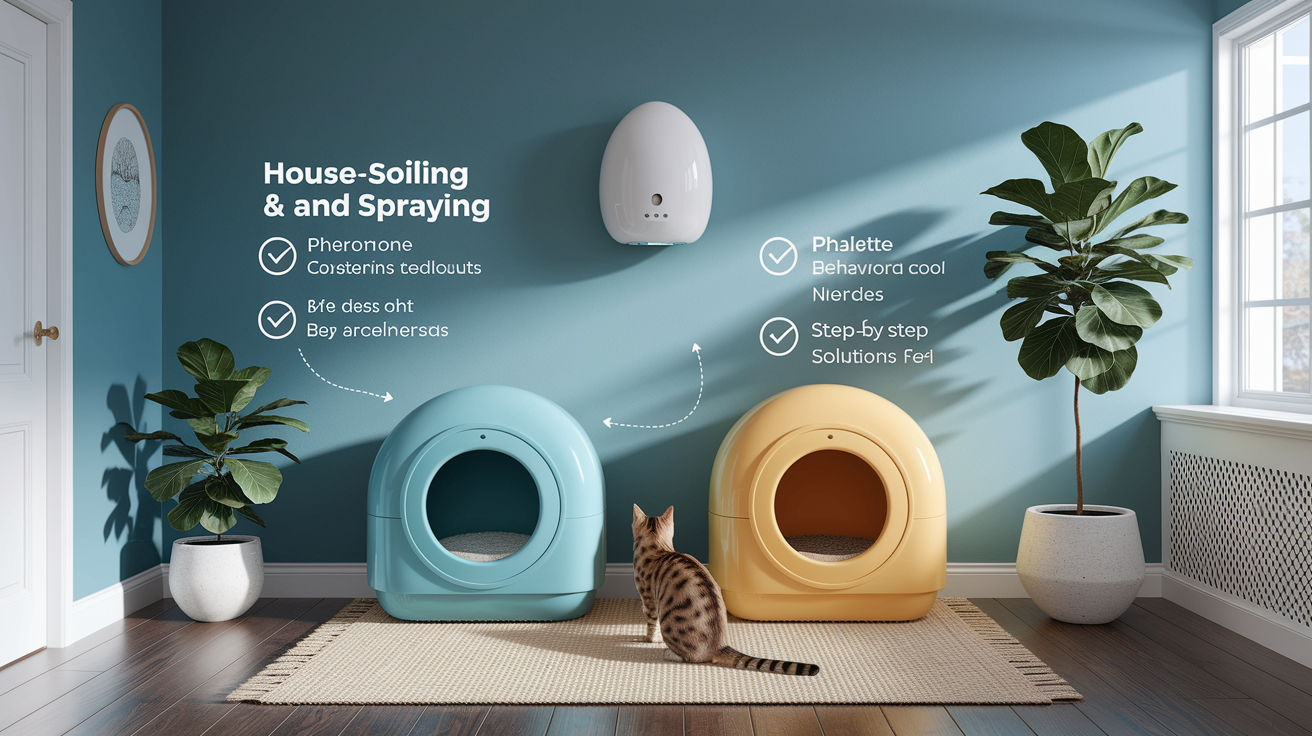
House-Soiling and Spraying
House-soiling is urinating or defecating outside the litter box. Spraying is a specific behavior where a cat backs up to a vertical surface, raises their tail, and releases a small amount of urine to mark territory.
Medical causes must be ruled out first. Urinary tract infections, bladder crystals or stones, kidney disease, diabetes, arthritis (making it hard to enter the box), and gastrointestinal issues can all cause litter box avoidance.
If your vet confirms your cat is healthy, the cause is behavioral. Common triggers include dirty litter boxes, box location problems, litter type changes, stress from new pets or people, moving, or conflict with other cats.
Immediate steps (0 to 48 hours):
Schedule a vet exam to rule out medical causes. Add one or two extra litter boxes in new, quiet locations. Scoop all boxes twice daily. Clean soiled areas thoroughly with an enzymatic cleaner (never ammonia-based products, they smell like urine to cats). Block access to previously soiled spots with furniture, foil, or plastic mats.
2 to 4 week modification plan:
Try different litter types (unscented clumping, crystal, pine, paper). Offer two boxes side by side with different substrates to see which your cat prefers. Move boxes away from noisy appliances, high-traffic areas, or spots where your cat has been startled. Increase daily play to 20 to 30 minutes total (two 10 to 15 minute sessions). Add vertical perches and hiding spots to reduce stress.
If you have multiple cats, ensure each has separate food, water, boxes, and resting areas. Consider a synthetic pheromone diffuser (like Feliway or similar products, typically $25 to $60) to reduce environmental stress. Effects often appear within 2 to 4 weeks.
When to get help:
If accidents continue after 4 weeks of consistent environmental changes, consult a certified cat behaviorist or veterinary behaviorist. Spraying in intact cats often decreases significantly after spaying or neutering, ideally before 5 to 6 months of age.
Excessive Scratching
When cats scratch furniture, walls, or carpet despite having scratching posts, the problem is usually location, post quality, or lack of incentive to use the right surface.
Immediate steps:
Add one or two new scratching surfaces in the exact spots where your cat is scratching inappropriately. Cover problem areas with double-sided tape, aluminum foil, or plastic sheeting to make them less appealing. Reward your cat immediately with a small treat or play session every time they use the post.
2 to 4 week plan:
Offer different post types: vertical sisal posts, horizontal cardboard scratchers, angled ramps, or carpet-covered towers. Place one near your cat’s favorite sleeping spot and one near the problem area. Make posts taller and sturdier. Cats won’t use wobbly posts. Secure posts to walls if needed.
Use catnip or silvervine on the post to attract your cat. Reapply every few days. Rotate post locations slowly once your cat is using them regularly, moving them a few inches per day toward your preferred spot. Trim your cat’s claws every 2 to 4 weeks to reduce damage.
Never punish scratching. It increases stress and rarely stops the behavior.
Aggression (Play, Redirected, Fear-Based)
Cat aggression comes in several types, and solutions depend on the cause.
Play aggression happens when cats, especially young ones, bite or scratch during interactive play or ambush your feet and hands. It’s normal hunting behavior directed at the wrong target.
Stop all play that involves your hands or feet as toys. Redirect to wand toys, balls, or stuffed kickers. Play daily, 10 to 15 minutes twice a day, to burn off energy. If your cat bites during petting, learn their tolerance threshold and stop before they get overstimulated. Watch for tail flicking, ear flattening, or skin rippling as early warnings.
Redirected aggression occurs when a cat is aroused by something they can’t reach (like an outdoor cat seen through a window) and then lashes out at a nearby person or pet.
Separate the cat immediately into a quiet room to calm down. Block visual access to the trigger (close curtains, move furniture). Wait at least 30 minutes before approaching. Cats can stay aroused for hours. Reintroduce slowly, using treats and calm voice. Don’t force interaction.
Fear-based or territorial aggression often involves hissing, growling, swatting, or biting when a cat feels cornered, threatened, or when another cat invades their space.
Give the fearful cat high perches, hiding spots, and escape routes in every room. Use gradual desensitization: expose the cat to the trigger at a low level (distance, volume, duration) and reward calm behavior, slowly increasing exposure over weeks. Never corner or force a fearful cat to interact.
For inter-cat aggression, separate the cats and do a slow, structured reintroduction over 2 to 8 weeks using scent swapping, feeding on opposite sides of a door, and supervised visual contact.
When to get help:
If aggression involves injuries to humans or other pets, repeated attacks, or no improvement after 4 to 6 weeks of behavior modification, consult a certified animal behaviorist or veterinary behaviorist. Some cases require medical intervention or medication alongside training.
Excessive Vocalization
Loud, frequent, or nighttime meowing can have many causes: hunger, attention-seeking, cognitive decline in senior cats, medical pain, hyperthyroidism, high blood pressure, or anxiety.
Medical checklist:
Schedule a vet exam, especially if the cat is over 10 years old or if vocalization is new or sudden. Rule out hyperthyroidism, kidney disease, high blood pressure, dental pain, and cognitive dysfunction.
Behavioral fixes:
Ensure your cat is getting enough food and water. Feed 2 to 3 measured meals per day rather than free-feeding to reduce food-related meowing. Increase daytime play and enrichment to tire your cat out before bedtime. Ignore attention-seeking meowing. Don’t respond with food, play, or talking. Wait for quiet, then reward.
Provide nighttime comfort: a cozy bed, a pheromone diffuser, or soft music. If the cat is senior and meowing at night, consider a night light and keep resources (food, water, litter) on the same floor as their sleeping area.
Improvement usually takes 2 to 4 weeks of consistent responses.
Hiding and Withdrawal
Occasional hiding is normal, especially for shy or new cats. Prolonged hiding (more than 48 hours), sudden withdrawal, or hiding paired with loss of appetite, lethargy, or litter box changes is concerning.
Safe steps to coax a cat out:
Sit quietly near the hiding spot without making direct eye contact or reaching for the cat. Offer a high-value treat or favorite food on a spoon just outside the hiding place. Use a soft voice or play calm music. Provide alternative hiding spots that are easier to monitor, like a covered cat bed or cardboard box with an opening.
When to worry:
If hiding lasts more than 48 hours, the cat isn’t eating or drinking, or you see signs of pain (vocalizing, limping, hunched posture), schedule a vet visit immediately.
Cats often hide when they’re sick or in pain. It’s an instinct to stay safe when they’re vulnerable.
Environmental Enrichment and Daily Routines
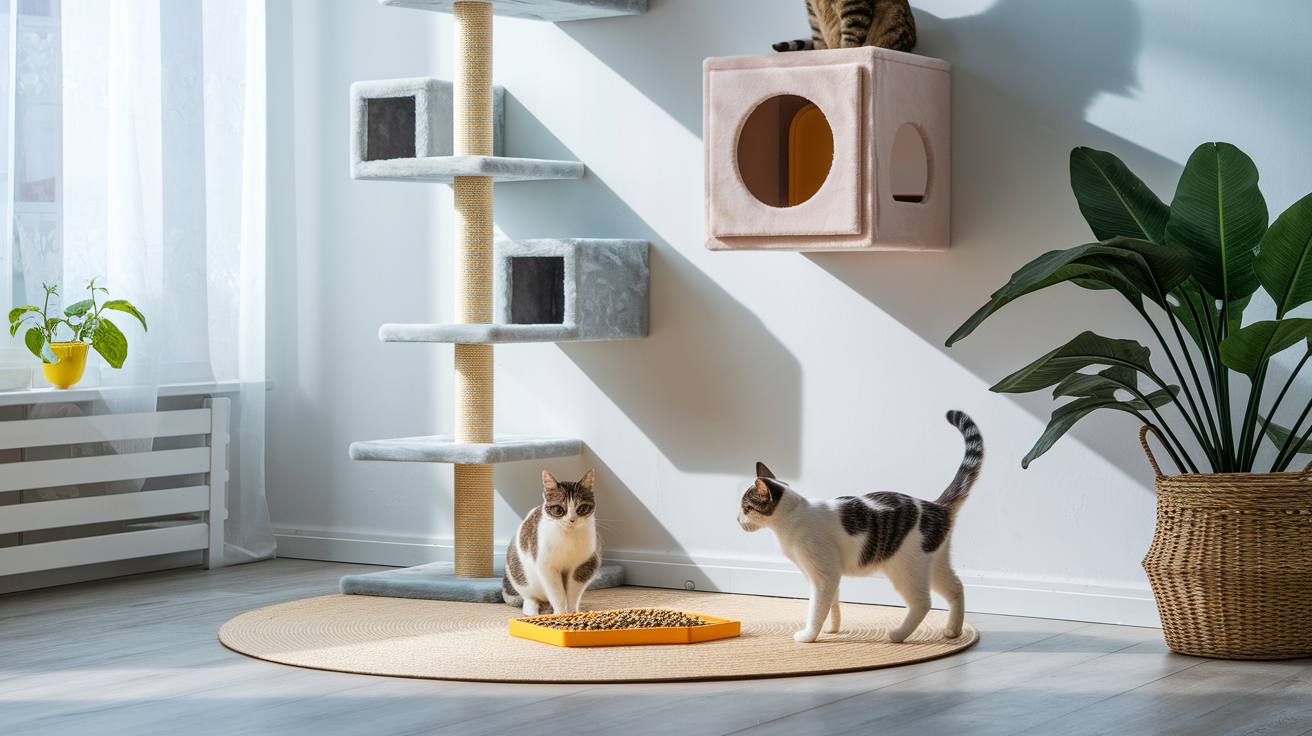
Cats need mental and physical stimulation to stay healthy and calm. Boredom and lack of enrichment lead to behavior problems like aggression, overgrooming, and destructive scratching.
Play Schedule
Interactive play is the most important enrichment tool you have. Aim for 10 to 15 minutes of active play, twice a day (morning and evening work well for most cats). Use wand toys, feather teasers, or laser pointers. Always end laser play by letting your cat “catch” a physical toy or treat so they get the satisfaction of a successful hunt.
Rotate toys every few days to keep them interesting. Cats lose interest in toys they see all the time.
Vertical Space
Cats feel safer and more confident when they can observe their environment from above. Provide at least two high perches per cat. Options include cat trees, wall-mounted shelves, window hammocks, or sturdy furniture arranged to create climbing paths.
Every cat should have access to at least one high sleeping or resting spot where they can retreat when stressed.
Puzzle Feeders and Feeding Enrichment
Puzzle feeders slow down eating, provide mental stimulation, and mimic the effort of hunting. Use them for 1 to 2 feeding sessions per day.
Examples include treat balls, slow-feed bowls, snuffle mats, or DIY options like dry food hidden in a muffin tin covered with tennis balls.
Some cats take time to learn puzzle feeders. Start easy and gradually increase difficulty.
Litter Boxes (Setup and Maintenance)
Follow the N + 1 rule: one box per cat, plus one extra. For three cats, provide four boxes.
Place boxes in separate, quiet areas. Avoid putting all boxes in one room or right next to noisy appliances like washing machines.
Scoop daily. Full litter change and deep clean the box weekly (bi-weekly for single-cat homes with large boxes, more often for multi-cat setups).
Use 2 to 3 inches of litter. Boxes should be at least 1.5 times the length of your cat from nose to base of tail. Larger is better, especially for big cats.
Avoid covered boxes unless your cat clearly prefers them. Many cats feel trapped in covered boxes, especially in multi-cat homes where ambush or bullying can happen.
Daily and Weekly Enrichment Checklist
| Activity | Frequency | Duration or Quantity |
|---|---|---|
| Interactive play (wand, laser, fetch) | Twice daily | 10 to 15 minutes per session |
| Puzzle feeder or food enrichment | 1 to 2 times daily | One meal or treat portion |
| Rotate toys | Every 3 to 7 days | Swap out 2 to 3 toys |
| Vertical perches available | Always | At least 2 per cat |
| Litter box scooping | Daily | All boxes |
| Litter box deep clean | Weekly | All boxes |
| Claw trimming | Every 2 to 4 weeks | Front and back claws |
| Weight check | Weekly | Record and track trends |
Training and Positive Reinforcement
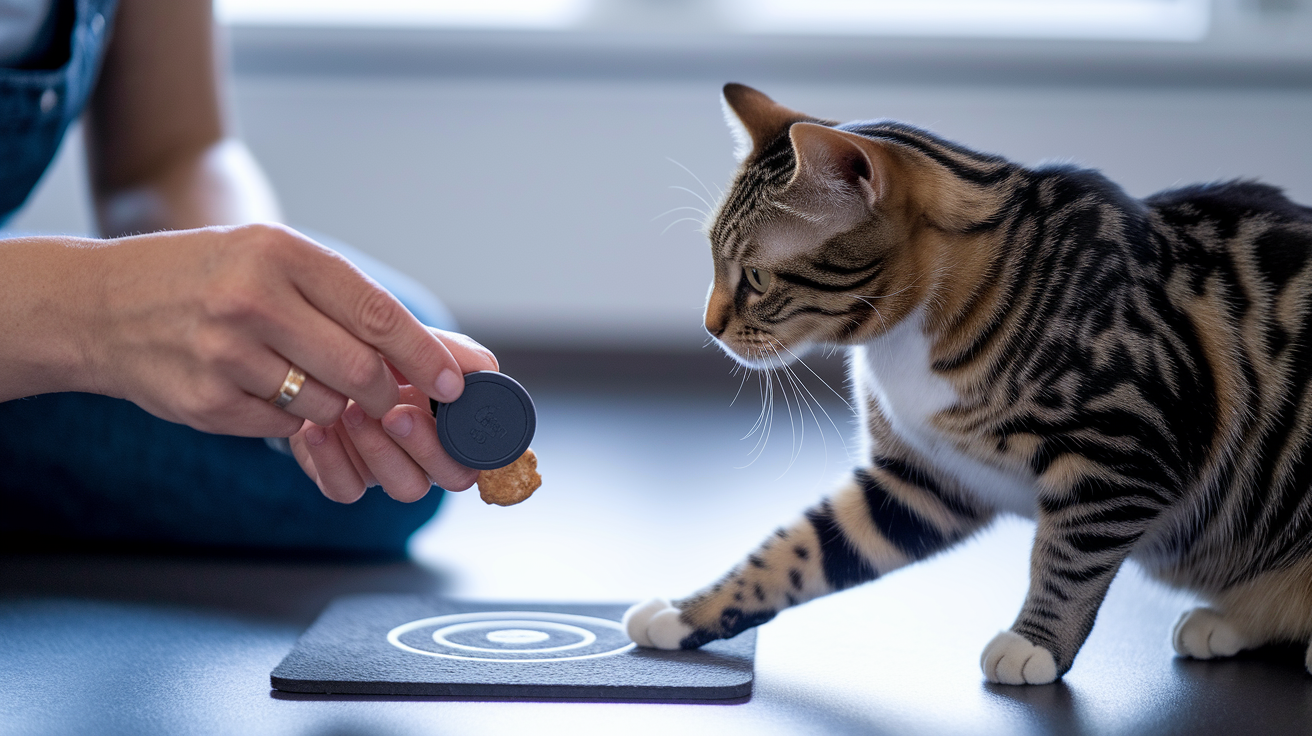
Cats can be trained. It just takes patience, consistency, and the right rewards.
Clicker or Marker Training
Clicker training uses a small handheld device that makes a distinct “click” sound to mark the exact moment your cat does the right behavior. The click is immediately followed by a treat.
Steps:
- Charge the clicker: Click, then immediately give a treat. Repeat 10 to 15 times over a few sessions so your cat learns click = treat.
- Mark the behavior: Wait for your cat to do something you want (sit, come, touch a target). Click the instant it happens, then treat.
- Add a cue: Once your cat is reliably doing the behavior, add a word or hand signal just before they do it. Click and treat when they respond to the cue.
Training sessions should be short, 1 to 3 minutes, and done 2 to 3 times per day. Cats have short attention spans. End on a success.
Use small, high-value treats, about the size of a pea. Limit to 1 to 3 treats per session to avoid overfeeding. Adjust daily meal portions if you’re training frequently.
Teaching Recall
Recall training teaches your cat to come when called. It’s useful for safety and building trust.
- Choose a specific word or sound, like their name, “come,” or a tongue click.
- Say the cue, then immediately reward your cat with a treat when they approach (even if they were already coming).
- Gradually increase distance and distractions.
- Practice daily in short sessions.
Never call your cat for something unpleasant (like nail trims or medicine). Use a different cue or pick them up without calling.
Litter Box Retraining
If your cat has developed a habit of eliminating outside the box, you can retrain them after addressing medical and environmental causes.
- Confine your cat to a small, comfortable room with a litter box, food, water, bed, and toys.
- Make the litter box as appealing as possible: clean daily, preferred substrate, large size, easy access.
- Spend time in the room playing and interacting, so it doesn’t feel like punishment.
- Once your cat is consistently using the box for 7 to 14 days, slowly expand their access to the rest of the home, one room at a time.
- If accidents happen, return to the smaller space and repeat.
This process can take 2 to 8 weeks depending on how long the problem behavior has been happening.
When to Seek Veterinary or Behaviorist Help

Some behavior changes require professional help, either medical or behavioral.
Emergency Signs (Seek Vet Care Within 24 Hours)
Straining to urinate, crying in the litter box, or inability to urinate (this is a life-threatening emergency, especially in male cats). Vomiting more than twice in 24 hours or vomiting blood. Diarrhea lasting more than 24 to 48 hours, especially if there’s blood or your cat seems lethargic. Not eating or drinking for more than 24 to 48 hours.
Sudden aggression, disorientation, or extreme lethargy. Seizures or loss of consciousness. Difficulty breathing, open-mouth breathing, or blue-tinged gums.
Urgent Signs (Schedule Vet Exam Within a Few Days)
Gradual weight loss (more than 10% of body weight over a few weeks). Increased hiding, especially if paired with appetite changes or litter box issues. New or worsening excessive grooming, bald patches, or skin wounds. Persistent limping or reluctance to jump.
Sudden increase in vocalization, especially in senior cats. Behavior changes after moving, adding a new pet, or other major life change that don’t improve within 2 to 4 weeks.
When to Refer to a Certified Behaviorist
If you’ve tried environmental enrichment, litter box adjustments, and positive training for 4 to 8 weeks with no improvement, it’s time to consult a professional.
A certified cat behaviorist or veterinary behaviorist can assess the situation, create a detailed behavior modification plan, and in some cases recommend medication to reduce anxiety or compulsive behaviors.
Behaviorists are especially helpful for:
Inter-cat aggression that’s escalating or causing injuries. Severe fear or anxiety that limits your cat’s quality of life. Compulsive behaviors like excessive grooming, pica (eating non-food items), or tail chasing. Complex cases where multiple behavior problems are happening at once.
Look for professionals certified by the International Association of Animal Behavior Consultants (IAABC) or board-certified veterinary behaviorists (Dip ACVB).
Quick-Reference Resources and Monitoring

What to Track When You’re Troubleshooting Behavior
Keep a simple log for 7 to 14 days. Note:
Time of day the behavior happens. What happened just before (trigger or antecedent). What the behavior looked like (describe it clearly). What happened after (your response, the cat’s response). Location in the home.
This helps you spot patterns and measure progress. “The scratching happens every morning right after I fill the food bowl” is more useful than “my cat scratches a lot.”
Normal Behavior Ranges to Monitor
| Metric | Normal Adult Cat | When to Worry |
|---|---|---|
| Sleep | 12 to 16 hours/day | Sudden increase or extreme lethargy |
| Urination | 2 to 4 times/day | Straining, blood, going much more or less often |
| Defecation | 1 to 2 times/day | Diarrhea, constipation, blood, or none for 48+ hours |
| Water intake | ~3.5 to 4.5 oz per 5 lbs body weight/day | Drinking much more or much less |
| Weight (adult) | Stable week to week | Loss or gain of more than 10% over 2 to 4 weeks |
| Play/activity | Short bursts, 2 to 3 times/day | No interest in play, extreme hyperactivity, or aggression during play |
Cleaning Tips for Accidents
Use an enzymatic cleaner designed for pet urine and feces. These break down the odor-causing proteins so your cat won’t be attracted back to the same spot.
Avoid ammonia-based cleaners, bleach, or vinegar on urine spots. Ammonia smells like cat urine and can make the problem worse.
Soak the area thoroughly, let the cleaner sit for 10 to 15 minutes, then blot and air dry. Repeat if needed.
Block access to the cleaned area for at least 24 hours using foil, plastic, or a piece of furniture.
Estimated Costs for Common Tools and Products
Basic scratching post: $20 to $80 depending on size and material. Multi-level cat tree: $60
Final Words
We showed what to notice and what to try right away: reading body language, setting up calm spaces and play routines, redirecting scratching, and simple training steps.
Use your journal to track appetite, litter box habits, scratching, vocalizing, and sleep. Try short daily play sessions and a quiet hiding spot. If things worsen or your cat stops eating, call your vet.
Keep watching for patterns, because small changes tell you a lot about cat behavior. You’re building habits that help both of you, and it gets easier.
FAQ
Q: How do you know if a cat likes you?
A: You can tell a cat likes you by relaxed body language—purring, slow blinks, head bunting, kneading, following you, or showing their belly. Each cat shows affection in its own way.
Q: What to give a cat when sick?
A: For a sick cat, offer fresh water, small amounts of bland food (boiled chicken or prescription diet) and encourage rest; contact your vet if symptoms last more than 24 hours or worsen.
Q: How to warm up a cat?
A: To warm up a cat, wrap them in warm blankets, use a low-heat heating pad or a wrapped warm water bottle, check body temperature, and see a vet immediately if they are very lethargic or shivering.
Q: What is “I love you” in cat language?
A: “I love you” in cat language is shown by slow blinks, head bunting, purring, gentle kneading, following you, or bringing prey—these are cats’ ways of showing trust and affection.