
Could the humble measuring cup be the reason so many dogs are carrying extra pounds?
Weighing food by your dog’s body weight makes portions precise and easier to adjust for life stage, activity, and health.
In this post, Dog Food Portion Size by Weight: Daily Feeding Chart, you’ll find exact grams and cup ranges, a simple 2-3 percent rule to start, and step-by-step checks so you can weigh meals, track body condition, and tweak amounts every two weeks.
Start here, weigh once, and check progress so food helps health, not hinders.
Weight‑Based Dog Food Portions: Exact Daily Amounts Owners Should Use
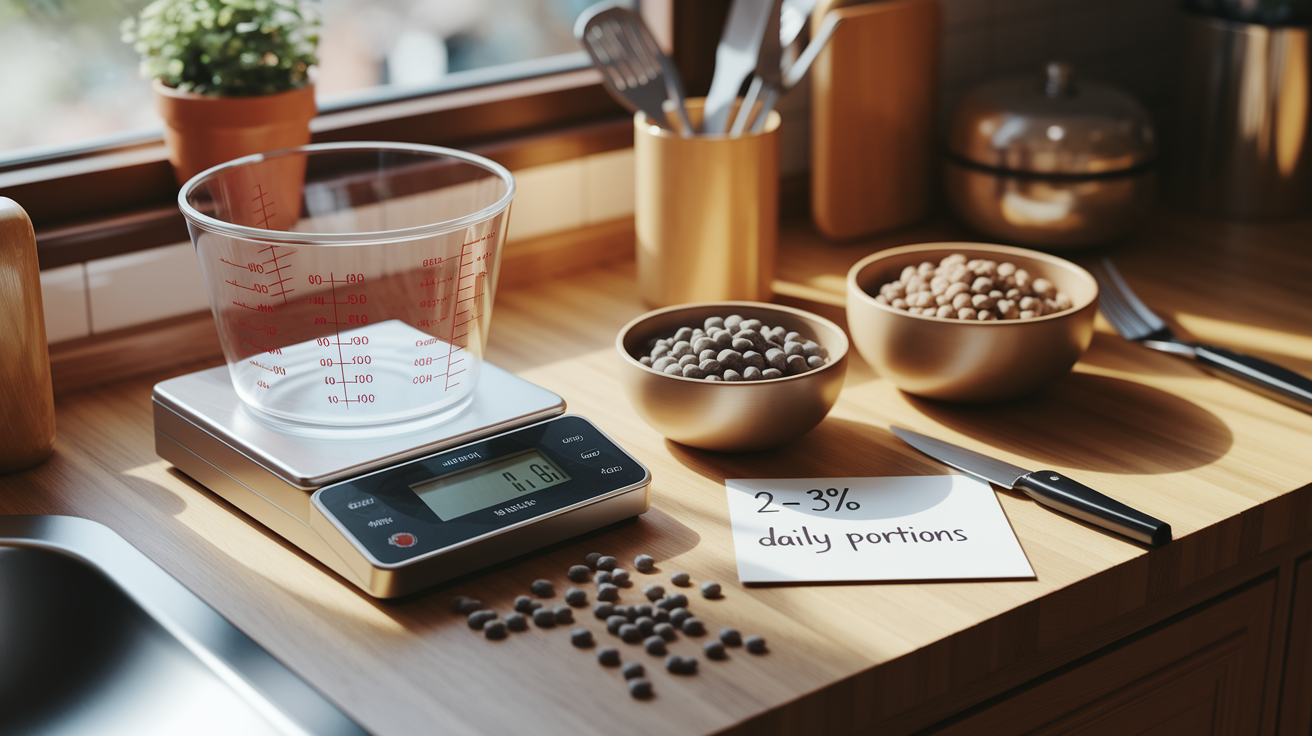
Your best starting point? Feed 2–3% of your dog’s body weight per day. Weigh your dog in pounds, calculate that percentage, then convert to cups or grams using your food’s calorie density. A 20 pound dog needs about 0.4–0.6 pounds daily. That’s roughly 181–272 grams, or somewhere around 1–2 cups depending on your kibble.
The table below gives you baseline daily portions by weight. Think of these as your jumping off point. You’ll adjust from there based on how active your dog is, their age, and how their body actually looks. And here’s the thing, cup measurements are approximate because kibble density changes wildly between brands. Grams give you precision. Always check your bag for calories per cup.
| Weight Range (lbs) | Cups/Day | Grams/Day | Notes |
|---|---|---|---|
| 0–10 lbs (small) | 0.5–1 cup | 50–120 g | Split into 2 meals; higher end for active dogs |
| 11–25 lbs (medium) | 1–2 cups | 100–240 g | Adjust by activity and metabolism |
| 26–50 lbs (large) | 2–3.5 cups | 200–420 g | Feed twice daily to reduce bloat risk |
| 51+ lbs (giant) | 3.5–5 cups | 350–600 g | Monitor joint health and weight closely |
| Multi‑dog households | Varies | Calculate per dog | Feed separately to prevent food stealing |
Check your food label for the AAFCO compliance statement. It confirms the formula actually meets balanced nutrition standards. Roughly 59% of dogs in the US are overweight or obese. Accurate portion control is one of the simplest ways to support long term health. Start with these chart ranges, weigh your food when you can, and recheck your dog’s body condition every two weeks to make sure you’re on track.
Factors That Influence Dog Food Portions by Body Weight

Age changes everything. Puppies burn about twice the calories per pound compared to adults. Rapid growth, brain development, higher metabolic rates. All of it adds up. Senior dogs often need 10–20% fewer calories as activity drops and metabolism slows, though some muscle preservation diets might adjust protein upward even when total calories come down.
Activity level directly shifts energy needs. A dog who runs, plays fetch, or works in the field may need 5–10% more than the baseline. A dog who sleeps most of the day should stay at the lower end or even slightly below. Breed traits matter too. Herding and sporting breeds usually have higher resting metabolic rates than companion or toy breeds at the same weight.
Health conditions and body condition score (BCS) are your final adjustments. Dogs with diabetes, thyroid issues, or food sensitivities need vet guided feeding plans that can differ from general weight rules. BCS uses a 9 point or 5 point scale to check rib visibility, waist definition, and abdominal tuck. If your dog scores above ideal, drop portions by 10–15% and recheck in two weeks. Below ideal? Increase by the same amount and watch closely.
Four things that influence daily portions most:
Age and life stage. Puppies, adults, and seniors all have different caloric needs per pound.
Daily activity and exercise intensity. Sedentary versus working or athletic dogs.
Breed size and metabolic rate. Toy breeds often have faster metabolisms than giant breeds at rest.
Health status and BCS. Medical conditions, medications, and body fat percentage all shift what your dog actually needs.
Using Feeding Charts and Labels to Determine Dog Food Portions
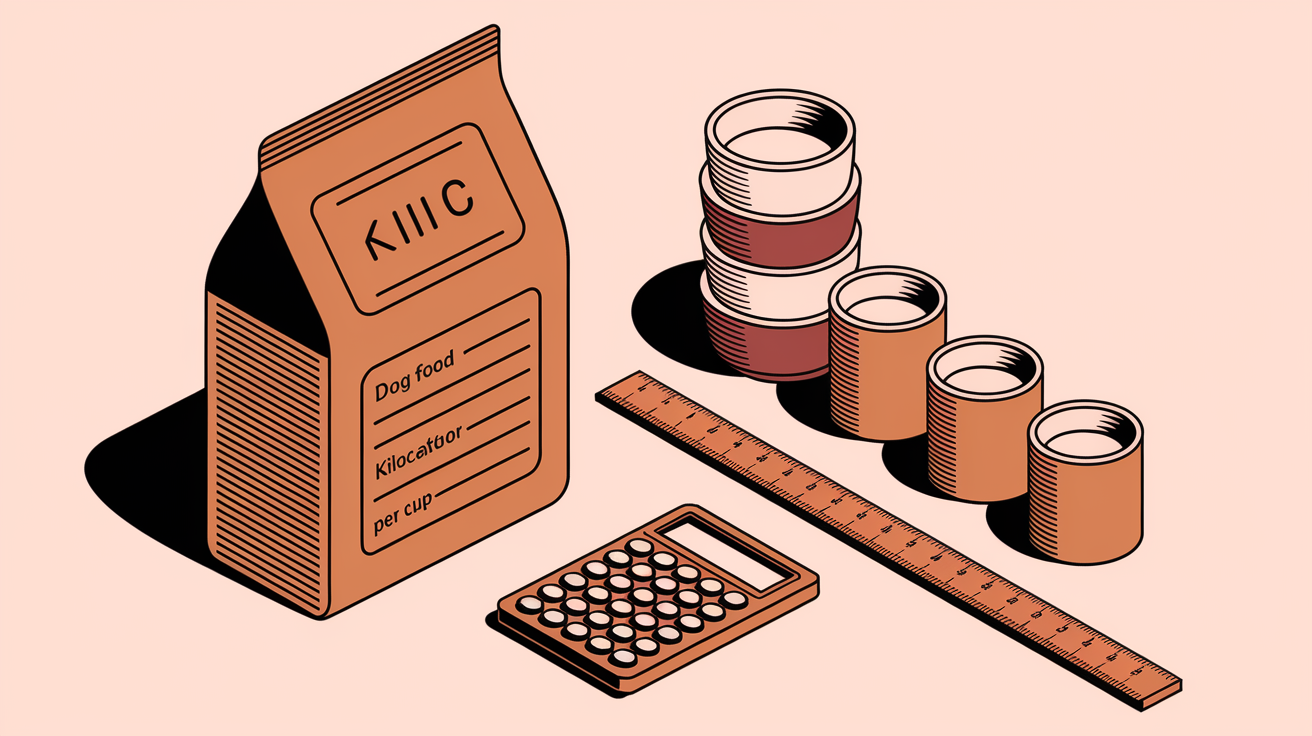
Every dog food label includes a feeding chart and a guaranteed analysis panel. The feeding chart shows suggested daily portions by weight range. The guaranteed analysis gives you minimum protein and fat percentages plus maximum fiber and moisture. The number you really need? Kilocalories per cup. It’s usually printed smaller, near the chart or on the back panel. A food with 350 kcal/cup means smaller portions than one with 450 kcal/cup to deliver the same energy.
Manufacturer charts are starting points. Not rules. A 20 pound dog might be listed at 1 cup per day, but if that dog’s highly active or still growing, the correct amount could be 1.25 cups. Always cross check the chart against the percentage calculation from the first section and your dog’s body condition score. If your dog’s gaining weight on the recommended amount, drop the portion by 10% and check again after two weeks.
Here’s how to use a feeding chart:
- Find the kilocalories per cup on the food label. This determines portion density.
- Locate your dog’s weight range on the manufacturer chart and note the suggested daily cups.
- Calculate 2–3% of body weight in grams and compare it to the label portion to confirm alignment.
- Split the daily total into two or more meals based on your dog’s age and digestion needs.
- Monitor body condition weekly and adjust portions up or down in 10% increments until you see stable weight and energy.
How Breed Size Influences Daily Food Needs
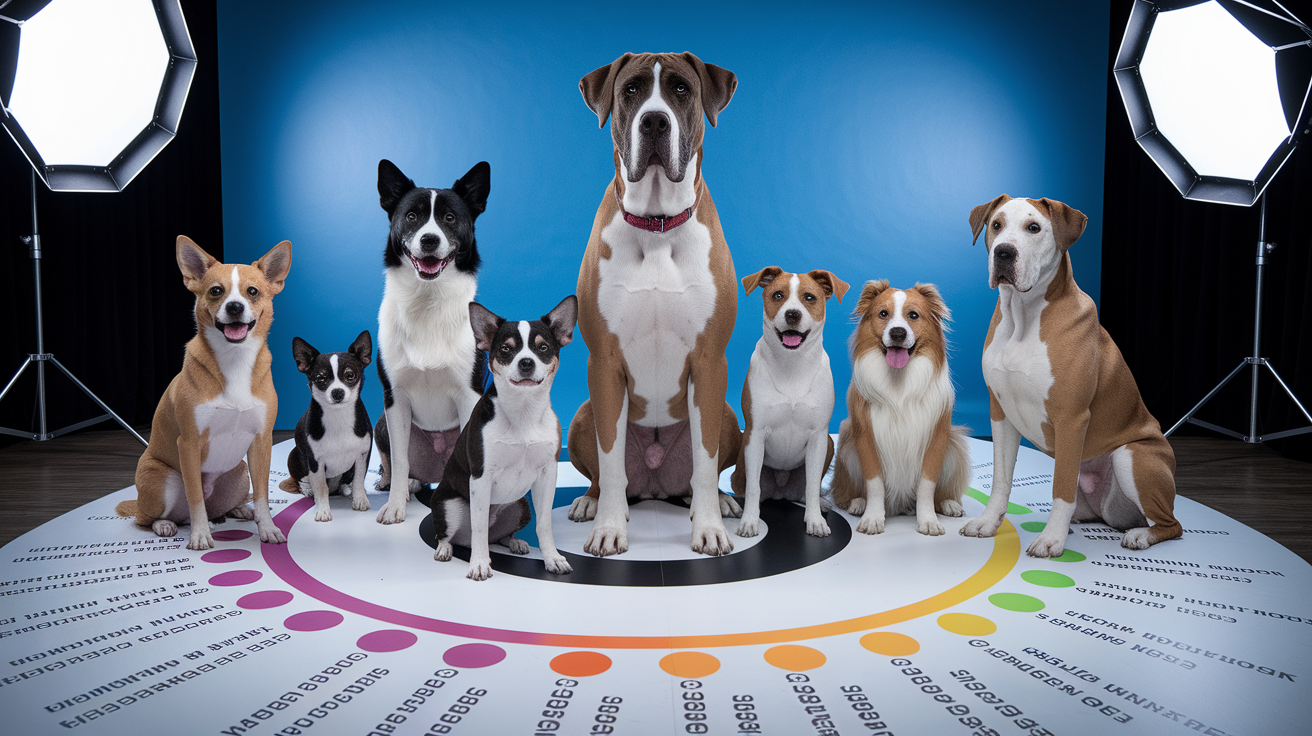
Small breeds often have faster metabolisms relative to their body weight. A 10 pound Chihuahua burns more calories per pound than a 100 pound Great Dane at rest. Smaller animals lose body heat more rapidly and need higher energy turnover to maintain core temperature. That’s why toy and small breeds usually fall at the higher end of the 2–3% range, sometimes reaching 3.5% during active periods or cold weather.
Large and giant breeds face different challenges. Slower metabolic rates mean fewer calories per pound, but their size creates joint stress and digestive risks. Feeding two smaller meals per day instead of one big meal reduces the chance of gastric dilatation volvulus (bloat). It’s a life threatening stomach twist that’s more common in deep chested breeds. Controlled portions also help prevent rapid growth in puppies, which can lead to developmental orthopedic issues in large breed dogs.
Medium breeds sit in the middle of the metabolic spectrum. They adapt well to the baseline 2–3% guideline. But working and sporting breeds within this weight range, Border Collies, Australian Shepherds, Spaniels, often need the higher end or an activity boost because their energy expenditure is greater than companion breeds like Bulldogs or Basset Hounds at the same weight.
| Breed Size | Key Feeding Considerations |
|---|---|
| Toy & Small (under 25 lbs) | Higher metabolic rate per pound; prone to hypoglycemia if underfed; use upper percentage range |
| Medium (25–50 lbs) | Moderate metabolism; adjust primarily by activity and breed purpose (working vs companion) |
| Large (51–90 lbs) | Lower calories/lb; split meals to reduce bloat risk; monitor joint health and avoid rapid weight gain |
| Giant (90+ lbs) | Slowest metabolism; high risk for orthopedic issues; feed at lower percentage and use joint support formulas |
For exact daily portions by weight, go back to the feeding chart in the first section. This table explains why those ranges differ and what to watch for when you’re adjusting portions within the baseline.
Adjusting Portions for Puppies, Adults, and Seniors
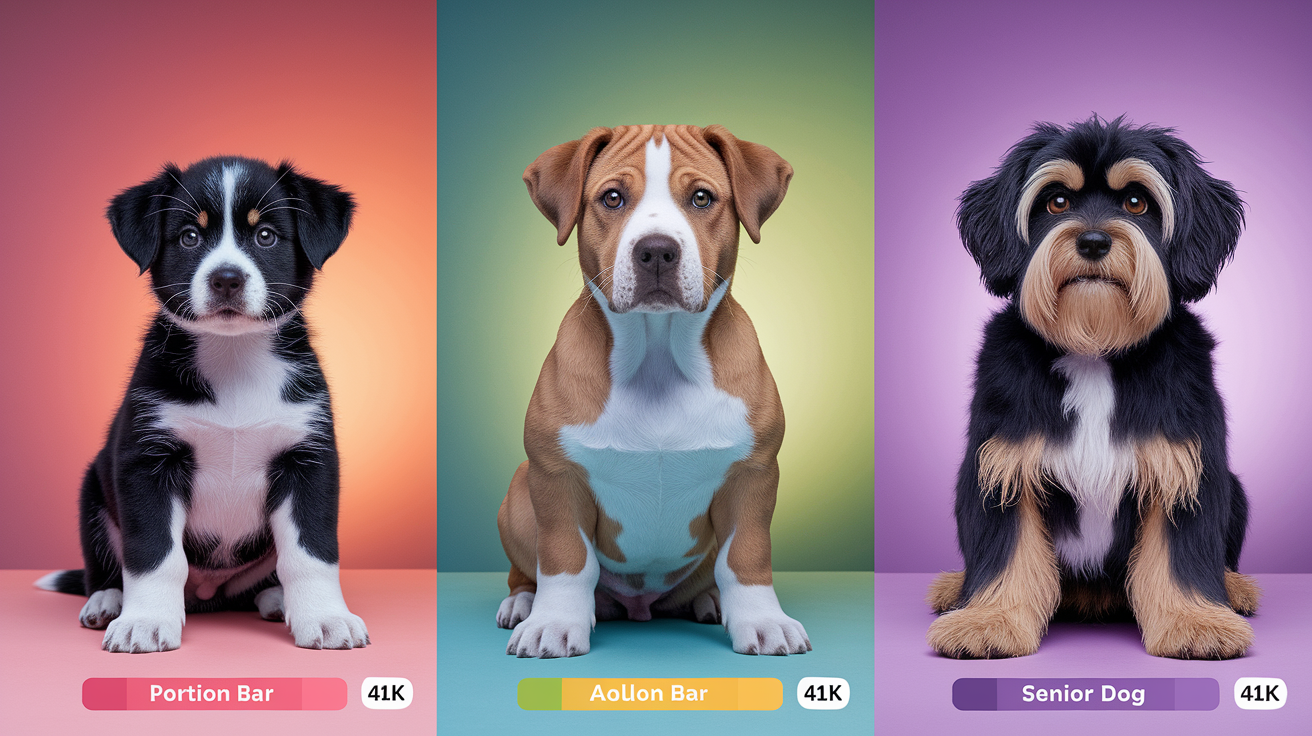
Life stage changes how much energy your dog pulls from each gram of food and where that energy goes. Puppies funnel calories into bone growth, brain development, immune system maturation, and constant movement. Adults use food mainly for maintenance, activity, and muscle repair. Seniors shift toward preserving lean mass, supporting aging joints, and compensating for slower digestion and reduced activity. Each stage needs different portion strategies even when body weight stays the same.
Puppy Feeding by Weight
Puppies need roughly double the calories per pound compared to adult dogs of the same weight. A 10 pound puppy might need 600–800 kcal per day, while a 10 pound adult only needs 300–400 kcal. This higher intake supports rapid cell division, skeletal development, and the intense energy burn of play and exploration. Feed puppies three to four times per day to keep blood sugar stable and prevent digestive overload. Small stomachs can’t handle large single meals.
Growth rate matters as much as current weight. Large breed puppies shouldn’t be overfed. Excess calories speed up bone growth faster than connective tissue can support, which increases the risk of hip dysplasia and other developmental orthopedic diseases. Use a puppy formula designed for your dog’s expected adult size, and aim for slow, steady weight gain rather than maximum growth speed. Reweigh your puppy every two weeks and adjust portions to match current weight, not target adult weight.
Adult Daily Portions by Weight
Adult dogs have stable caloric needs once they reach full size, typically around 12–18 months for most breeds and up to 24 months for giant breeds. Use the feeding chart from the first section as your baseline, then modify by activity level. A dog who walks twice daily on leash may stay at the baseline 2% of body weight. A dog training for agility or running alongside a bike may need 2.5–3%. If your dog’s weight creeps up or down over a month, adjust portions by 10% and monitor for another two weeks.
Intact adults, those not spayed or neutered, often have slightly higher metabolic rates than altered dogs. After spay or neuter surgery, reduce portions by about 10% and watch body condition closely for the first three months. Hormonal changes can slow metabolism and increase appetite. This is one of the most common windows for unintended weight gain.
Senior Portion Adjustments
Senior dogs, generally those over age seven for large breeds and over nine for small breeds, experience muscle loss, joint stiffness, and decreased activity. Many need 10–20% fewer total calories than they did in their prime adult years, but protein requirements often stay the same or increase to preserve muscle mass. A senior formula with moderate fat, controlled phosphorus for kidney support, and added joint supplements can deliver fewer calories while maintaining nutritional density.
Watch for changes in appetite, thirst, and energy that signal underlying health shifts. Seniors with dental pain may eat more slowly or avoid hard kibble, which can lead to unintentional underfeeding. Warm water added to kibble or a switch to wet food can help. Weigh your senior dog monthly and track trends. Slow, gradual weight loss is normal, but sudden drops or gains mean it’s time for a vet check for thyroid issues, diabetes, or cancer.
Measuring Dog Food Portions Accurately (Cups vs Grams)
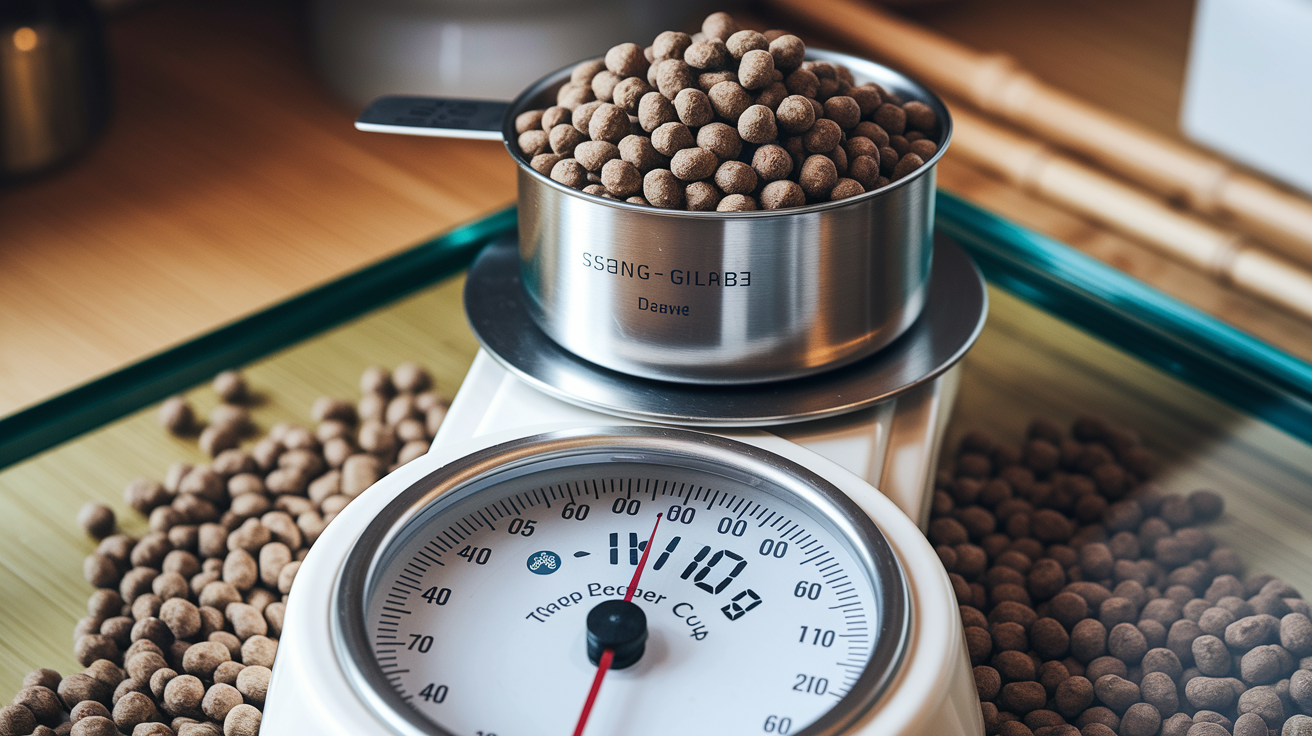
One cup of dry kibble weighs roughly 100–120 grams, but that range shifts based on kibble shape, density, and moisture content. Round, airy kibble weighs less per cup than dense, flat pieces. If you scoop kibble loosely, a “cup” might hold 90 grams. Pack it down and that same measuring cup could hold 130 grams. This 40 gram swing across two daily meals adds up to nearly a full extra cup per week. That’s enough to cause gradual weight gain in a medium dog.
A digital kitchen scale removes guesswork. Weigh your dog’s daily portion in grams, divide by the number of meals, and serve the same amount each time. Scales cost $10–$20 and give you accuracy within one gram. If you prefer cups, use a standard dry measuring cup, not a coffee mug or plastic scoop, and level off the top with a straight edge. Then weigh that “cup” once on a scale to learn its true gram weight for your specific kibble. Use that conversion going forward.
Four steps to portion accuracy:
Use a digital scale for the first week to learn your kibble’s actual grams per cup density.
Measure daily totals first, then divide into individual meals rather than eyeballing each serving.
Check kilocalories per cup on the food bag and recalculate portions whenever you switch brands or formulas.
Stick to the same tools. One measuring cup, one scale, so portion sizes stay consistent day to day.
Caloric intake drives weight more than volume. A cup of high calorie performance kibble (500 kcal/cup) delivers much more energy than a cup of weight management formula (300 kcal/cup). If you switch foods, always recalculate portions using the new food’s calorie density, even if the cup amount looks small.
Portion Adjustments for Weight Loss, Weight Gain, and Special Conditions
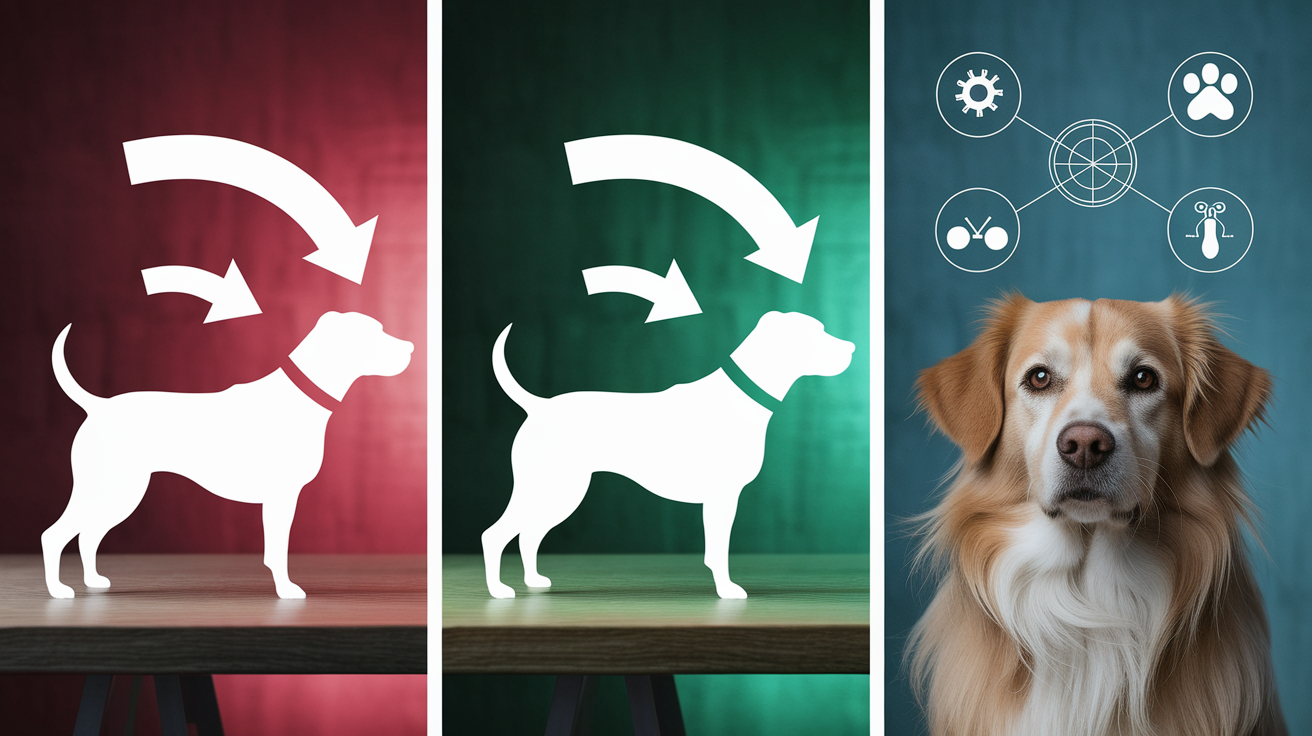
Weight management starts with an honest body condition score check. Run your hands along your dog’s ribs. If you can’t feel them without pressing, your dog’s likely overweight. Look from above. A visible waist behind the ribs signals healthy weight. A straight or bulging silhouette suggests excess fat. If your dog’s overweight, reduce daily portions by 10–15% and increase activity gradually. Reweigh every two weeks and adjust again if progress stalls.
Dogs who need to gain weight need the opposite approach. Increase portions by 10% and add a midday snack if your dog eats only twice daily. Choose calorie dense foods or add a small amount of wet food to boost palatability. Underweight dogs should see steady gain, about 1–2% of body weight per week, without sudden jumps that stress digestion. If appetite’s poor or weight loss continues despite increased food, schedule a vet exam to rule out parasites, dental disease, or metabolic disorders.
Special conditions need tailored feeding. Dogs with diabetes need consistent carbohydrate intake at the same times each day to match insulin dosing. Dogs with food allergies or sensitivities may need limited ingredient diets that change calorie density, so recalculate portions when switching proteins or formulas. Dogs recovering from surgery or illness may need temporary calorie increases to support healing, guided by your vet’s recovery plan.
Safe portion adjustment process:
- Assess current body condition using rib feel, waist check, and weekly weigh ins.
- Change portions by 10% increments. Never cut or add more than 15% at once to avoid digestive upset.
- Wait two weeks before making another adjustment so you can see true trends rather than daily fluctuations.
- Track activity and appetite in a simple journal to catch patterns (increased begging, lower energy, stool changes).
- Consult your vet if weight change exceeds 2% per week or if appetite/energy shifts suddenly.
Signs You’re Feeding Too Much or Too Little Based on Weight Changes
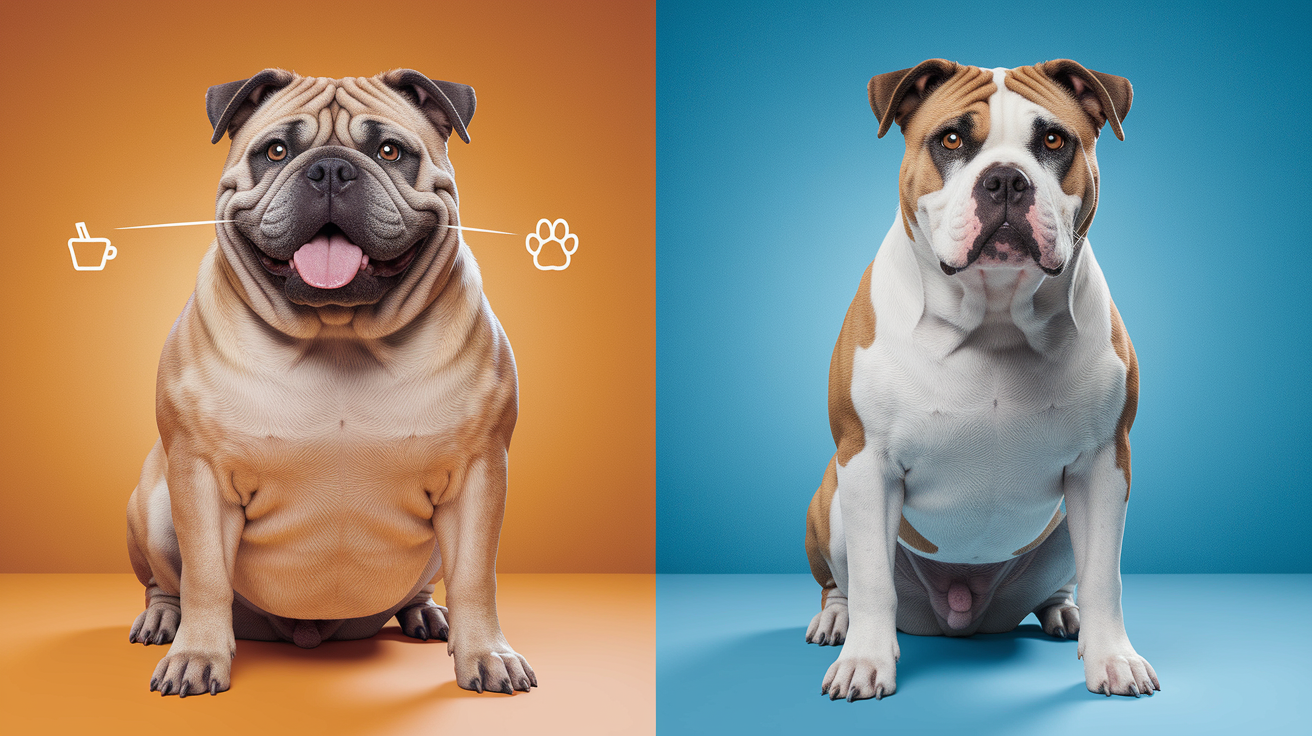
Overfeeding shows up as steady weight gain, a disappearing waistline, and ribs that are hard to feel under a layer of fat. Dogs who eat too much often have lower energy because carrying extra weight stresses joints and makes movement uncomfortable. You might also notice excessive thirst and urination as the body works to process surplus calories, plus softer or more frequent stools from digestive overload.
Underfeeding presents as visible ribs, a pronounced spine, and a tucked abdomen that looks hollow rather than trim. Dogs who aren’t getting enough food may guard their bowls, beg constantly, scavenge for scraps, or eat non food items like grass, dirt, or fabric. Coat quality often declines. Dull, dry fur and flaky skin signal insufficient fat and protein. Energy may seem normal at first, then drop as the body begins breaking down muscle for fuel.
The rib test is the simplest at home check. Place your palms flat on your dog’s ribcage and press gently. You should feel ribs under a thin layer of fat, similar to running your fingers across the back of your hand. If ribs are immediately obvious with no pressure, increase portions. If you have to press hard or can’t find ribs at all, reduce portions. Waist definition should be visible from above and a slight abdominal tuck visible from the side when your dog stands.
Six key signs to watch:
Overfeeding: rapid weight gain, ribs no longer palpable, excessive thirst.
Overfeeding: reduced activity, difficulty jumping or climbing stairs, soft stools.
Overfeeding: loss of waist definition when viewed from above.
Underfeeding: ribs and spine easily visible, prominent hip bones.
Underfeeding: constant begging, food guarding, scavenging behavior.
Underfeeding: dull coat, flaky skin, low energy after initial normal activity.
Feeding Frequency and Meal Scheduling for Proper Portion Control
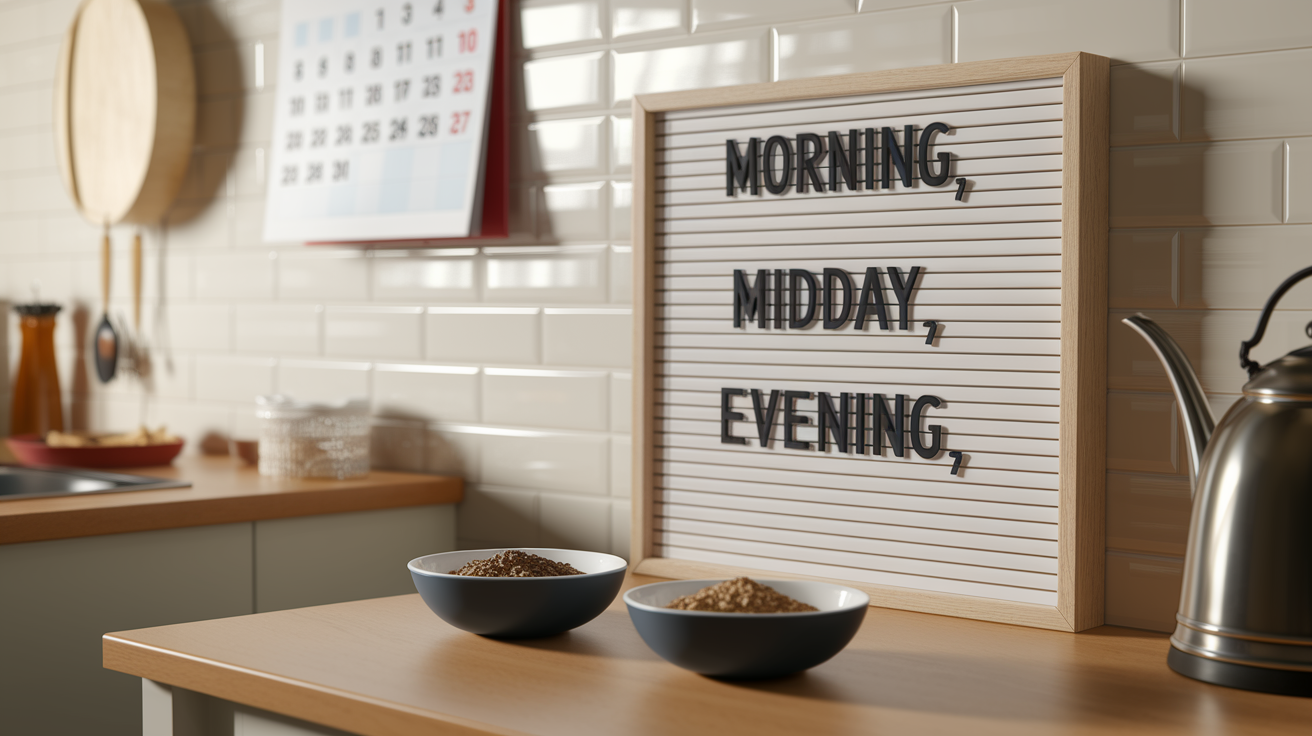
Puppies need three to four meals per day until they reach roughly six months of age, then drop to two or three meals until adulthood. Frequent meals prevent blood sugar dips that cause shakiness or lethargy, and smaller servings are easier on developing digestive systems. For example, a puppy receiving 2 cups daily should get four half cup meals spaced evenly. Morning, midday, late afternoon, and evening, rather than one or two large servings.
Adult dogs thrive on two meals per day, typically spaced 8–12 hours apart. Splitting the daily portion into morning and evening feedings keeps energy stable, reduces hunger driven begging, and lowers the risk of bloat in deep chested breeds. A 20 pound adult eating 1 cup per day should receive two half cup meals. Scheduled feeding also makes it easier to monitor appetite. If your dog skips a meal or eats more slowly than usual, you’ll notice the change right away.
Seniors may need adjusted timing based on medication schedules, digestive comfort, or activity patterns. Some older dogs do well on two meals, while others prefer three smaller servings to ease digestion. If your senior dog has arthritis or reduced mobility, feeding after a short walk can stimulate appetite, and feeding before bedtime ensures overnight comfort without middle of the night hunger.
How to set a feeding schedule:
- Divide the daily portion from the weight based chart into the number of meals appropriate for your dog’s age.
- Feed at the same times each day. Consistency helps regulate digestion and prevents begging between meals.
- Remove uneaten food after 15–20 minutes to establish clear meal windows and prevent grazing.
- Adjust meal timing around exercise. Wait at least 30 minutes after feeding before vigorous activity to reduce bloat risk.
Monitoring Progress: Weight Checks and Body Condition Tracking
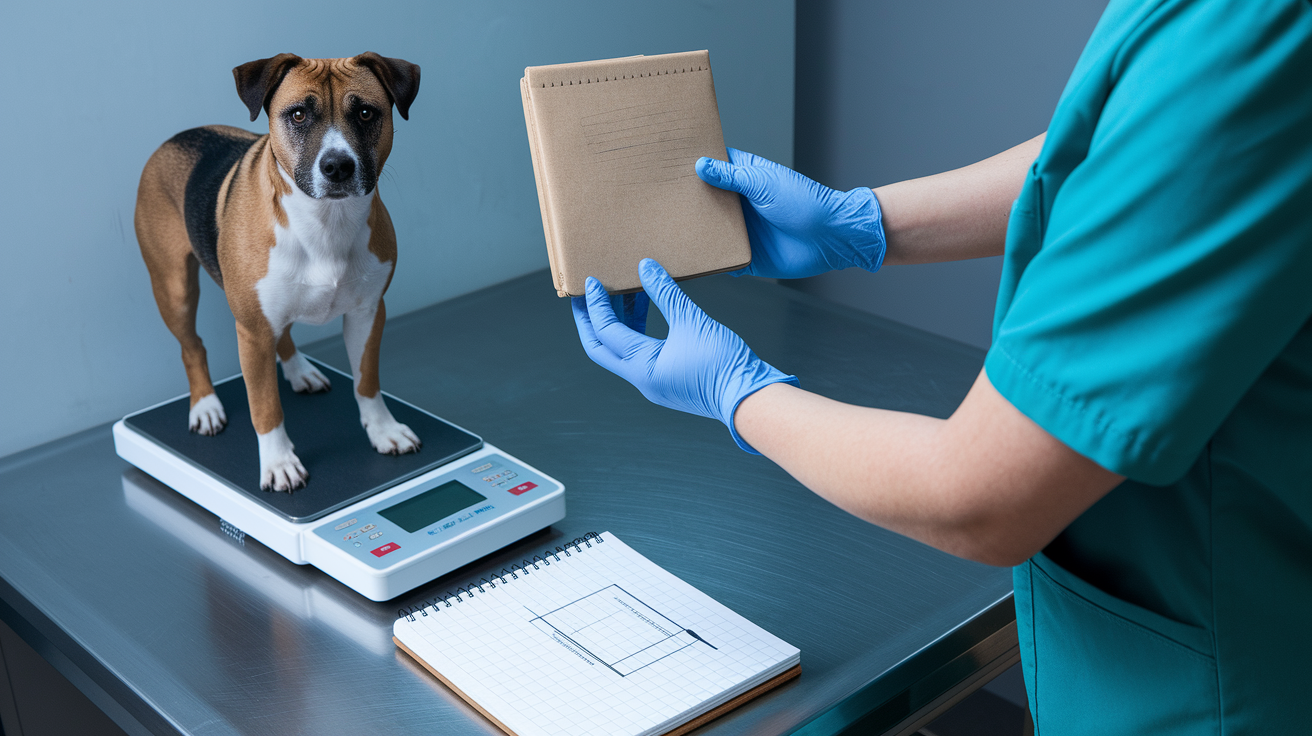
Weekly weigh ins catch trends before they become problems. Use the same scale at the same time of day. Morning before breakfast works well. Record the number in a simple log or phone note. A pound or two of fluctuation is normal, especially after a particularly active day or a salty treat, but steady movement in one direction over three to four weeks signals that portions need adjustment.
Body composition matters as much as total weight. A dog can stay at the same number on the scale while losing muscle and gaining fat, particularly during the transition to senior years or after an injury that reduces activity. Run the rib test and waist check every week alongside the scale number. If ribs become harder to feel even though weight is stable, reduce portions slightly. If ribs start to show but weight hasn’t dropped, your dog may be losing muscle. Talk to your vet about protein intake and gentle strength building activity.
Portion changes should be gradual and data driven. If your dog gains a pound over two weeks, cut daily food by 10% and reassess after another two weeks. If weight stays steady and body condition looks good, you’ve found the right amount. Activity shifts and seasonal temperature changes can alter metabolism, so expect to tweak portions two or three times per year. Cold weather often increases calorie needs, while summer heat and lower activity may require a small reduction.
Final Words
Start with the feeding chart and the 2%–3% body-weight rule. Use cups and grams, split meals, and check kcal on the label.
Then adjust for age, activity, and health using weekly weigh-ins and body condition checks. Watch for signs of too much or too little and change portions slowly.
This approach keeps dog food portion size by weight simple and repeatable, and helps your dog stay at a healthy, happy weight.
FAQ
Q: How much food should I feed my dog chart by weight?
A: How much to feed your dog by weight depends on body weight and calorie density; a good starting rule is 2–3% of body weight, roughly: small 0.5–1, medium 1–2, large 2–3.5 cups/day.
Q: What is the 80 10 10 rule for dog food?
A: The 80/10/10 rule for dog food describes a raw or homemade diet made of about 80% muscle meat, 10% edible bone, and 10% organ meat to meet basic nutrient balance.
Q: Is 2 cups of food a day enough for a 60 pound dog?
A: Two cups a day for a 60-pound dog is usually below recommended amounts; most 60-lb dogs need about 3.5–5 cups daily or 2–3% of body weight—adjust using kcal per cup and activity.
Q: Is a 22 lb dog considered small or medium?
A: A 22 lb dog is considered medium-sized; medium dogs are roughly 11–25 pounds, and they typically need about 1–2 cups per day depending on age, activity, and kibble calories.