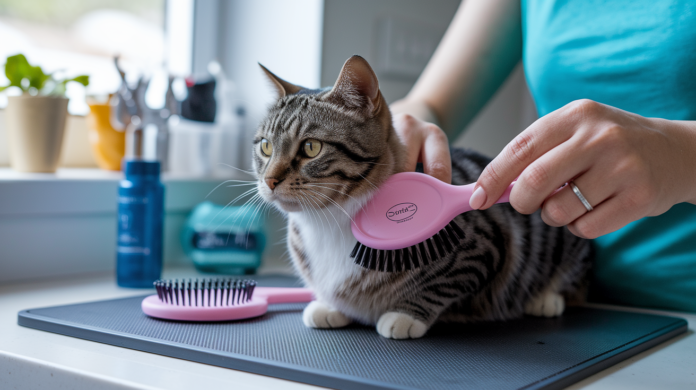

Think cat grooming is a nice-to-have, not a must?
A lot of owners skip it until painful mats, extra hairballs, or hidden skin problems force a vet visit.
Regular grooming cuts hairballs, stops mats, and helps you spot issues early so treatment is easier.
This post walks through cat grooming tools every owner needs for happy felines, with simple tool choices, how to use them, and what to watch so you can build an easy at-home routine.
Must-Have Cat Grooming Tools for a Complete At-Home Kit
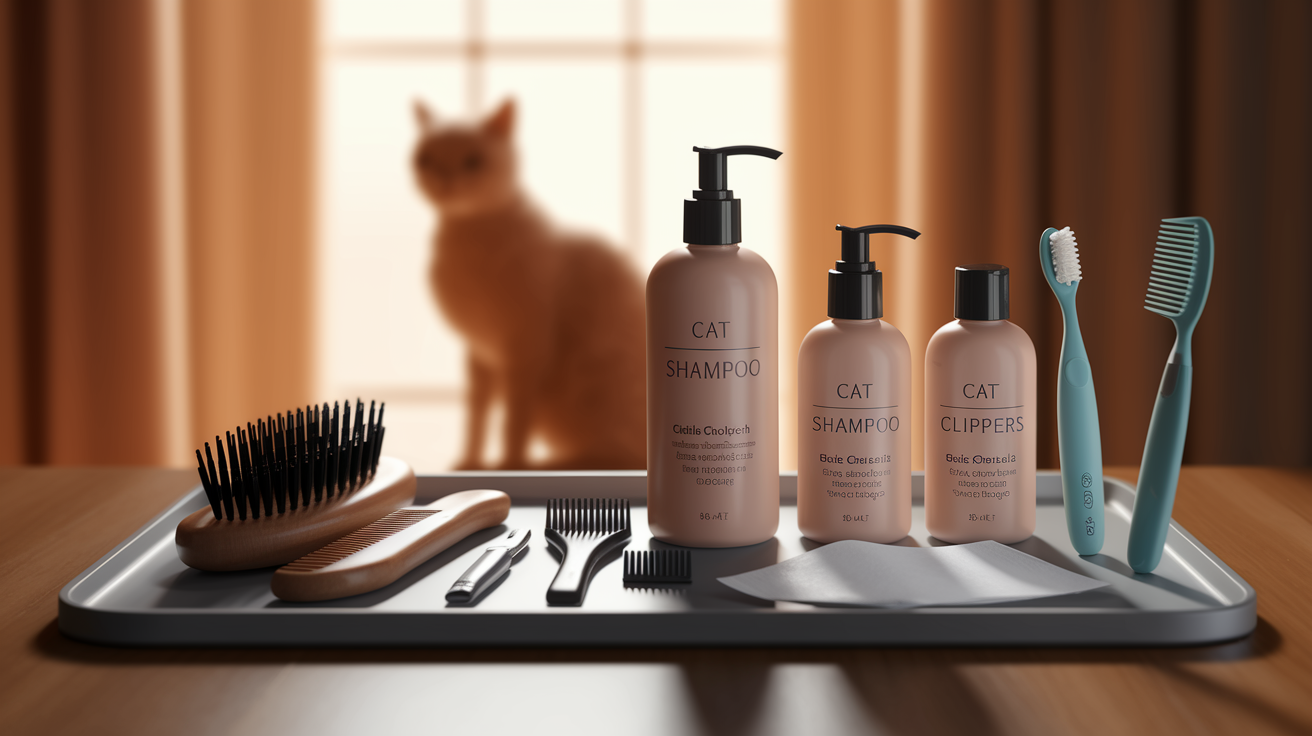
Building a solid cat grooming kit at home matters more than most owners think. Regular grooming doesn’t just keep your cat looking tidy. It helps you catch skin problems early, stops painful mats before they start, cuts down on hairballs, and makes vet visits way less stressful because your cat’s already used to being touched and handled.
You don’t need a professional salon setup. Just the right handful of tools. A complete kit covers coat care, nail maintenance, and basic hygiene. These eight essentials will get you through weekly routines, seasonal shedding, and the occasional spot clean between baths.
• Slicker brush – Pulls out loose fur, works through light mats, and helps reduce hairballs.
• Comb – Spreads natural oils, catches leftover tangles, and checks for fleas or ticks.
• Nail clippers or trimmers – Stops overgrown claws, walking discomfort, and furniture damage.
• Cat shampoo – Cleanses without stripping oils or irritating sensitive skin.
• Ear cleaner – Removes wax and debris to lower infection risk.
• Toothbrush and toothpaste – Fights plaque, tartar buildup, and gum disease.
• Grooming wipes – Quick spot cleaning for face, paws, and between bath freshening.
• Flea comb – Fine teeth catch fleas, eggs, and flea dirt before infestations take hold.
Together, these tools cover your cat’s daily and weekly needs. Brush once a week (daily if long haired), check nails weekly, wipe as needed, and add ear and dental care into your monthly rhythm. It’s a manageable routine that keeps small problems from turning into big ones.
Brushes and Deshedding Tools for Cat Coat Care
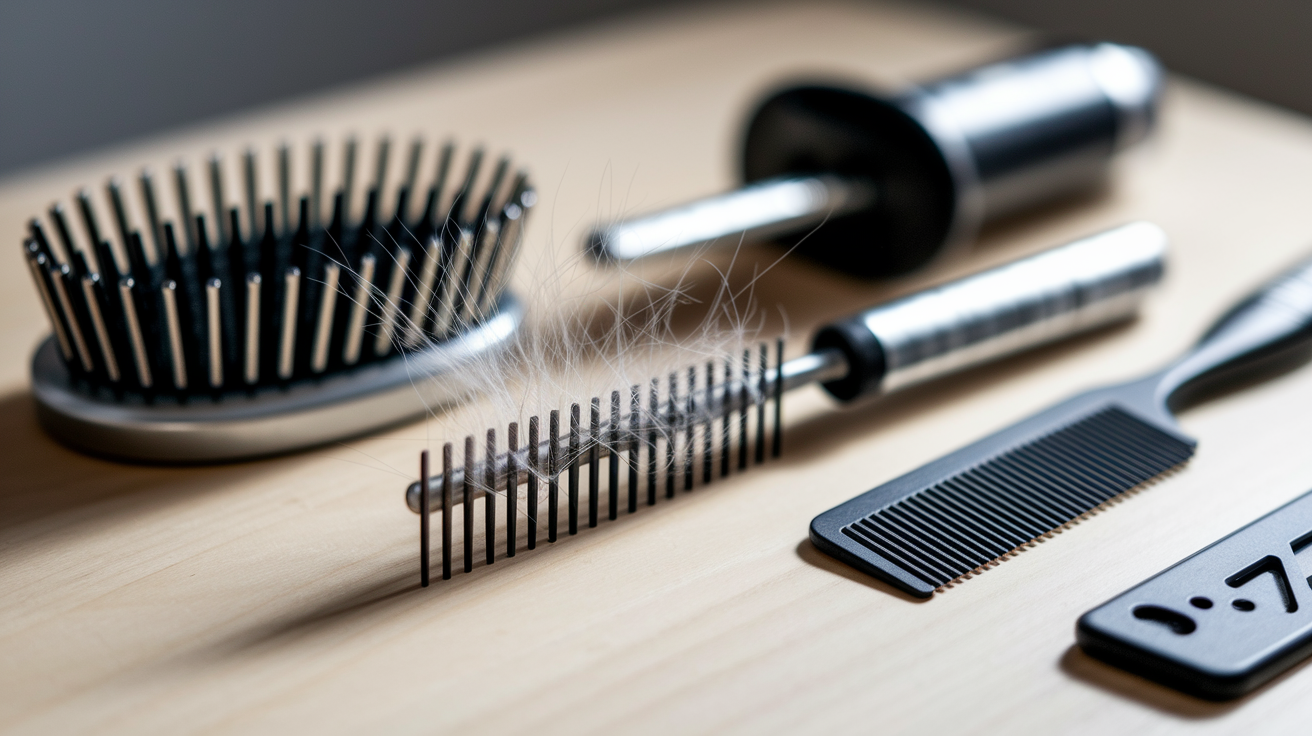
Not all brushes do the same job. Coat texture, undercoat thickness, and how much your cat sheds all influence which tools work best and how often you’ll reach for them.
Slicker Brushes and When to Use Them
Slicker brushes have fine, closely spaced wires that grab loose fur and work through light tangles. They’re great for medium and long haired cats, and they help cut down on hairballs by catching fur before your cat swallows it during self grooming. Use gentle, short strokes and let the wire tips do the work. Skip retractable self cleaning slicker brushes, the kind where bristles push in and out. Those can be too harsh on skin and fur, especially if you press too hard or your cat has sensitive skin.
Deshedding Tools and Undercoat Care
Deshedding tools are built to reach deep and pull out the soft undercoat that regular brushes leave behind. If your cat has a thick, double coat or sheds heavily during spring and fall, plan to use a deshedding tool one to two times per week. These tools have a row of fine metal teeth that grab loose undercoat without cutting the topcoat. They make a real difference in shedding around the house, but they’re aggressive, so use them gently and skip them if your cat’s coat is already thinning or damaged.
Combs for Detangling and Coat Health
A good comb with long, evenly spaced teeth is your finishing tool. After brushing, run the comb through to catch any remaining knots, check for fleas or flea dirt, and smooth out the coat. Combs also help spread the natural oils your cat’s skin produces, which keeps fur soft and shiny. Look for combs with rounded tips so you don’t scratch skin, and choose a handle long enough to reach between your cat’s front legs and along the belly where mats hide.
| Tool Type | Best For | Key Benefit |
|---|---|---|
| Slicker Brush | Medium and long haired cats | Removes loose fur and light tangles, reduces hairballs |
| Deshedding Tool | Heavy shedders, thick or double coats | Pulls out dense undercoat to reduce household shedding |
| Comb | All coat types | Final detangle, oil distribution, flea detection |
| Rubber Brush or Glove | Short haired cats, anxious cats | Gentle massage and bonding while removing loose hair |
Cat Nail Care Tools and Safe Trimming Essentials

Cat nail clippers are shaped to match the curve of a cat’s claw, which makes clean cuts easier and reduces the chance of splintering. Look for stainless steel blades and built in safety locks. Some clippers include a guard that stops you from cutting too deep. If your cat hates the pressure of clippers, a nail grinder can work instead. Grinders use a rotating file to smooth the nail tip gradually, but they’re noisier and take longer, so start slow if your cat is sound sensitive.
Check your cat’s nails once a week. Overgrown claws curve into the paw pad, cause limping, and can lead to infections. Regular trims also mean fewer snags on furniture and less accidental scratching during play. If you’ve never trimmed before, ask your vet for a quick demonstration. One lesson usually covers where to cut and how to hold the paw without stressing the cat.
Here’s a safe trimming routine to follow at home:
- Pick a calm moment – Right after a meal or a nap, when your cat is relaxed and sleepy.
- Hold the paw gently – Press the pad lightly to extend the claw so you can see the pink quick inside.
- Trim only the sharp tip – Stay a few millimeters away from the pink area to avoid pain and bleeding.
- Work one paw at a time – If your cat gets antsy, stop and finish the rest later.
- Reward immediately – Offer a small treat or favorite snack right after to build positive association.
Hygiene Tools: Shampoos, Wipes, and Ear Care for Cats
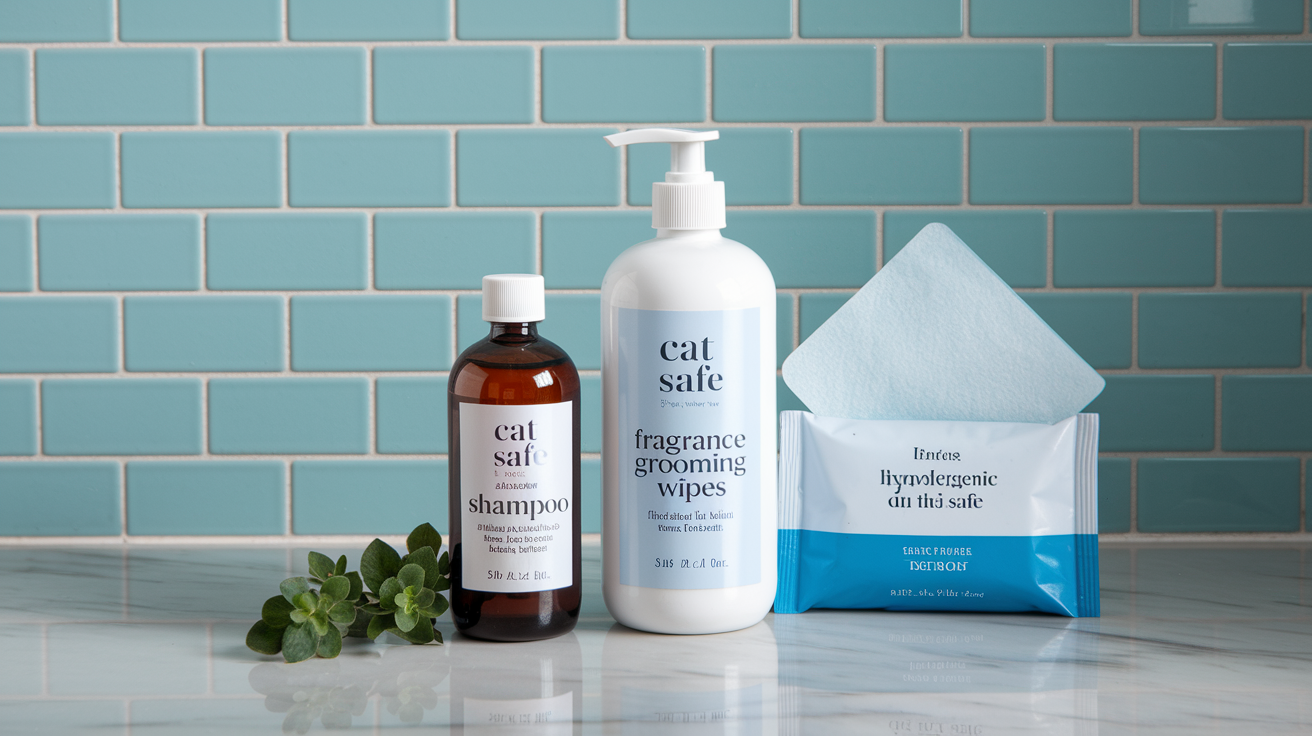
Most cats don’t need frequent baths, but when you do bathe, use a shampoo made for feline skin. Cat skin has a different pH than ours, so human shampoo or even dog shampoo can strip natural oils, dry out skin, and cause irritation or itching. Look for mild, soap free formulas and check that the label says “cat safe.” If your cat has allergies or sensitive skin, hypoallergenic options help prevent flare ups.
Grooming wipes are more practical for everyday touch ups. Keep a pack near where your cat eats or sleeps. Wipe paws after litter box trips, clean around the face after meals, or freshen the coat between baths. Wipes remove dirt, dander, and light odors without the stress of water. Ear cleaners are just as simple. Cat ears trap wax, dirt, and moisture, which can turn into infections if left alone. A gentle ear cleaner on a cotton pad clears buildup and keeps the ear canal dry. Never push anything deep into the ear. Wipe only the parts you can see.
When shopping for hygiene products, here’s what to prioritize:
• Cat formulation – Ingredients and pH balanced for feline skin and coat.
• Fragrance free or very mild scent – Strong perfumes can irritate or stress cats.
• Hypoallergenic if your cat has allergies – Reduces risk of reactions and itching.
• Alcohol free wipes – Alcohol dries skin and stings if there are small cuts.
• Non toxic ear cleaner – Safe if your cat licks paws after you handle the ears.
• Easy application – Squeeze bottles for shampoo, single use wipe packs, and simple dropper or pad systems for ears.
Tools for Managing Mats, Tangles, and Long Haired Coat Challenges
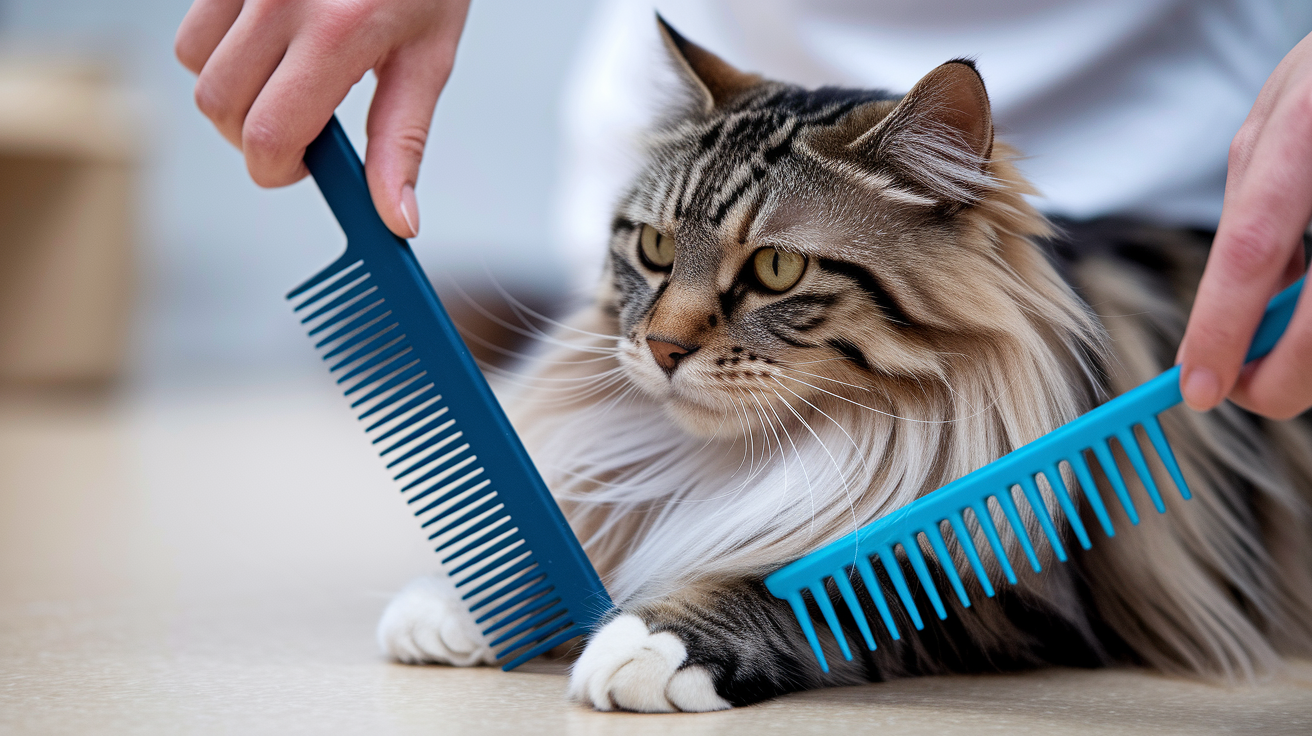
Mats form when loose fur wraps around itself and tightens into clumps. They show up most often behind the ears, under the legs, along the belly, and at the base of the tail. Once a mat forms, it pulls on the skin every time your cat moves, which hurts and can lead to skin sores or infections underneath. Long haired breeds like Persians and Maine Coons are especially prone, but any cat can mat if brushing gets skipped for a week or two.
Dematting Tools and Safe Usage
A dematting comb has sharp, angled blades that slice through mats instead of yanking them out. Most dematting combs are dual sided, with wider teeth on one side to break up large tangles and finer teeth on the other to smooth what’s left. Hold the mat close to the skin with one hand so you’re not pulling, then work the comb gently from the outside in. If a mat is tight or close to the skin, stop and use pet clippers to shave it out instead of risking a cut. Skip electric dematting tools. They look convenient but can be too aggressive and may injure skin if the blade catches or if you press too hard.
Undercoat Rakes and Long Hair Maintenance
An undercoat rake has long, widely spaced teeth designed to reach through the topcoat and pull out the dense undercoat where mats begin. If your cat has thick or double layered fur, use the rake once or twice a week during shedding season and every week or two the rest of the year. Rakes reduce overall coat volume and make brushing with a slicker or comb much easier afterward. Daily brushing is the best prevention for long haired cats. It only takes a few minutes and keeps mats from forming in the first place.
| Tool | Purpose | Risk Notes |
|---|---|---|
| Dematting Comb | Cuts through existing mats without pulling skin | Use gently; stop if mat is too tight and shave instead |
| Undercoat Rake | Removes loose undercoat to prevent mat formation | Can thin coat if overused; limit to 1–2× per week |
| Electric Dematting Tool | Motorized mat removal | Not recommended, too aggressive and may injure skin |
Cat Grooming Tools for Special Coat Types
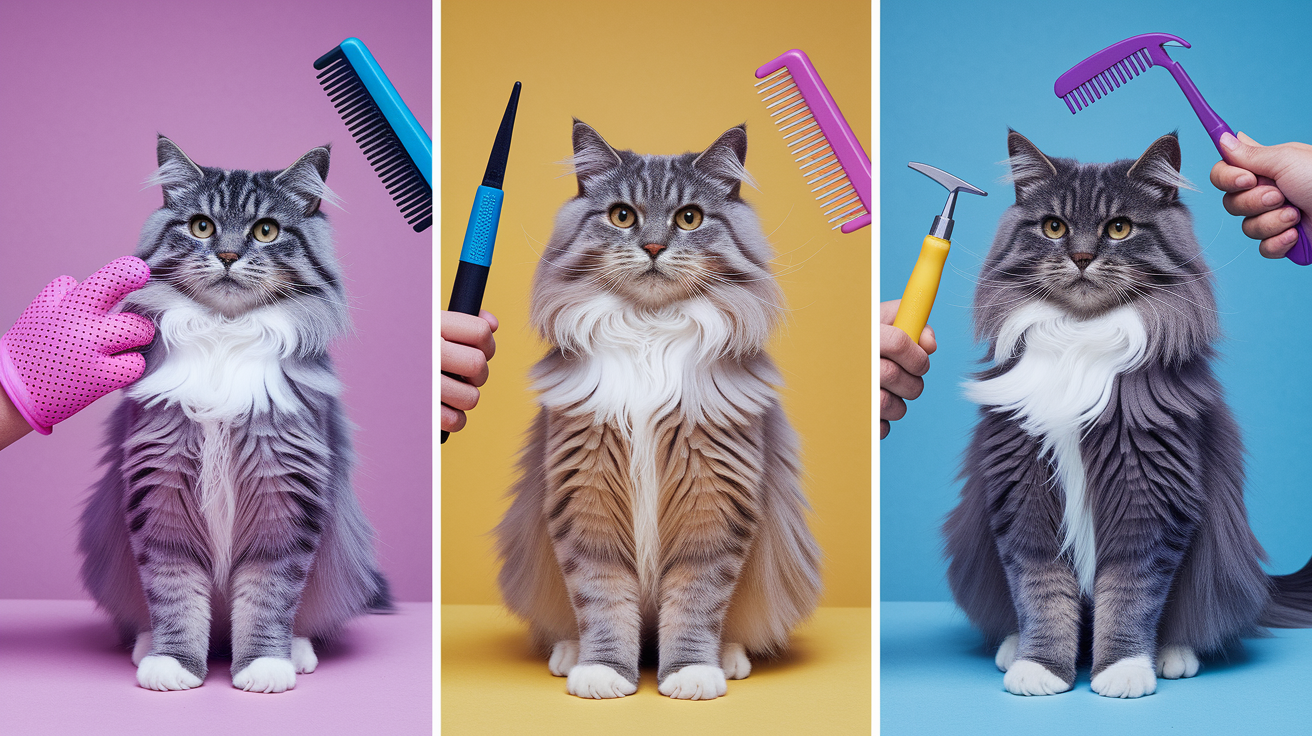
Short haired cats have simple grooming needs. A rubber grooming glove or soft bristle brush works well to lift loose hair and spread oils without irritating the skin. Brush once a week, or a little more during spring and fall shedding. Short coats don’t mat easily, so your main job is managing shed hair and keeping the coat shiny. A quick pass with a flea comb once a week helps catch any hitchhikers early.
Medium haired cats need a bit more attention. Add a slicker brush and a comb to your kit. The slicker grabs loose fur and works through small tangles, and the comb finishes the job by catching anything the slicker missed. Brush medium coats once or twice a week to stay ahead of mats and reduce hairballs. If your cat sheds heavily, throw in a deshedding tool during peak seasons.
Long haired cats require daily brushing to prevent mats and keep the undercoat from turning into a tangled mess. Use an undercoat rake first to thin out the dense underlayer, then follow with a slicker brush to smooth the topcoat. Finish with a comb to check for hidden knots. Keep a dematting tool nearby for any tangles that sneak through. Long coats also benefit from regular sanitary trims around the rear and belly, especially if litter sticks to the fur. If mats become a constant problem, consider scheduling a professional grooming session every few months to reset the coat.
Grooming Tools for Kittens, Seniors, and Anxious Cats
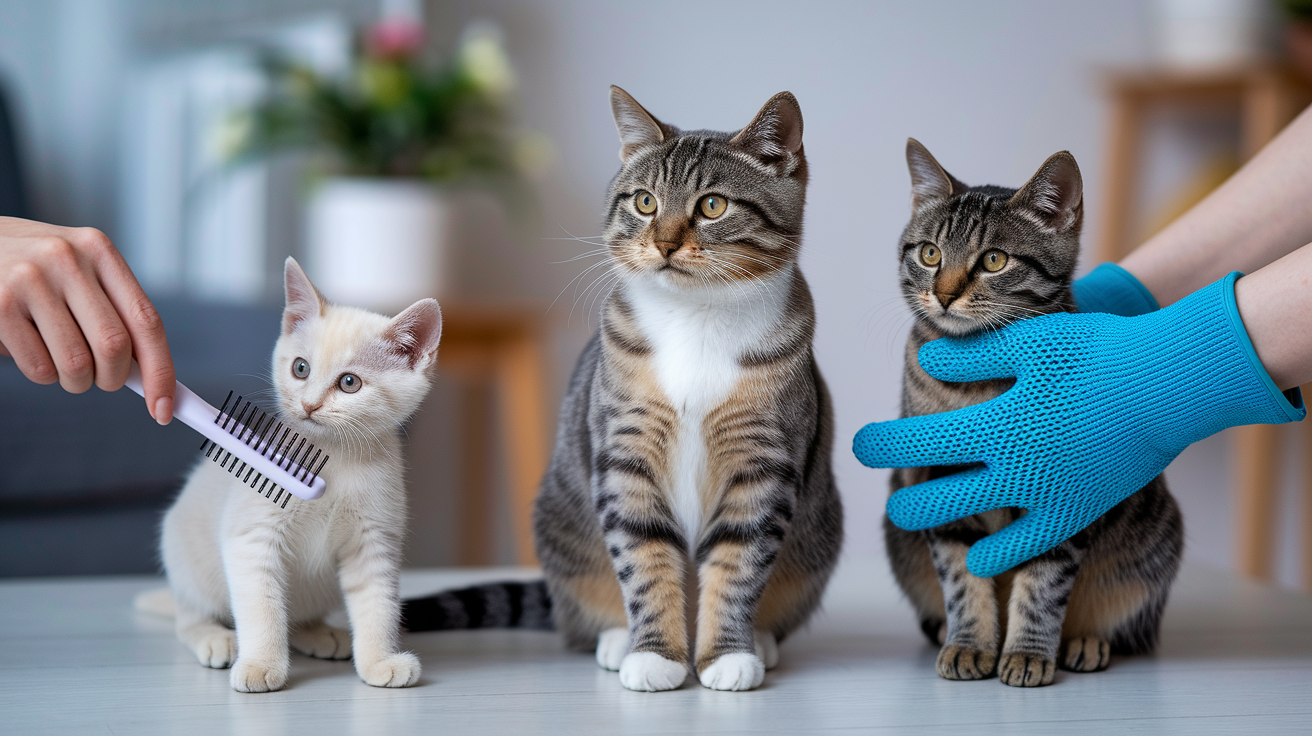
Kittens need extra soft tools and short sessions to build positive grooming habits early. Look for a small kitten brush with very soft bristles or a rubber grooming mitt. Start by brushing for just a minute or two, once or twice a week, and pair it with play or treats so grooming feels like a normal, calm part of their routine. Early handling also makes future nail trims and ear checks much easier.
Senior cats often need more frequent grooming because they’re less flexible and may not groom themselves as thoroughly as they used to. Brush seniors daily if needed, especially around areas they can’t reach easily, and check nails weekly since older cats may not wear them down naturally through activity. Look for mats around the hips, back legs, and tail base. Keep sessions gentle and stop if your cat seems stiff or uncomfortable.
Anxious or shy cats respond better to grooming tools that feel less like grooming. A grooming glove turns petting into brushing, which is less intimidating. Keep sessions short, maybe five minutes at first, and let your cat walk away if they need a break. Avoid noisy tools like electric grinders or clippers until your cat is fully comfortable with quiet tools. If your cat panics or becomes aggressive, stop and try again later, or ask your vet for advice.
Calming tools and supportive techniques for nervous cats include:
• Grooming gloves – Mimic petting and reduce the “tool” feeling.
• Soft bristle brushes – Gentle on skin and less likely to snag or pull.
• Short, frequent sessions – Five minutes daily beats one stressful 30 minute session.
• Treats and calm voice – Reward cooperation immediately and keep your tone steady and quiet.
Selecting Quality Cat Grooming Tools (Materials, Ergonomics, Safety)
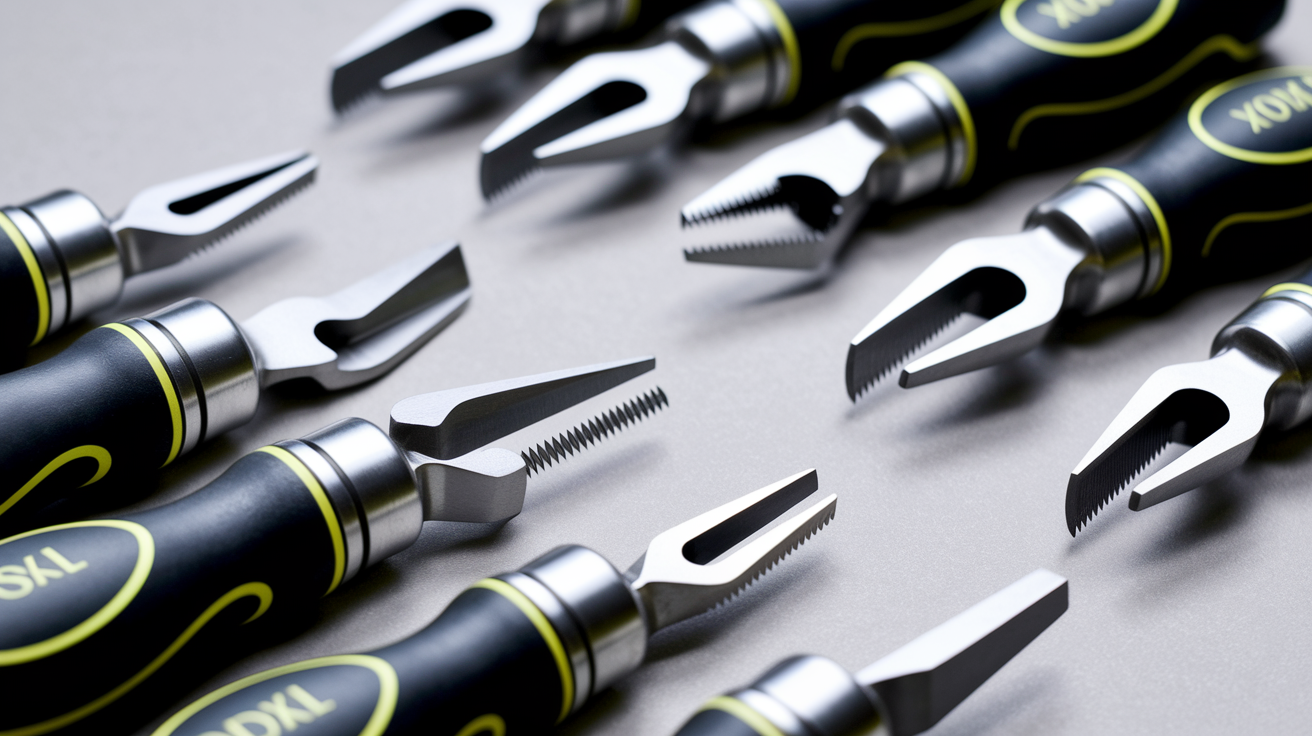
Tool quality matters more than brand names. Start with materials. Stainless steel blades and teeth last longer, resist rust, and are easier to clean than plastic or coated metal. Combs, nail clippers, and flea combs should all be stainless if you can find them. Bristles on brushes should be firm enough to work through the coat but not so stiff they scratch skin. Look for rounded or coated tips, especially on slicker brushes and rakes.
Ergonomics make a real difference during longer grooming sessions. Choose handles that fit your hand comfortably and offer a non slip grip. Lightweight tools reduce hand fatigue, and balanced weight distribution keeps your wrist from cramping. If you’re grooming a large or long haired cat, these details add up quickly. Safety features like nail clipper guards and safety locks prevent accidents and give you more control. Some tools, like durable deshedding brushes, get strong ratings for build quality and longevity, so it’s worth reading a few reviews before buying.
Before you buy, check for these must have features:
• Stainless steel blades or teeth – Longer lasting, rust resistant, and easier to sanitize.
• Rounded or coated bristle tips – Protects skin from scratches and irritation.
• Ergonomic, non slip handle – Comfortable grip for longer sessions and better control.
• Built in safety features – Guards on clippers, locking mechanisms, or protective covers.
• Easy to clean – Removable parts, washable surfaces, or smooth designs without hard to reach crevices.
Maintaining, Cleaning, and Storing Cat Grooming Tools
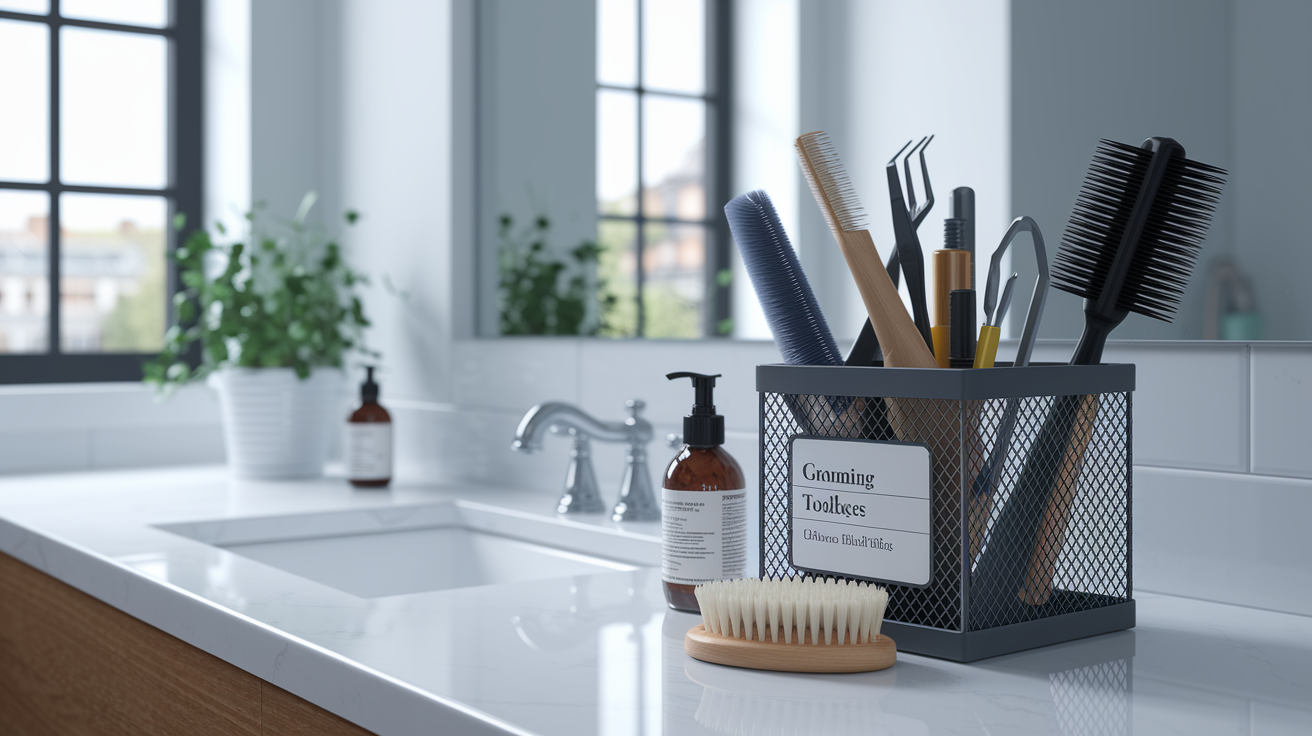
Clean tools work better and last longer. After every grooming session, pull collected hair out of brushes and combs by hand or with a small cleaning tool. Once a week, wash your grooming tools with warm, soapy water, rinse thoroughly, and dry them completely before putting them away. Hair, skin oils, and dander build up fast, and dirty tools can transfer bacteria or cause skin irritation next time you groom.
Store your grooming kit in one place so it’s easy to grab when you need it. Some owners keep tools in a small bin near the cat’s favorite spot, which makes quick touch ups simple and builds a consistent routine. If you store tools near your cat’s food or favorite resting area, your cat may start to connect grooming time with positive, familiar spaces.
Here’s a simple four step care routine to keep tools in good shape:
- Remove hair after each use – Pull hair out of brushes, combs, and deshedding tools by hand or with a cleaning pick.
- Wash tools weekly – Use warm water and mild dish soap, scrub gently, rinse well, and dry fully before storing.
- Check for damage monthly – Look for bent teeth, dull blades, loose handles, or worn bristles and replace as needed.
- Store tools together – Keep everything in one bin or drawer so you’re ready for the next session without hunting for pieces.
Final Words
Grab the slicker brush, comb, deshedding tool, nail clippers, shampoo, ear cleaner, toothbrush, and flea comb. Those core items make up a complete at-home kit and that’s what this post laid out.
Use them regularly. Brush weekly or daily for long-haired cats, check nails weekly, and spot-clean with wipes as needed. Avoid harsh electric dematting tools and follow safe trimming steps.
With these cat grooming tools every owner needs, you’ll keep your cat comfy, cut down on hairballs, and build a calm grooming routine you can stick with.
FAQ
Q: What equipment do you need to groom a cat?
A: The equipment you need to groom a cat includes a slicker brush, comb, nail clippers, cat-specific shampoo, ear cleaner, toothbrush and toothpaste, grooming wipes, and a flea comb. These are safe, basic tools for home care.
Q: What is the best tool to groom a cat?
A: The best tool to groom a cat depends on coat type. A slicker brush is the most versatile for removing loose fur and preventing hairballs, while deshedding tools suit heavy-shedding coats.
Q: What are the 10 things cats need?
A: The 10 things cats need are food, fresh water, a clean litter box, vet care, safe ID or microchip, a scratching post, comfy resting spots, toys, regular grooming tools, and daily mental enrichment.
Q: What does a full cat grooming include?
A: A full cat grooming includes brushing or deshedding, nail trimming, ear cleaning, teeth brushing or wipes, spot bathing if needed, mat removal, and a final check for skin, fleas, or irritation.