

That “chicken dinner” on the bag may contain far less chicken than you think.
Learning to read dog food labels is one of the simplest ways to make healthier choices for your dog.
You don’t need a nutrition degree—just a few focused minutes and a quick checklist.
This guide shows exactly where to look: product names, ingredient order, the guaranteed analysis, AAFCO statements, and feeding directions, so you can choose food that matches your dog’s needs and skip the marketing hype.
Step-by-Step Guide to Understanding Dog Food Labels
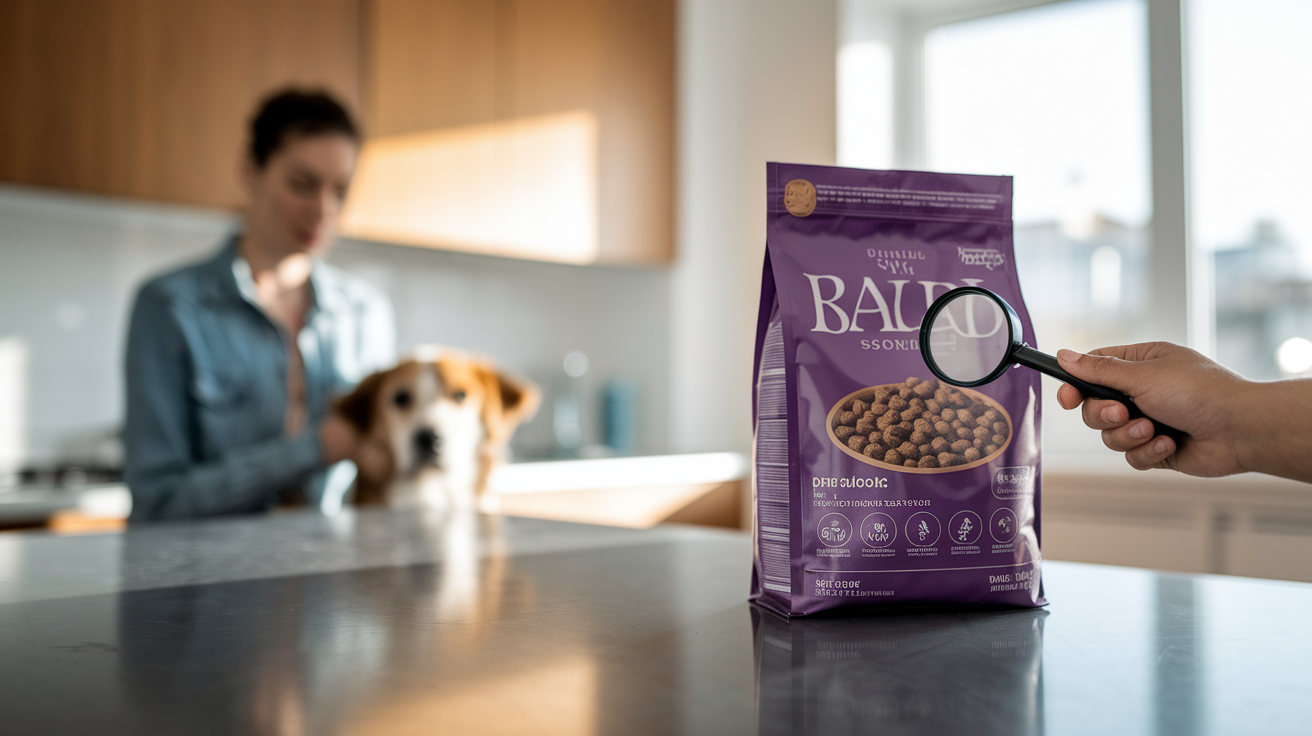
Learning to read a dog food label is one of the easiest ways to make better choices for your pet. You don’t need a nutrition degree. Just five focused minutes before you buy.
The product name actually tells you more than you’d think. AAFCO rules link the name directly to how much of that ingredient you’re getting. “Chicken for Dogs” means at least 95% chicken. “Chicken Dinner” or “Chicken Entrée”? Only 25% minimum. “Dog Food with Chicken” drops to just 3%. And “Chicken Flavored” means there’s basically no actual chicken, just flavoring. So a plain sounding name can mean more meat than something that sounds fancy.
Here’s how to scan the whole label quickly:
- Check the product name and use those AAFCO percentages to guess how much of that ingredient is really there.
- Read the ingredient list top to bottom. Ingredients show up by weight before cooking, so the first five are what matters most. You want a named protein like chicken, beef, or lamb meal up top.
- Look at the Guaranteed Analysis panel for minimum protein and fat, maximum fiber and moisture. More protein and healthy fat usually means more meat, less filler.
- Find the AAFCO nutritional adequacy statement. It tells you if the food is “complete and balanced” and for which life stage: puppy, adult, or pregnant/nursing dogs.
- Check the feeding guidelines. These show daily servings by weight and calories per serving. Start there and adjust based on your dog’s activity.
- Note the lot number and best by date. Snap a photo. If there’s a recall, you’ll know if your bag is affected.
Reading Dog Food Ingredient Lists for Quality Assessment
Ingredients appear by weight before cooking. That means in wet food, water often comes first because it’s heavy. In dry food, the top ingredient is usually the main protein or carb. And that top spot? It matters a lot.
Named proteins beat vague ones every time. “Chicken” and “chicken meal” are clear. “Meat meal” or “poultry by-product meal” could be anything, and quality varies wildly. Chicken meal actually has more protein per ounce than whole chicken because the moisture’s been cooked out. By-products like liver and gizzards can be good organ meat if they’re USDA approved or human grade. Just avoid anything labeled generically.
Watch for these when you scan an ingredient list:
Named whole meats or meals in the top three. Chicken, beef, lamb meal, salmon.
Healthy fats from real sources. Chicken fat, fish oil, flaxseed oil for omegas.
Whole grains or low glycemic carbs. Brown rice, oats, sweet potatoes. Not just corn or wheat gluten.
Real fruits and vegetables. Blueberries, carrots, pumpkin for vitamins and fiber.
Red flags? Vague protein terms like “meat,” “meat meal,” or “animal digest.”
Fillers in the first five ingredients. Corn, wheat, soy with no named meat ahead of them.
Artificial preservatives, colors, flavors. BHA, BHT, ethoxyquin, Red 40, Yellow 5. Anything you wouldn’t recognize in your own kitchen.
Understanding Guaranteed Analysis on Dog Food Labels
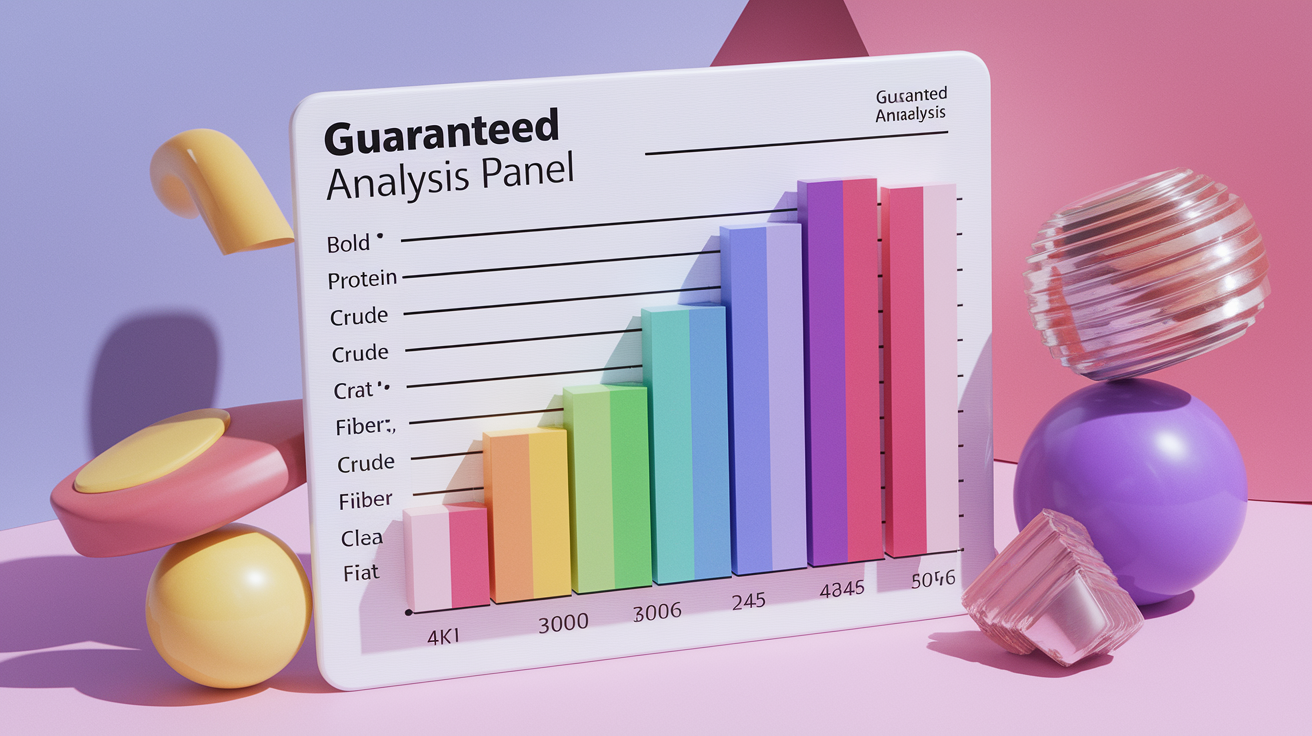
The Guaranteed Analysis panel shows minimum or maximum percentages of crude protein, crude fat, crude fiber, and moisture. “Crude” just means these numbers come from lab tests. It’s the fastest way to compare two bags side by side.
| Nutrient | What It Tells You |
|---|---|
| Crude Protein (minimum %) | How much protein the food delivers. Higher protein usually means more meat, especially if named meat or meal comes first on the ingredient list. |
| Crude Fat (minimum %) | Energy density and support for skin, coat, and absorption of fat soluble vitamins. Look for named fat sources in the ingredients. |
| Crude Fiber (maximum %) | Indigestible plant material that supports digestion. Really high fiber can signal heavy filler like corn or wheat hulls. |
| Moisture (maximum %) | Water content. Wet food can be 75 to 80% moisture. Dry food is usually 10 to 12%. Higher moisture dilutes other nutrients per serving. |
If you’re comparing wet food to dry food, convert both to dry matter basis. Subtract the moisture percentage from 100 to find dry matter, then divide each nutrient by that percentage. A wet food with 8% protein and 75% moisture has about 32% protein on a dry matter basis. That’s actually closer to a dry food listing 28% protein. Dry matter math levels things out so you’re comparing nutrition, not water.
Some labels list specific micronutrients like omega 3s, calcium, or added vitamins. If omega 3 or calcium shows up way down in the ingredient list, the actual amount is probably low. Cross check the Guaranteed Analysis for listed percentages to see if those nutrients made it in meaningful amounts.
Interpreting AAFCO Statements and Nutritional Adequacy Claims
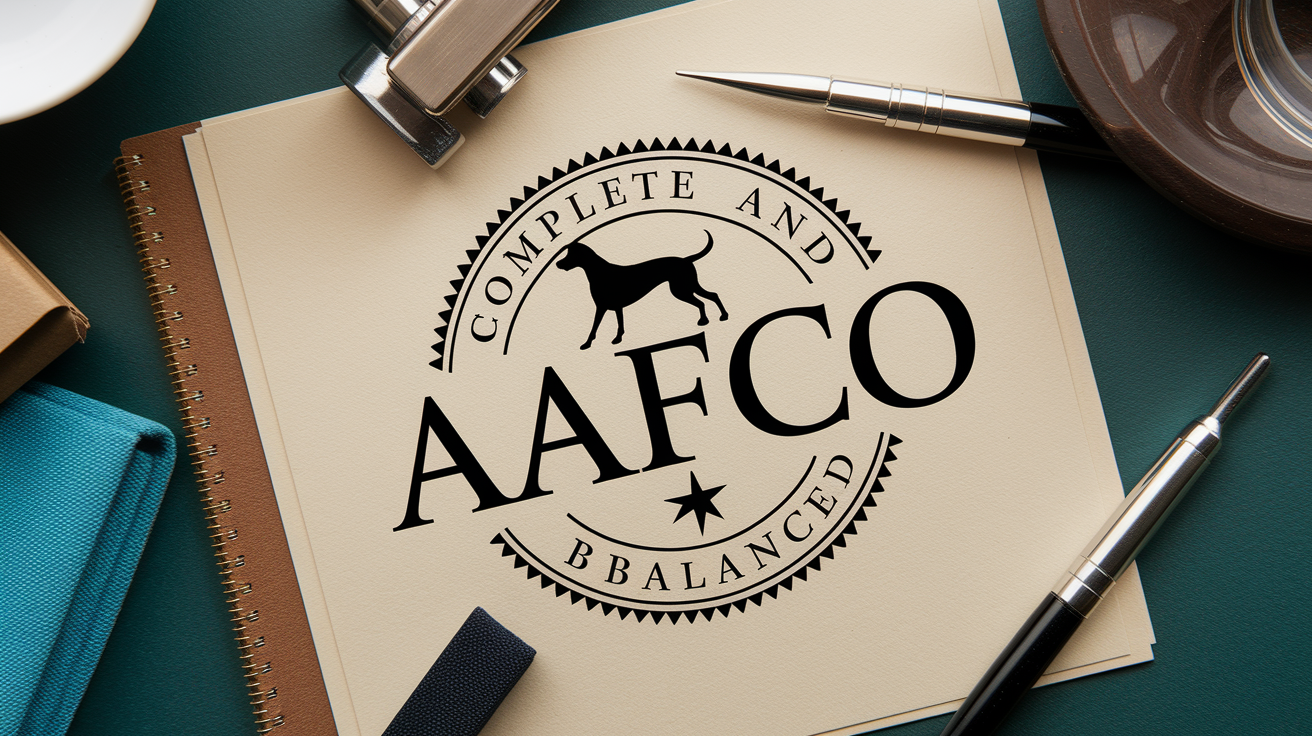
The AAFCO nutritional adequacy statement is the one sentence that tells you if the food is designed to sustain your dog’s life stage. “Complete and balanced” means the formula meets AAFCO nutrient profiles for that stage. Puppy, adult maintenance, or gestation and lactation.
If it says “formulated to meet” AAFCO standards, the recipe was designed to hit those nutrient targets on paper. If it says “feeding trials,” the company actually fed the food to real dogs under controlled conditions to confirm they stayed healthy. That’s a higher level of proof but less common.
Life stage matters because puppies need more calories, protein, calcium, and phosphorus than adult dogs. And pregnant or nursing dogs have completely different energy demands. Adult maintenance formulas are built for everyday health in a mature dog with normal activity. The FDA has noted there’s little evidence that senior dogs need separate formulations, so most “senior” foods still meet the adult maintenance profile. Sometimes with tweaks like added joint support or reduced calories. If your dog is healthy and aging, an adult maintenance food often works fine. But always check with your vet before switching.
How to Read Dog Food Feeding Guidelines and Portion Instructions
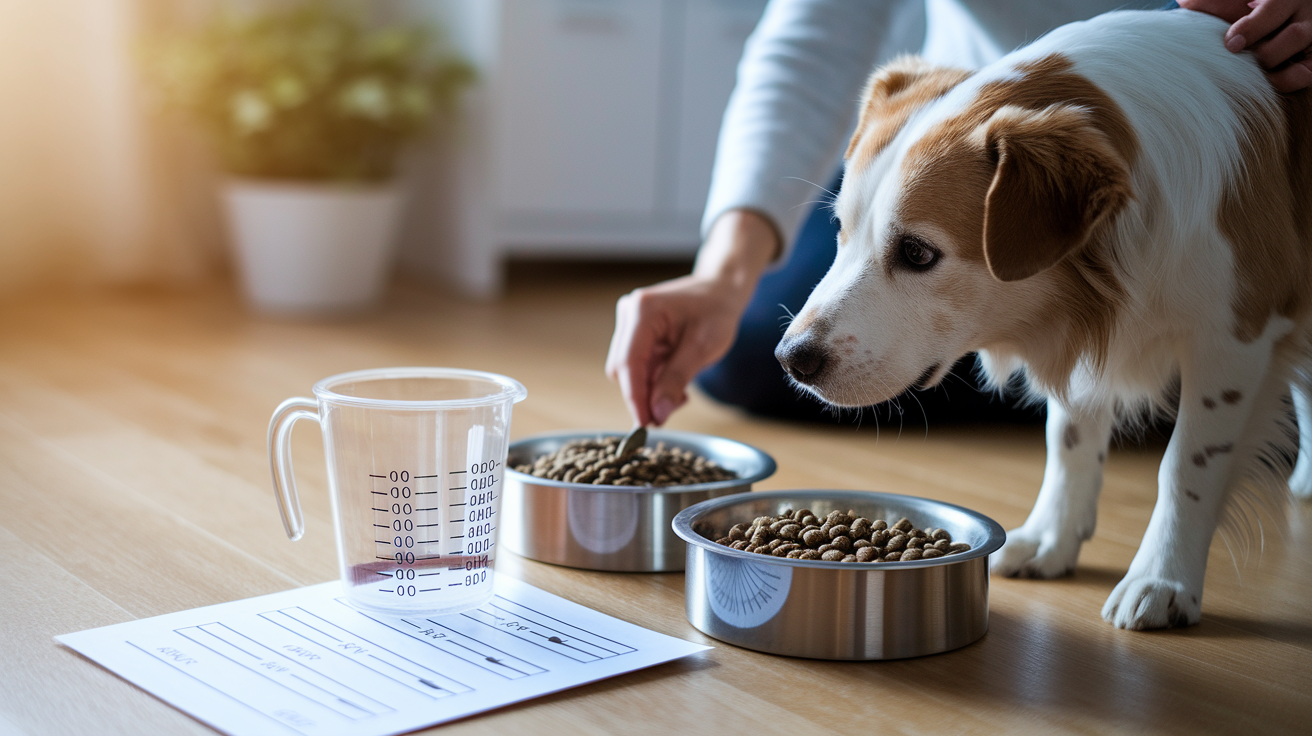
Feeding guidelines give you a daily starting point based on your dog’s weight, but they’re estimates. Not prescriptions. Labels usually list recommended servings in cups or grams per day, sometimes split into multiple meals. They’ll include calorie information as kilocalories per kilogram or per cup. One kilocalorie equals one food calorie. If you see “3,500 kcal/kg,” divide by the number of cups in a kilogram of that food to find kcal per cup. Or just look for the per cup number if it’s listed separately.
Activity level changes everything. A working dog or young active adult might need 20 to 30 percent more than the chart suggests. A couch potato or a dog recovering from illness might need less. Body condition is your best feedback. You should be able to feel your dog’s ribs without pressing hard and see a visible waist from above. If you’re not sure, your vet can show you what ideal looks like for your dog’s breed and build.
Start with the chart’s recommended amount for your dog’s current weight and life stage.
Divide the daily total into two or three meals to support steady energy and digestion.
Watch body condition over two weeks. If ribs are getting hard to feel, cut back by 10 percent. If ribs are too visible, add 10 percent.
Adjust for activity. Add a small scoop on days with long walks, training, or play.
Always provide fresh, clean water. Hydration affects digestion, energy, and nutrient absorption.
Recognizing Additives, Preservatives, and Label Claims on Dog Food Packaging
Dog food labels are full of claims that sound good but don’t always mean what you think. “Natural” has no strict legal definition in pet food. It can appear on bags with synthetic vitamins or processed ingredients. “Organic” is more tightly regulated and means ingredients meet USDA organic standards, which prohibit synthetic pesticides and require certified handling. But organic doesn’t automatically mean nutritionally superior. “Human grade” signals that every ingredient and the processing facility meet FDA standards for human food. That usually means higher quality control and traceable sourcing.
Preservatives keep food safe by preventing rancidity and mold. But not all preservatives are the same. Natural options like mixed tocopherols (vitamin E), ascorbic acid (vitamin C), and rosemary extract are common in premium foods and pose no known risk. Synthetic preservatives like BHA, BHT, and ethoxyquin have been flagged in some studies for potential health concerns. Many brands have moved away from them. If you see artificial colors like Red 40, Yellow 5, Blue 2, or vague “artificial flavors,” ask yourself why they’re there. Dogs don’t care if kibble is brown or bright orange. Flavor should come from real meat, not lab made compounds.
“Grain free” became popular in the past decade, but recent research has linked some grain free diets to dilated cardiomyopathy in certain dogs. Especially formulas heavy in peas, lentils, and potatoes. Whole grains like brown rice, oats, and barley provide energy, fiber, and B vitamins without the risks tied to exotic or high legume formulas. If your dog has a diagnosed grain allergy, grain free makes sense. For most dogs, grains aren’t the enemy. Work with your vet to choose a formula based on your dog’s actual health needs, not trends.
Using Label Information to Compare Dog Food Brands
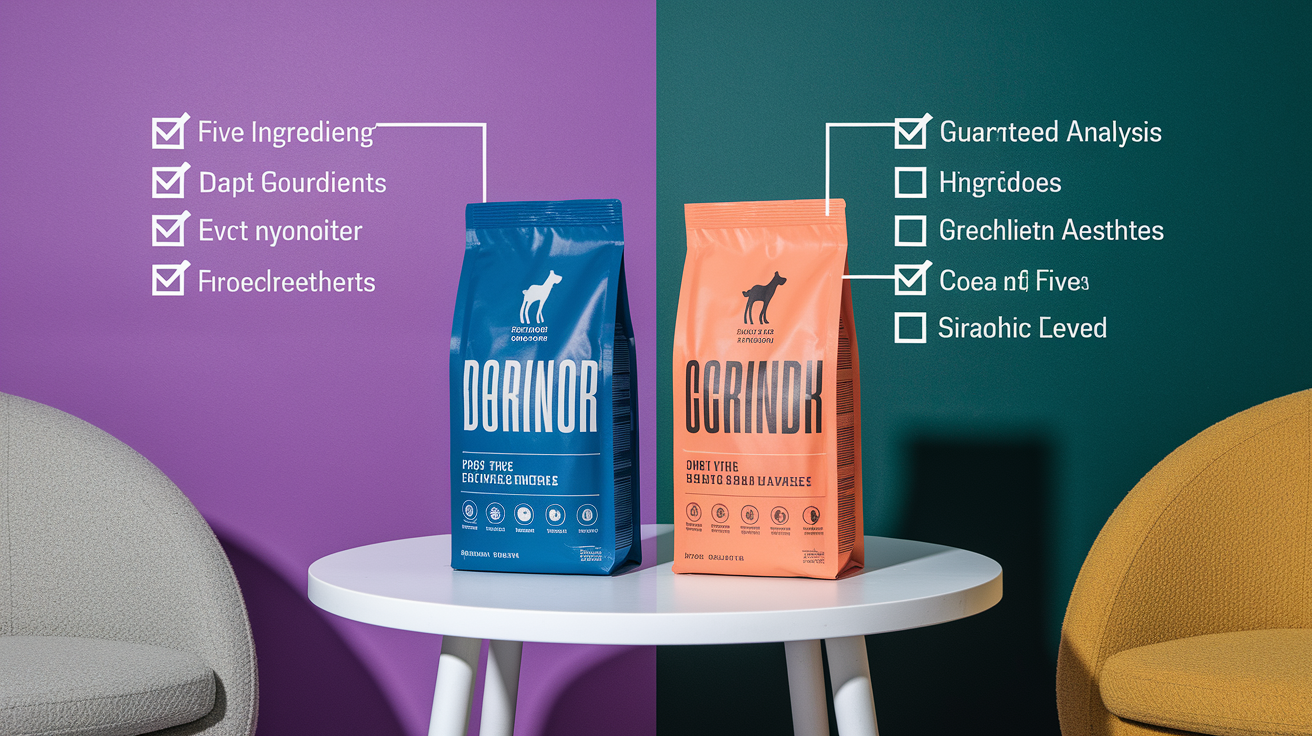
Once you know how to read a label, you can line up two or three brands and make an honest comparison. The goal isn’t to find the most expensive food or the one with the fanciest marketing. It’s to match ingredient quality, nutrient density, and safety standards to your dog’s age, activity, and budget.
Compare the first five ingredients. The brand with a named protein or named meal first, followed by whole grains, healthy fats, and real produce wins over one that starts with corn, wheat, or vague meal.
Check the Guaranteed Analysis for protein and fat minimums. A food with 28% protein and 15% fat usually delivers more energy and muscle support than one with 20% protein and 8% fat, assuming similar moisture.
Look for the AAFCO statement. If one food is “complete and balanced for all life stages” and another only meets “adult maintenance,” and you have a puppy, the choice is clear.
Scan for red flag ingredients. If one label lists by-products, artificial colors, and corn in the top five while another lists chicken, chicken meal, and sweet potatoes, the second is a better foundation.
Note the calorie content. A food with 400 kcal per cup costs less per day to feed than one with 300 kcal per cup, even if the price per bag looks higher.
Factor in your dog’s response. All the label analysis in the world doesn’t replace watching your dog’s coat, energy, stool quality, and body condition after a few weeks on the food.
If you’re comparing a budget brand to a premium brand, run through this checklist for both. Sometimes a mid tier food with clear ingredients and solid Guaranteed Analysis numbers outperforms a premium brand that relies on marketing buzzwords and vague sourcing.
Storage, Lot Numbers, and Safety Information on Dog Food Labels
Every bag and can carries a lot number, production date, and best by or expiration date. Usually printed or stamped near the seal. These numbers matter more than most people realize. If a recall is issued, the lot number tells you immediately whether your food is affected. One study found that 75 percent of dry dog food samples contained some level of mycotoxins, toxic compounds produced by mold. Storage and freshness aren’t optional.
Before you leave the store or accept a delivery, check the best by date. “Best by” means peak quality, not that the food is unsafe after that date. But nutrients do degrade over time, especially fats, which can go rancid. “Expiration” or “use by” is a harder cutoff. Write the lot number on your phone or tape it inside a cabinet door so you can reference it if needed. If you buy in bulk, rotate bags so the oldest gets used first.
Keep dry food in a sealed container in a cool, dry place away from heat and humidity. Mold grows fast in warm, moist environments.
Refrigerate opened wet food and use it within two to three days. Bacteria multiply quickly once a can is open.
Don’t buy dented, torn, or swollen packaging. Damage can compromise the seal and invite contamination.
Don’t mix old and new batches in the same container. Oils from older kibble can speed up rancidity in fresh food.
Check for changes in smell, color, or texture. If the food smells off, looks moldy, or feels sticky or greasy, throw it out. Your dog’s nose is sensitive. They may refuse spoiled food before you even notice.
Final Words
Start by scanning the product name, then read the ingredients, Guaranteed Analysis, AAFCO statement, feeding guide, and storage/lot info. Go top to bottom so nothing important gets missed.
Pay close attention to the top five ingredients, whether a named meat or meal is listed, and how moisture can reorder ingredients in canned foods. Use the label to compare calories, additives, and protein quality.
Keep the six-step read handy. Practicing how to read dog food labels takes a few minutes and helps you choose better food for your dog.
FAQ
Q: How to read nutrition labels on dog food?
A: Reading nutrition labels on dog food means scanning the product name, ingredients top-to-bottom, Guaranteed Analysis, AAFCO adequacy statement, feeding guide, and lot/storage info; focus on named proteins and dry matter comparisons.
Q: What is the 25 rule for pet food?
A: The 25 rule for pet food means items labeled “dinner,” “entrée,” or similar must contain at least 25% of the named ingredient by weight (before processing), a lower threshold than the 95% rule.
Q: Is 30% protein too high for dogs?
A: A 30% protein level is not automatically too high; suitability depends on your dog’s life stage, activity, and health. Compare protein on a dry matter basis and check with your vet for medical concerns.
Q: What should top 3 ingredients be in dog food?
A: The top three ingredients should be a named animal protein (for example chicken or lamb), a healthy fat source (chicken fat or fish oil), and digestible carbs or vegetables like brown rice or carrots.