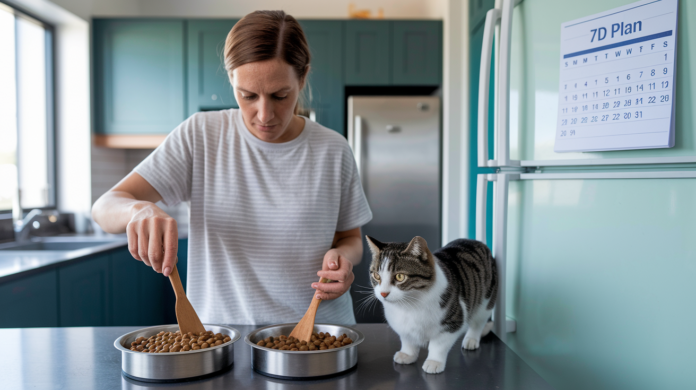

Thinking of switching your dog or cat to premium food overnight?
That often leads to upset tummies because their gut bacteria are used to the old diet.
A slow, measured change helps avoid diarrhea, vomiting, and appetite loss.
This post gives a clear 7-day schedule plus slower options for sensitive pets, what signs to watch, and simple tricks for picky eaters.
Follow the plan and you’ll finish the switch with fewer problems, accurate portions, and a happier pet.
Step-by-Step Transition Schedule for Dogs and Cats

Your pet’s gut is home to billions of bacteria that handle the job of breaking down food. These microorganisms get really good at processing whatever your dog or cat has been eating. Throw in new ingredients and totally different nutrient ratios all at once, and the bacterial population can’t keep up. That’s when you see diarrhea, gas, vomiting, and a miserable pet. A slow transition gives the microbiome time to adjust to new proteins, fats, and fiber.
7-Day Transition Schedule:
-
Days 1–2: Mix 75% old food with 25% new food. If your dog eats 2 cups daily, that’s 1.5 cups old plus 0.5 cups new.
-
Days 3–4: Mix 50% old with 50% new. Same 2-cup example becomes 1 cup of each.
-
Days 5–6: Mix 25% old with 75% new. Now you’re at 0.5 cups old and 1.5 cups new.
-
Day 7: Serve 100% new food. Done.
-
Sensitive stomachs? Stretch each phase by 1–2 extra days. You’re looking at 10–14 days total.
-
Really sensitive pets: Add just 10% new food every 2–3 days. The whole thing takes 3–4 weeks.
-
Use a kitchen scale if you can. Premium foods are calorie-dense, so you’ll need smaller portions than budget brands. Measuring by weight keeps things accurate.
Cats usually need more time than dogs. Their digestive systems aren’t built for variety the way dogs’ are. Dogs evolved as scavengers who’d eat whatever they found. Cats are obligate carnivores with short intestinal tracts designed for consistent meat-based meals. If your cat hesitates or shows mild digestive weirdness, slow down right away. Hold each mixing ratio for 4–5 days instead of 2. Watch for decreased appetite, which shows up faster in cats and gets serious quickly.
This schedule works for wet or dry premium foods. Wet food transitions sometimes go smoother because the moisture and smell make new formulas more appealing. Same percentage ratios apply either way.
Monitoring Your Pet’s Digestive Health During the Transition

Watch your pet daily during the transition. You’ll catch problems early and adjust before minor issues turn into bigger ones.
| Symptom | Normal (Keep Going) | Warning Sign (Pause or Call Vet) |
|---|---|---|
| Stool Changes | Slightly softer stools for 2–3 days; small changes in color or smell | Watery diarrhea lasting more than 3 days; blood in stool; black, tarry appearance |
| Vomiting | One isolated episode of undigested food within 30 minutes of eating | Vomiting more than once in 24 hours; vomit with blood or bile; projectile vomiting |
| Appetite Changes | Eating 80–90% of normal portions; slight hesitation before eating | Refusal to eat for 24+ hours (cats); 48+ hours (dogs); dramatic weight loss |
| Gas | Mild increase in flatulence for 3–5 days | Severe, painful bloating; distended abdomen; constant discomfort |
| Energy Levels | Slightly quieter for 1–2 days as digestion adjusts | Extreme lethargy; can’t stand or walk normally; unresponsiveness |
| Behavioral Changes | Increased water drinking; more frequent litter box or outdoor trips | Hiding for long periods; aggression when approached; constant crying or whining |
If mild symptoms show up (stools softer than usual but still formed), pause and stay at your current mix for 2–3 extra days. Say symptoms start on day 4 when you’re at 50/50. Keep that exact ratio through days 4, 5, 6, and 7 before moving to 25% old / 75% new. Most pets adjust during those extra days, and you prevent things from getting worse. Keep fresh water available. Digestive changes make pets thirsty.
Call your vet the same day if you see bloody diarrhea, vomiting more than once, complete appetite loss, or extreme lethargy. Cats face something called hepatic lipidosis. When a cat stops eating for just 24–48 hours, the liver can start failing as it tries to metabolize stored fat for energy. Dogs handle brief fasting better, but any pet refusing food past their threshold needs professional help, not a wait-and-see approach.
Strategies for Picky Eaters and Food-Resistant Pets
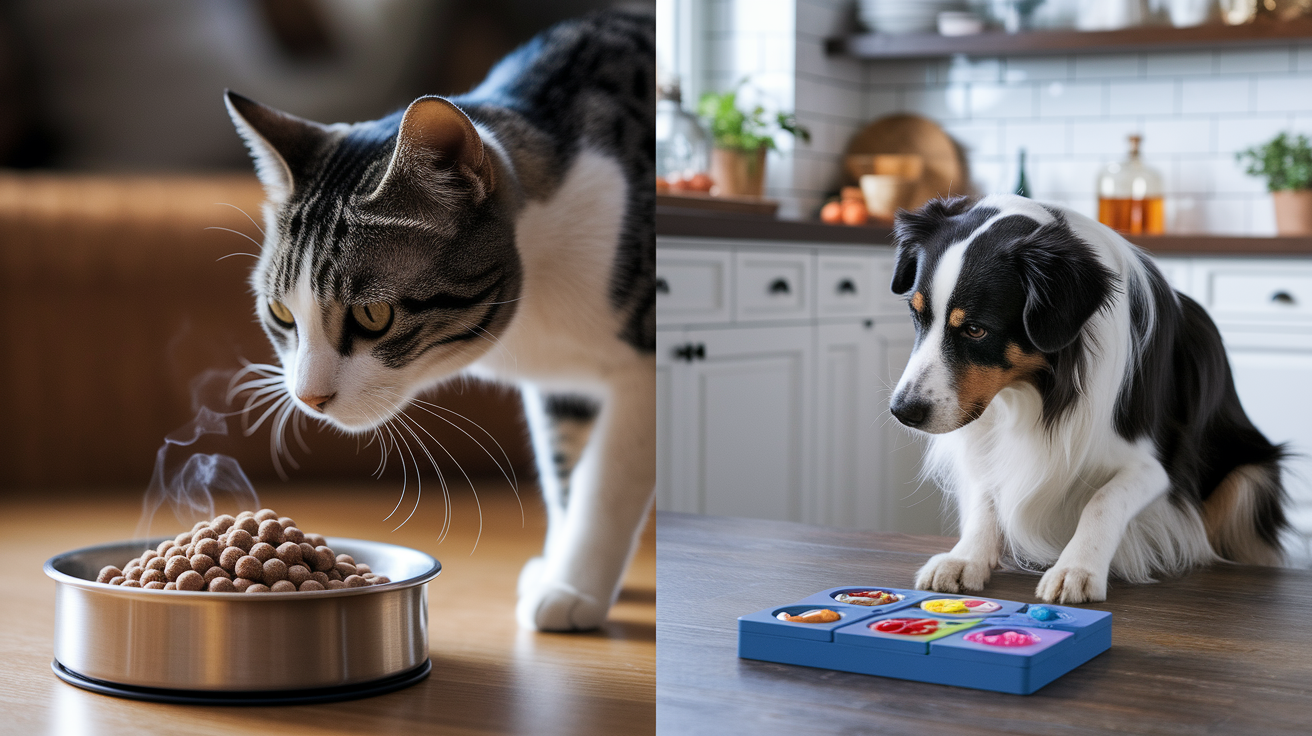
Food refusal doesn’t always mean something’s wrong. Many pets just prefer what they know, and premium foods taste different from the budget stuff they’re used to.
Techniques for Food-Resistant Cats
Warm wet premium food to about 100°F by placing the dish in a bowl of hot water for 2–3 minutes. Heat releases smell compounds that trigger appetite in cats who’d normally hunt warm prey. Add one teaspoon of low-sodium chicken broth, a pinch of bonito flakes, or a tiny sprinkle of nutritional yeast. These make new formulas smell more like “food” to a hesitant cat. Never let a cat go more than 24 hours without eating. If your cat ignores the enhanced food for a full day, offer a small amount of the old food to prevent liver problems, then try again the next day with an even smaller percentage of new food.
Techniques for Stubborn Dogs
Hand-feed the first few bites. It creates positive associations and makes mealtime feel social. Use puzzle feeders or slow-feed bowls to turn eating into a rewarding challenge instead of boring routine. Set scheduled meal times. Put the food down for exactly 20 minutes, then remove it whether your dog finished or not. No more free-feeding. This teaches that meals are limited opportunities, which increases motivation to eat what’s offered. Most dogs adapt within 3–4 meals.
If strong aversion persists after you’ve tried warming, flavor enhancers, scheduled feeding, and hand-feeding for 5–7 days, the specific premium food might not suit your pet’s taste. Some animals have real preferences. A dog who loves poultry-based formulas might refuse fish recipes. If enhancement techniques fail after a week, consider a different premium brand with a protein source closer to the old food.
Understanding the Benefits of Premium Pet Food
Premium pet food uses better ingredients and stricter manufacturing than economy brands. That translates to better nutrition and health for your dog or cat.
Key ingredient quality differences:
- Named protein sources: Premium foods list “chicken,” “salmon,” or “beef” first instead of vague terms like “meat meal” or “poultry by-product.”
- Minimal fillers: Little to no corn, wheat, and soy, which provide calories but not much your pet can actually use.
- No artificial additives: Premium formulas skip synthetic colors (which only make humans happy), artificial flavors, and chemical preservatives like BHA and BHT.
- Higher digestibility: Quality proteins and fats get absorbed more efficiently. Your pet extracts more nutrition from smaller portions.
- Concentrated nutrients: Premium foods pack more vitamins, minerals, and amino acids per cup. Feeding guidelines often recommend less food than budget brands.
- Transparent sourcing: Many premium brands tell you where ingredients come from and use human-grade production facilities.
Within 4–8 weeks of eating premium food, most pet owners notice a shinier, softer coat as essential fatty acids improve skin and fur. Energy levels stabilize. Dogs often show increased playfulness and stamina. Cats display more consistent activity instead of extreme bursts and crashes. Stool quality improves with better-formed, smaller waste because the body absorbs more and excretes less. Healthy weight becomes easier to maintain since nutrient-dense food satisfies hunger with fewer calories. Pets with food sensitivities often see reduced itching, ear infections, and gastrointestinal upset when allergens and low-quality ingredients are removed.
Premium food’s higher nutrient density means smaller portions than economy brands. A 50-pound dog might eat 3 cups of budget kibble daily but only 2 cups of premium food to get the same calories and nutrition. Always follow the feeding guidelines on your new food’s package and adjust based on your pet’s body condition.
Troubleshooting Common Transition Challenges

Not every pet follows the standard 7–10 day schedule. Individual digestive systems vary.
When to Extend the Transition Timeline
Pets with sensitive stomachs, seniors with slower metabolisms, and any dog or cat with pre-existing digestive conditions like inflammatory bowel disease or pancreatitis often need 3–4 weeks. Instead of changing the food ratio every 2 days, hold each phase for 4–5 days. Days 1–5: 75% old / 25% new. Days 6–10: 50% old / 50% new. Days 11–15: 25% old / 75% new. Days 16–20: 100% new food. This gentler progression gives the gut microbiome more time to establish new bacterial populations. Some pets need even slower advancement. If you notice mild but persistent soft stools at any phase, extend that specific ratio for a full week before moving forward.
Managing Setbacks and Backwards Steps
A setback happens when symptoms that were improving suddenly return or worsen. Stools were firming up nicely, then became loose again after advancing to the next ratio. When this occurs, move back to the previous mixing percentage that didn’t cause problems. If symptoms appeared at the 50/50 mix, go back to 75% old / 25% new and hold there for 5–7 days until stools normalize and appetite is strong. Then try a smaller increment (maybe 65% old / 35% new) instead of jumping straight to 50/50. Patient adjustments almost always succeed where forced timelines fail.
If you’ve attempted a 3–4 week transition with careful attention to setbacks and your pet still shows persistent symptoms, the issue might be a specific ingredient in the premium food rather than the transition process. Common culprits include novel protein sources your pet hasn’t encountered before or legumes like peas and lentils that some animals don’t digest well. Consider a different premium brand with a limited-ingredient formula or a protein that closely matches your old food.
When to Consult Your Veterinarian

Pets with diabetes, chronic kidney disease, liver disease, pancreatitis, inflammatory bowel disease, or known food allergies need vet approval before transitioning to any new food. These conditions require specific nutritional profiles. Diabetic pets need consistent carbohydrate content to match insulin doses. Kidney patients require controlled phosphorus and protein levels. Animals with IBD often need hydrolyzed proteins or novel protein sources. A food that’s premium quality for a healthy pet might be dangerous for a pet with medical needs. Your vet can review the new food’s guaranteed analysis and ingredient list to confirm it matches your pet’s therapeutic requirements.
Seek same-day veterinary care if your pet vomits blood, passes black or tarry stools (a sign of digested blood from the upper GI tract), shows extreme lethargy or weakness, has seizures, or develops a visibly distended and painful abdomen during the transition. For appetite loss, the threshold is 24 hours for cats and 48 hours for dogs. If your pet refuses all food for that duration, call your vet even if no other symptoms are present. These signs indicate serious complications that won’t resolve on their own.
Bring the new premium food’s packaging or a photo of the nutritional label to your next vet appointment. Your veterinarian can compare the protein, fat, fiber, and calorie content to your pet’s ideal nutritional targets and confirm that the transition timeline you’re using is appropriate for your individual animal’s health status and life stage.
Final Words
Start mixing slowly: follow the 7-day ratios, watch for softer stools, and pause for a few days if mild symptoms appear. This helps the gut adjust and cuts risk of upset.
Check daily for appetite, stool, vomiting, or energy changes. Try warming wet food, adding low-sodium broth, or hand-feeding for picky pets. Extend phases for sensitive or senior animals and move back a step if symptoms worsen.
If you’re wondering how to transition to premium pet food, use this plan, keep notes for the vet, and expect better coat and energy in weeks. You’ve got this.
FAQ
Q: What is the 90/10 rule for dogs?
A: The 90/10 rule for dogs refers to a raw feeding guideline of about 90% muscle meat and 10% bone, used to help balance calcium and phosphorus in home-prepared raw diets.
Q: What is the 25 rule for dog food?
A: The 25% rule for dog food means products labeled “dinner,” “platter,” or “entree” must contain at least 25% of the named ingredient by weight before cooking.
Q: What is the 95 rule for dog food?
A: The 95% rule for dog food means products named after a single ingredient (for example “Beef”) must contain at least 95% of that named ingredient by weight, excluding water added for processing.
Q: How long does it take to transition a dog from one food to another?
A: Transitioning a dog from one food to another typically takes 7 to 10 days using gradual mixing; sensitive dogs may need up to 14 days or longer with slower step increases.