

Two meals a day works for most dogs, but not all.
Small, growing, senior, and giant breeds each need different timing and portions to stay healthy, avoid bloating, and keep energy steady.
This post gives clear schedules by age and size, sample times you can use today, portion math, and simple signs that mean it’s time to change or see your vet.
You’ll get step-by-step plans, portion tips, and quick checklists so feeding fits your schedule and your dog’s needs.
Establishing the Ideal Daily Routine for the Best Feeding Schedule
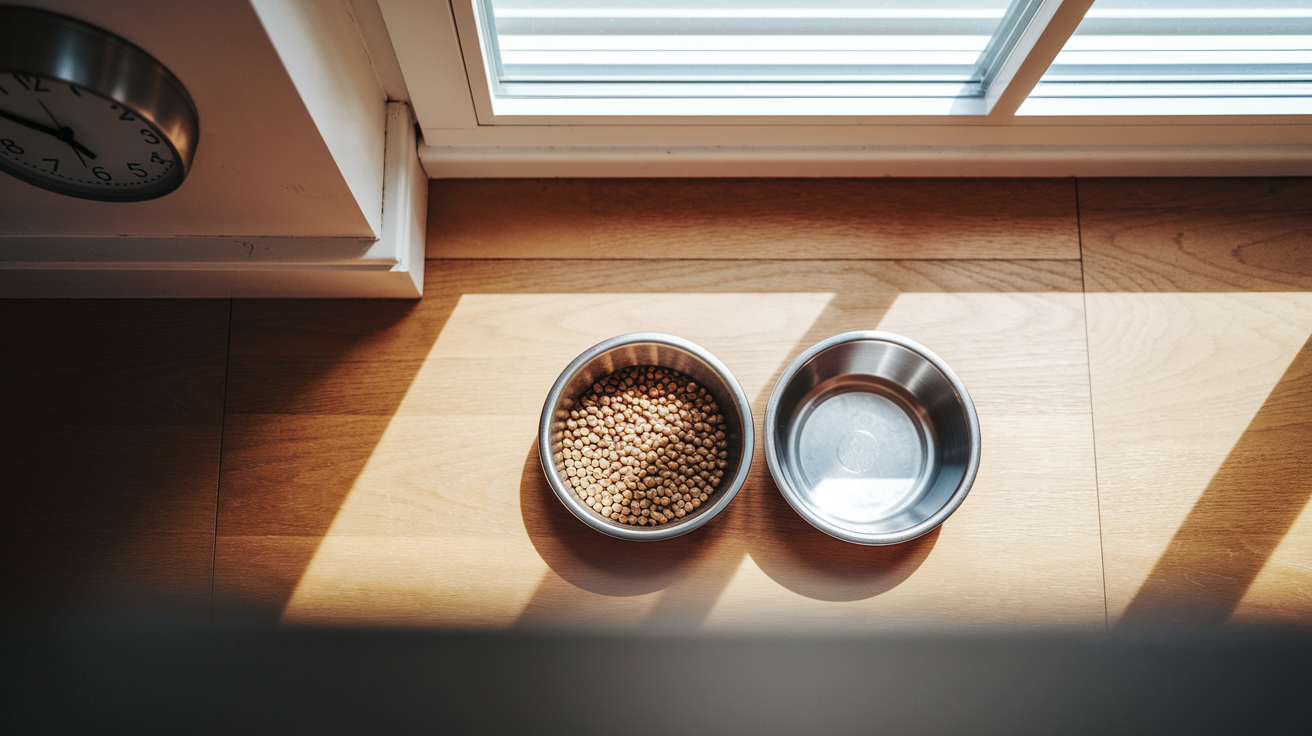
Most adult dogs do fine with two meals a day. You want to space those meals 8–12 hours apart, something like 07:00 in the morning and 18:00 (6:00 PM) in the evening, or maybe 07:00 and 19:00 (7:00 PM). This twice-daily rhythm works for the majority of adult dogs. It keeps their metabolism steady and prevents that long overnight fast from stretching into a full 24-hour gap. When your dog can anticipate morning and evening feeding times, it actually reduces anxiety and begging.
Consistency helps digestion. Feed at the same times every day and your dog’s body learns when to expect food, when to produce digestive enzymes, and when to expect bathroom breaks. You’ll see better weight control, improved nutrient absorption, steadier energy, and easier house training. A regular schedule also means you’ll notice appetite changes quickly, which can be an early sign of illness or stress.
Timing meals around exercise matters for safety. Don’t feed 1 hour before vigorous activity and wait 1–2 hours after feeding before high-energy play or runs. This spacing reduces the risk of bloat (also called GDV), a life-threatening stomach twist that’s more common in deep-chested breeds but can happen to any dog. Keep meals calm and rest periods peaceful.
Example twice-daily schedule: 07:00 and 19:00, giving you a 12-hour gap.
Adjusting for your household: If you leave for work at 06:00, feed at 06:00 and again when you return around 17:00 or 18:00.
Minimum and maximum spacing: 8 hours is the minimum gap between meals, 12 hours is the maximum for most dogs.
When to modify timing: If your dog begs excessively or seems hungry much earlier, shift mealtimes by 30 minutes every few days until you find a sustainable window.
Feeding Frequency by Life Stage for an Effective Dog Schedule
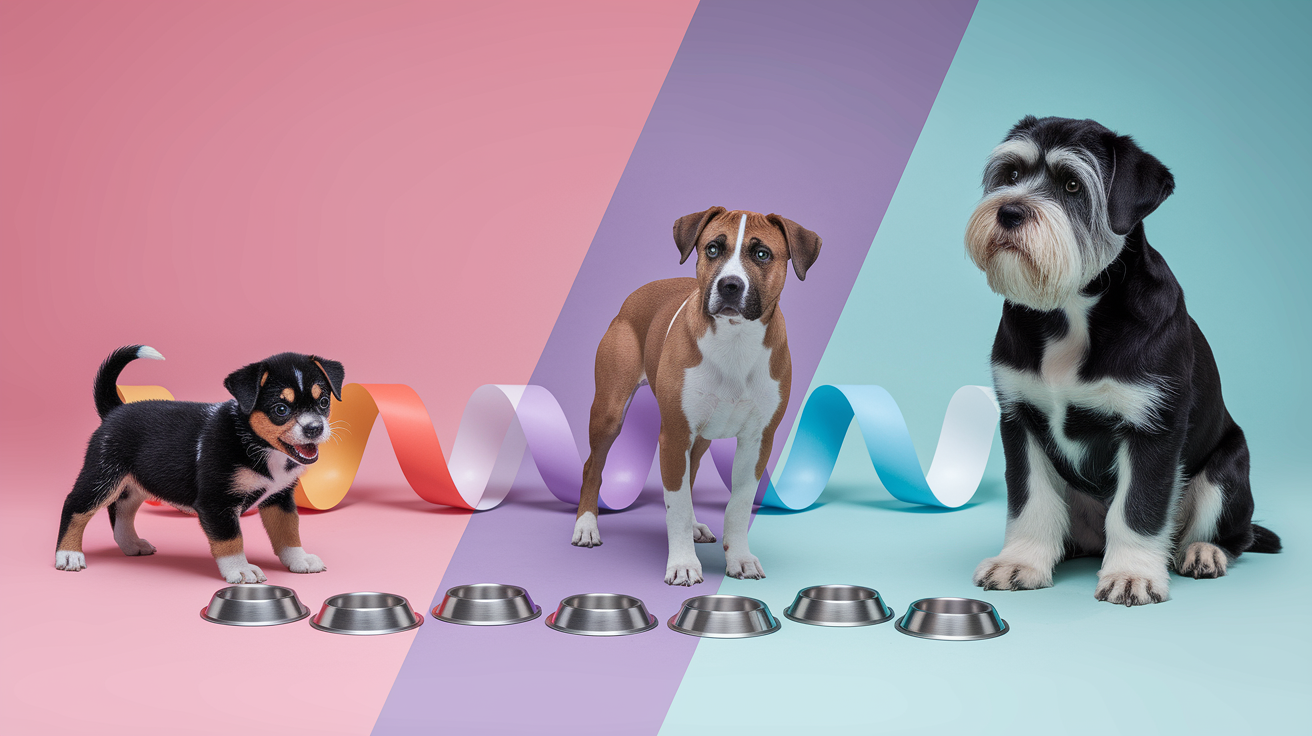
Newborn puppies nurse on demand or need bottle-fed meals every 2–4 hours around the clock. From 3–8 weeks during weaning, puppies transition to solid food with 4–6 small meals per day. Puppies 8 weeks to 6 months require 3–4 meals daily, gradually reducing to 2–3 meals by 6–12 months. The dedicated puppy section below provides full age-by-age details and sample times.
Adult dogs, from roughly 1 year old up to age 7 (or age 5–6 for giant breeds), typically thrive on 2 meals per day. Two meals keeps portions manageable, supports steady blood sugar, and makes it easier to track intake for weight control. Some small or toy breed adults continue to benefit from 3 smaller meals daily to prevent drops in blood sugar.
Senior dogs, generally 7 years and older (or 5–6 years for large and giant breeds), usually stay on the same 2-meal adult schedule. A senior routine may shift to smaller, more frequent meals if digestion slows, appetite decreases, or conditions like kidney disease, diabetes, or arthritis make eating large portions uncomfortable. Watch for changes in energy, stool quality, and weight, and adjust meal frequency as needed with your vet’s guidance.
| Age Group | Meals Per Day | Notes |
|---|---|---|
| Newborn–Weaning (0–8 weeks) | On-demand nursing or 4–6 small feedings | Every 2–4 hours for orphaned puppies; see puppy section for full details |
| Adult (1–7 years, varies by breed) | 2 (or 3 for toy/small breeds) | Morning and evening; consistent timing supports weight and behavior |
| Senior (7+ years, 5–6+ for large breeds) | 2 (or more if needed) | Smaller, more frequent meals may help digestion and comfort |
Portion Control and Timing for the Best Dog Feeding Schedule
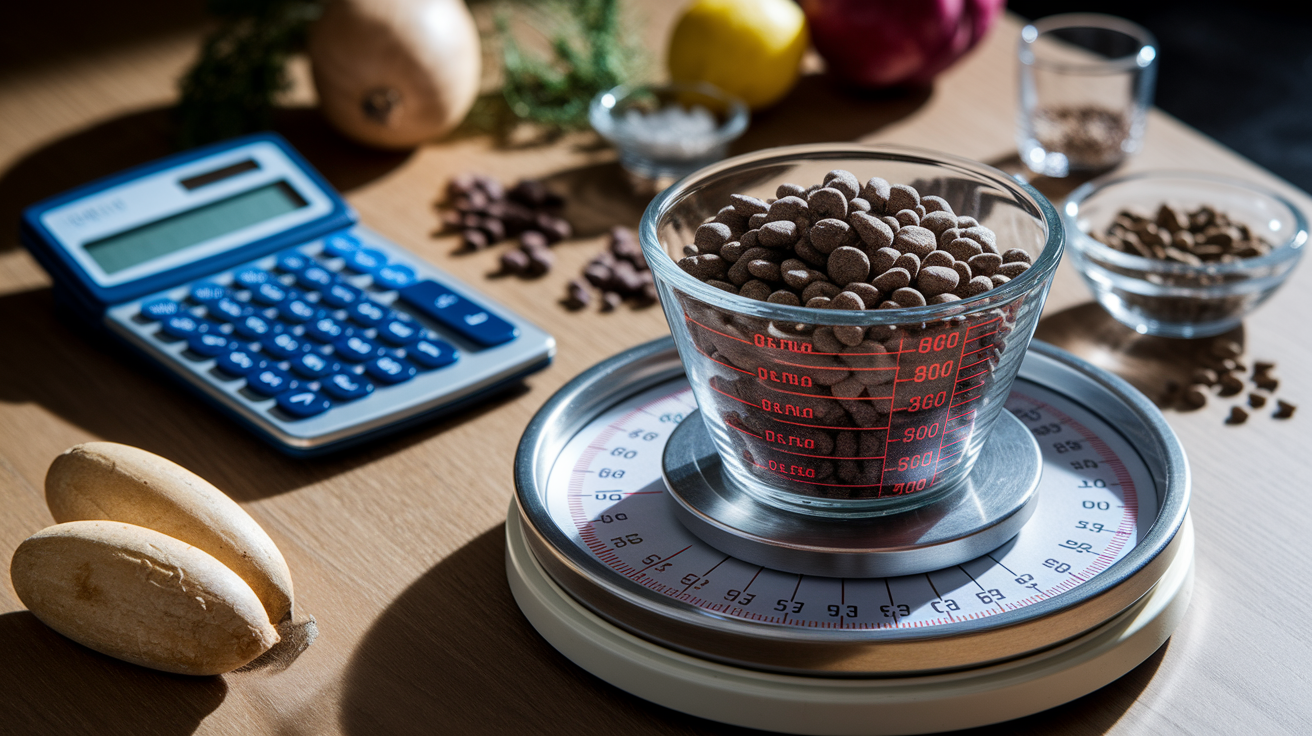
Accurate portions prevent obesity, malnutrition, and wasted food. Portion control and meal timing work together. Feeding the right amount at the right time keeps your dog satisfied between meals, maintains stable blood sugar, and lets you spot changes in appetite that might signal health problems. Calculating portions by weight and age ensures you’re giving calories matched to your dog’s life stage and activity level, not just guessing by the measuring cup.
The formula starts with Resting Energy Requirement, or RER. RER = 70 × (body weight in kilograms)^0.75. Next, multiply RER by an activity factor to get Maintenance Energy Requirement (MER). For a neutered, sedentary adult dog, use 1.2–1.4. For a typical pet with moderate daily walks, use 1.4–1.6. Intact or very active dogs need 1.8–2.5, and puppies require 2–3 times their RER depending on age. Here’s a real example: a 10 kg adult dog with moderate activity has an RER of roughly 70 × 10^0.75, about 394 kcal per day. MER = 394 × 1.6, roughly 630 kcal per day. If your kibble contains 350 kcal per cup, divide 630 by 350 to get about 1.8 cups per day. Split that into two meals, and you feed approximately 0.9 cup per meal.
Once you know the daily calorie total, divide it evenly across your dog’s meals. Subtract treat calories first. Treats should stay under 10% of total daily calories, so if your dog needs 630 kcal per day, limit treats to 63 kcal and feed 567 kcal in meals (about 1.6 cups, or 0.8 cup per meal). Measure portions by weight in grams when possible, because cup sizes vary by brand and kibble shape.
- Weigh your dog in kilograms: Use a home scale or vet scale; 1 pound = 0.45 kg.
- Calculate RER: RER = 70 × (weight in kg)^0.75. Use a calculator with an exponent function or search “RER calculator for dogs.”
- Multiply RER by activity factor: Choose 1.2–1.6 for most adult pets, 2–3 for puppies, up to 3 for lactating dogs.
- Convert calories to cups or grams: Check your food bag for kcal per cup or per 100 grams; divide MER by that number.
- Divide daily total into meals and subtract treat calories: Two meals for adults, three or four for puppies; remove 10% for treats before splitting.
Feeding Schedules for Different Breed Sizes
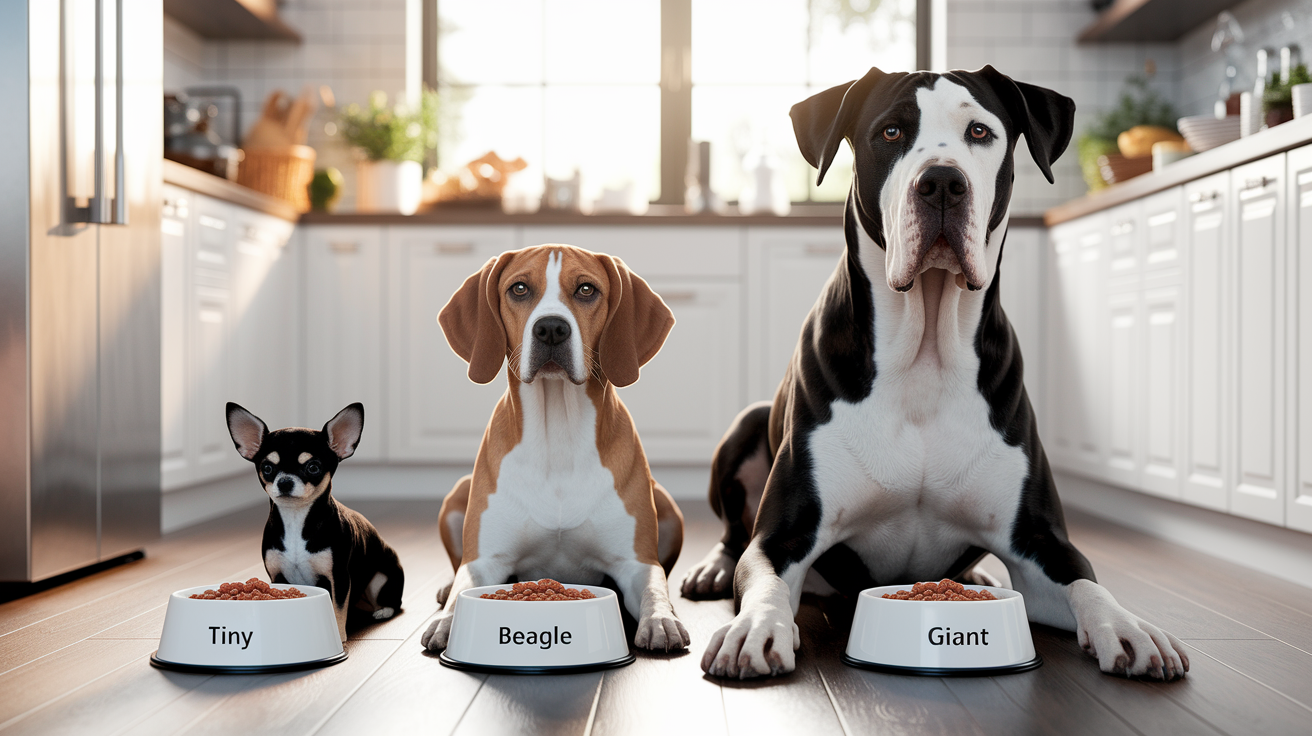
Small and toy breeds, like Chihuahuas, Yorkies, and Pomeranians, have faster metabolisms and smaller stomachs. A small breed meal schedule often works best with 3 meals per day, even in adulthood, to prevent hypoglycemia (low blood sugar). Puppies of toy breeds may need 4 meals daily until 4–6 months old. Splitting meals keeps energy steady and reduces the risk of shaking, weakness, or fainting. Feed small portions in the morning, midday, and early evening, such as 07:00, 12:00, and 18:00.
Medium-sized dogs (Beagles, Cocker Spaniels, Border Collies) are the most flexible. They typically thrive on the standard twice-daily adult schedule. Medium breeds can handle 8–12 hour gaps between meals without blood sugar issues and usually don’t face the bloat risks seen in deep-chested large breeds. A consistent morning and evening routine, like 07:00 and 19:00, works well for most medium dogs throughout their adult lives.
Large and giant breeds (Great Danes, Mastiffs, German Shepherds, Saint Bernards) need careful attention to bloat prevention. Feeding times for large breeds should split the daily ration into 2 or even 3 smaller meals. Never feed one giant meal per day. Large, deep-chested dogs are at higher risk for gastric dilatation-volvulus (GDV), where the stomach fills with gas and twists. Splitting meals reduces the volume of food in the stomach at any one time. Don’t allow vigorous exercise, play, or stress 1 hour before and 1–2 hours after each meal. Use slow-feeder bowls to prevent gulping, and keep mealtimes calm. Skip elevated feeding bowls unless your vet recommends them for a specific orthopedic reason, as some research links elevated bowls to increased bloat risk in large breeds.
Special Feeding Schedules for Health Conditions
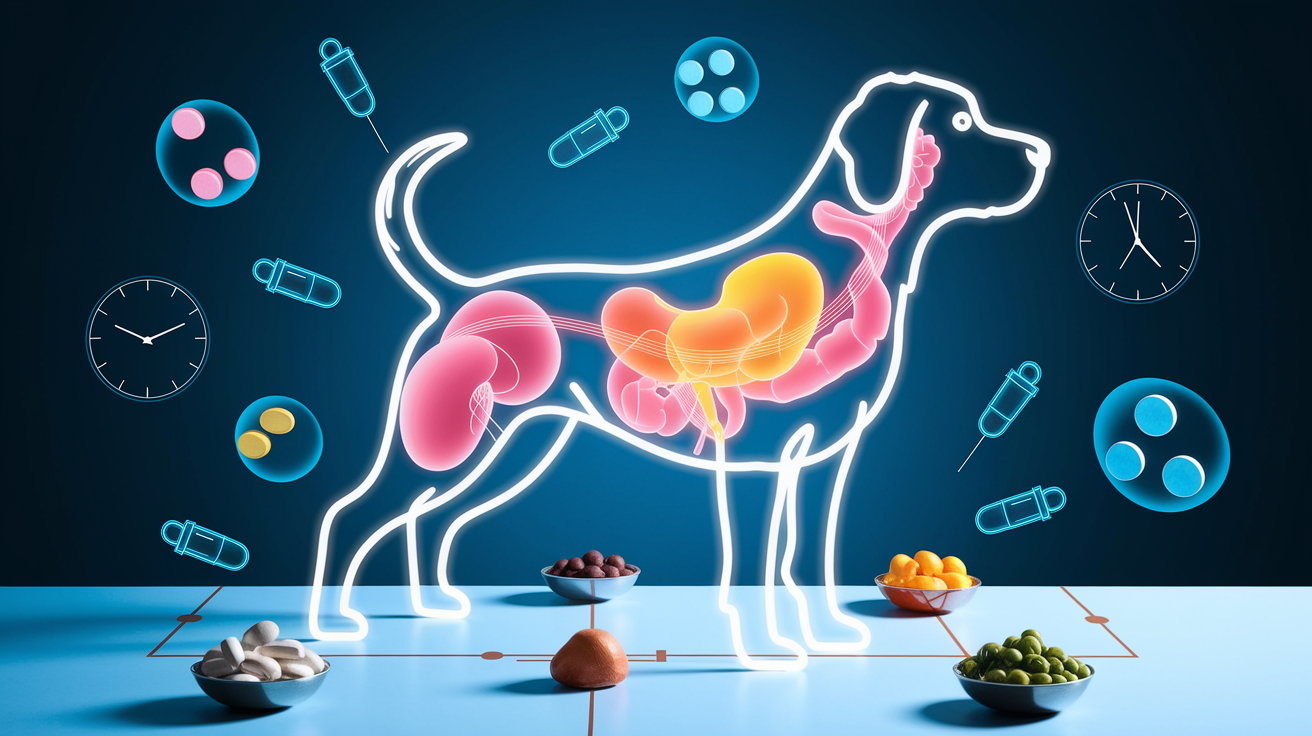
Health conditions demand strict regularity. When a dog has diabetes, pancreatitis, food allergies, kidney disease, or gastrointestinal sensitivities, feeding becomes part of medical treatment. Timing and consistency can be as important as the food itself. Irregular meals can destabilize blood sugar, trigger pancreatitis flares, or make it impossible to identify food allergens during an elimination trial.
Digestive disorders and metabolic diseases respond well to smaller, evenly spaced meals. Feeding for dogs with diabetes requires you to coordinate meal times with insulin injections. Your vet will prescribe the insulin dose and timing, typically twice daily, and you’ll feed half the daily ration just before or after each injection at exactly the same times every day. Dogs with pancreatitis benefit from 3–4 small, low-fat meals instead of 2 larger ones, because smaller portions are gentler on the inflamed pancreas. Dogs with sensitive stomachs benefit from spreading calories across 3 meals to reduce vomiting, gas, and diarrhea. Food allergies and elimination diet timing require you to feed the same novel-protein diet at the same times every day for 8–12 weeks without any treats, table scraps, or flavor variations, so your vet can assess whether symptoms improve.
Diabetes: Feed exactly on schedule, twice daily, paired with insulin doses; don’t allow any snacks or timing changes that shift blood sugar.
Pancreatitis: 3–4 small meals of low-fat food per day; skip fatty treats entirely.
Sensitive stomach or IBD: 3 smaller meals reduce stomach acid buildup and ease digestion; keep ingredients simple and consistent.
Food allergies: Strict elimination diet timing with zero extras for 8–12 weeks; feed the same food at the same times daily.
GERD or regurgitation: Elevate the head slightly during eating (for some dogs), feed smaller frequent meals, and don’t feed close to bedtime.
Feeding Schedules for Puppies: Weaning Through Adolescence

Newborn puppies from birth to about 4 weeks nurse on demand, roughly every 2–4 hours around the clock. If you’re hand-rearing an orphaned litter, bottle-feed every 2–4 hours day and night using a commercial puppy milk replacer. Hand-rearing newborns is exhausting but critical. Newborns can’t regulate blood sugar or body temperature well, so frequent, small meals keep them alive and growing.
Weaning begins around 3–4 weeks and completes by 8 weeks. During this transition, introduce soft puppy food mixed with milk replacer or water. Offer 4–6 small meals per day while the puppy still nurses or bottle-feeds, gradually increasing the amount of solid food and reducing milk. By 8 weeks, most puppies are fully weaned and eating only solid puppy food. At 8–12 weeks, feed 4 meals per day to support rapid growth and prevent hypoglycemia. Example times: 07:00, 11:00, 15:00, and 19:00.
From 3 to 6 months, reduce to three meals daily. Sample times: 07:00, 12:00, and 17:00. This schedule balances their high calorie needs with a slightly longer stretch between meals. It also helps with house training, since puppies typically need to defecate 5–30 minutes after eating. Between 6 and 12 months, most puppies transition to 2 meals per day. Small and toy breeds often make this shift closer to 6–8 months. Large and giant breeds may stay on 3 meals until closer to 12 months to reduce bloat risk and support steady bone growth. Always choose puppy food labeled for growth (AAFCO) and feed until your puppy reaches roughly 90% of expected adult weight or around 12 months, whichever your vet recommends.
| Puppy Age | Meals/Day | Feeding Notes |
|---|---|---|
| 0–4 weeks (newborn) | On-demand nursing or bottle every 2–4 hours | Orphans need around-the-clock feeding; consult vet for milk replacer and amounts |
| 3–8 weeks (weaning) | 4–6 small meals | Gradually replace milk with soft puppy food; complete weaning by 8 weeks |
| 8–12 weeks | 4 meals | Feed at 07:00, 11:00, 15:00, 19:00; prevents blood sugar drops and supports growth |
| 3–6 months | 3 meals | Feed at 07:00, 12:00, 17:00; helps with potty training and energy balance |
| 6–12 months | 2–3 meals | Small breeds shift to 2 meals by 6–8 months; large/giant breeds often stay at 3 until 12 months |
Feeding Schedules for Pregnant and Lactating Dogs

Pregnancy increases calorie needs, especially in the last third of gestation. Start with normal portions in early pregnancy, then gradually increase to about 1.5× normal calories by week 6 and up to 2× by the time she’s ready to whelp. Divide this increased ration into 2 or 3 meals per day so her expanding abdomen has room to digest comfortably. Use puppy food or an all-life-stages formula to meet the higher protein, fat, and calcium demands of growing puppies.
Lactation is the most calorie-intensive period in a dog’s life. A dam nursing a large litter may need up to 3 times her normal maintenance calories. You can feed anywhere from 3 to 6 meals per day depending on litter size. Free-choice feeding is sometimes used during peak lactation (weeks 3–5), but measuring daily intake and splitting it into frequent meals gives you better control and prevents the dam from overeating and gaining excess weight after weaning. Sample schedule: feed at 06:00, 10:00, 14:00, 18:00, and 22:00 if nursing a large litter, adjusting portion sizes to maintain the dam’s body condition.
Monitor the mother’s weight and body condition weekly. She should look slightly lean but not emaciated. After weaning begins around 3–4 weeks, start tapering her food back toward normal adult portions over 7–10 days to prevent mastitis and unwanted weight gain. Keep fresh water available at all times, as lactating dogs drink much more than usual.
Free Feeding vs Scheduled Feeding for Dogs
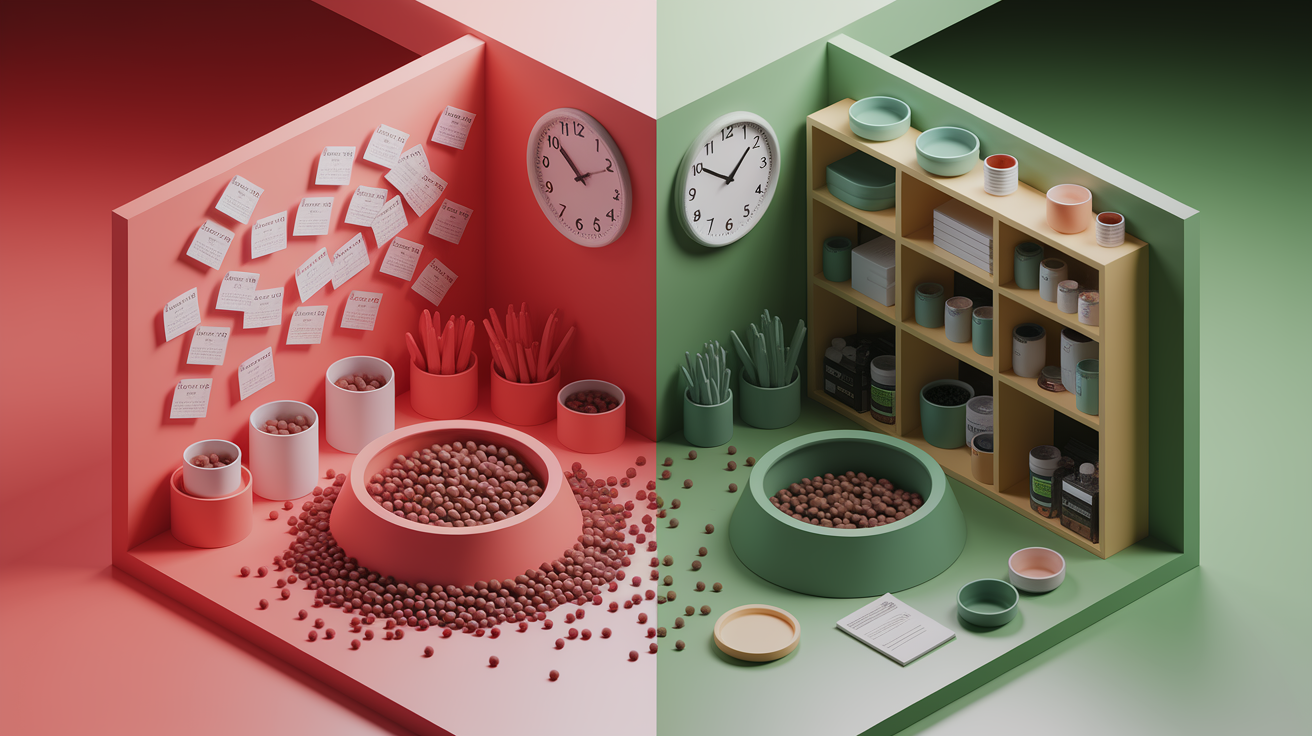
Free feeding means leaving food out all day so your dog can graze whenever he wants. Scheduled feeding means offering measured meals at set times and picking up the bowl after 15–20 minutes. It’s not really a close contest for most dogs. Scheduled meals give you portion control, predictable bathroom timing, early detection of appetite loss, and reduced food guarding. Free feeding often leads to overeating, obesity, picky eating, and difficulty managing calorie intake, especially in multi-dog homes.
Single daily feeding, where you give the entire day’s food in one meal, isn’t ideal for most dogs. The only real advantage is convenience for you, but the downsides include longer fasting periods (which can cause nausea or vomiting of bile), higher risk of bloat in deep-chested breeds, blood sugar swings, and increased begging behavior. Splitting food into at least two meals per day is safer and more comfortable for nearly every dog. Slow feeder bowls fit well into scheduled feeding. Use puzzle bowls, slow-feeder inserts, or scatter feeding at each scheduled mealtime to extend eating duration, increase mental stimulation, and reduce gulping.
Scheduled feeding benefits: Easier weight management, predictable potty breaks, quick detection of illness (a skipped meal is an early warning), reduced resource guarding, better training motivation.
Free feeding risks: Overeating and obesity, difficulty tracking daily intake, stale or spoiled food, increased anxiety around the bowl, makes multi-dog or multi-pet feeding chaotic.
Single meal per day downsides: Long fasting periods, higher bloat risk, hunger-driven nausea, more begging throughout the day.
Slow feeders and scheduled meals: Combine them by serving each scheduled meal in a puzzle or slow-feeder bowl; your dog eats slower but still finishes within the mealtime window.
Sample Daily Meal Templates for Common Dog Routines
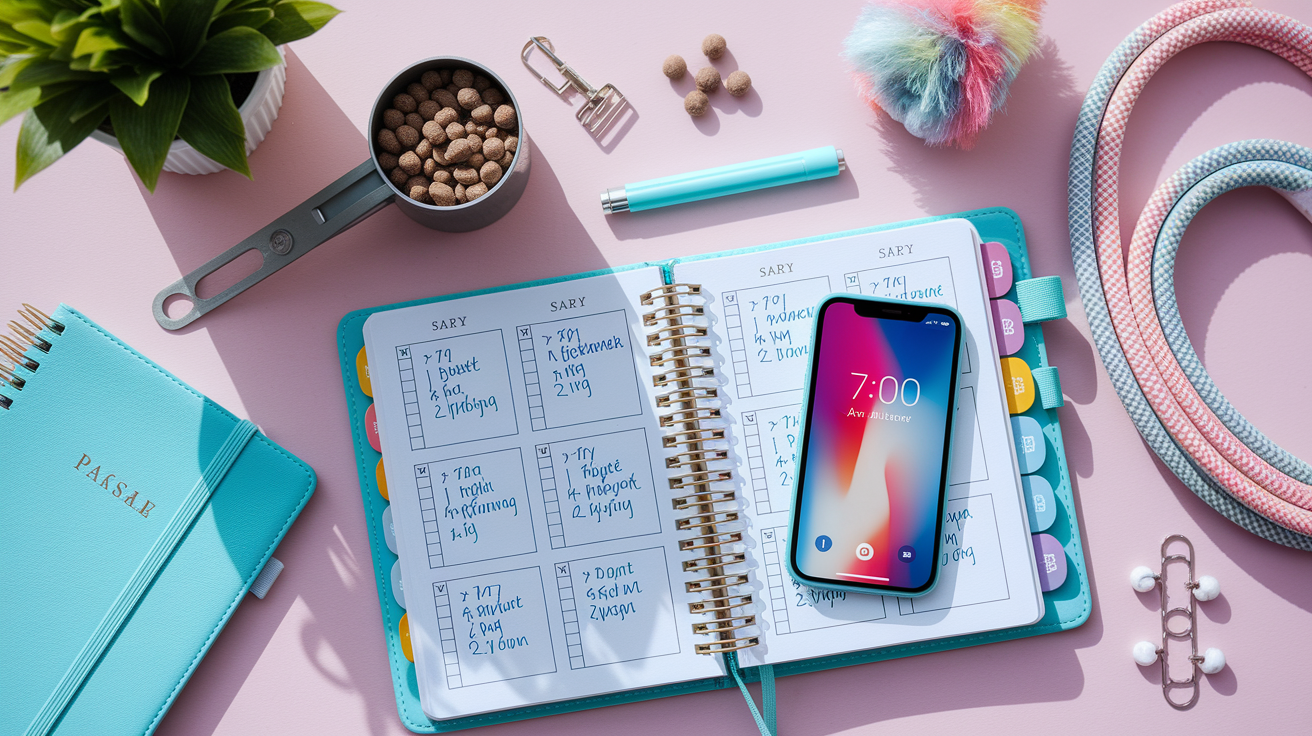
Real examples make it easier to build your own routine. A typical adult dog in a 9-to-5 household might eat at 07:00 (before work) and 18:00 (after work). For shift workers who leave mid-afternoon, try 06:00 and 17:00. If you work from home, you have more flexibility: 08:00 and 19:00 works, or 07:00 and 18:00. The key is consistency, not the exact hour.
A three-meal puppy might eat at 07:00 breakfast, 12:00 lunch, and 17:00 dinner every single day, weekend included. Puppies thrive on routine. For a four-meal young puppy, try 07:00, 11:00, 15:00, and 19:00. Small adult dogs prone to blood sugar dips can follow the same three-meal template: 07:00, 12:00, 18:00. Large breeds at risk for bloat benefit from spreading meals across the day: 07:00, 13:00, and 19:00 keeps portions smaller and digestion lighter.
Spacing meals 8–12 hours apart for adults and 4–6 hours apart for puppies covers most situations. If your schedule is irregular, pick the earliest and latest times you can reliably commit to and stick with those every day, even on weekends.
| Dog Type | Meal Times | Notes |
|---|---|---|
| Adult dog, 2 meals, standard work schedule | 07:00 and 18:00 or 19:00 | 11–12 hour gap; adjust by ±1 hour to fit your commute or wake time |
| Puppy, 3 meals (3–6 months) | 07:00, 12:00, 17:00 | 5-hour spacing; midday meal may require a pet sitter or lunch-break visit |
| Puppy, 4 meals (8–12 weeks) | 07:00, 11:00, 15:00, 19:00 | 4-hour spacing; requires someone home or a caregiver for middle feedings |
| Small adult dog or large-breed bloat prevention, 3 meals | 07:00, 13:00, 19:00 | 6-hour spacing; keeps portions small and blood sugar stable |
Adjusting the Best Feeding Schedule Over Time
No feeding schedule is permanent. When you need to adjust depends on life stage, weight changes, activity shifts, health conditions, and your dog’s individual response. Puppies grow out of frequent feedings as they mature. Seniors may need smaller, more frequent meals if digestion slows. An adult dog who gains or loses more than 10% of body weight needs a recalculated portion and possibly a new meal frequency.
Signs your schedule needs change include persistent begging (might need more frequent smaller meals or more total calories), regular vomiting of bile in the morning (overnight fast may be too long), weight gain or loss, changes in stool quality (too-frequent loose stools or constipation), or a new diagnosis like diabetes or kidney disease. If your dog suddenly stops finishing meals or starts scavenging, check for illness first, then evaluate whether meal timing or portion sizes need adjustment.
Transitioning should happen gradually. If you’re moving from three meals to two, don’t make the switch overnight. Start by shifting the middle meal 30 minutes earlier each day over a week until it merges with the morning or evening feeding. When changing meal times by more than an hour, move them in 30–60 minute increments every 2–3 days to prevent stress, hunger-driven nausea, or disrupted potty timing. When switching foods, follow the 7–10 day transition protocol: mix 25% new food with 75% old for days 1–3, then 50/50 for days 4–6, then 75% new for days 7–9, and 100% new by day 10. Keep meal times consistent during food transitions so you can spot digestive upset that’s caused by the new food, not the schedule change.
Feeding Schedule Tips for Training, Potty Timing, and Multi-Dog Homes
A reliable mealtime routine is one of the fastest ways to teach a puppy where and when to go. Puppies typically need to defecate 5 to 30 minutes after eating. By feeding at the same times every day and taking your puppy outside immediately after each meal, you create a predictable bathroom schedule. This makes accidents rare and speeds up house training significantly. The same principle helps adult dogs with occasional digestive issues. Consistent meal timing gives you consistent output timing.
In multi-dog homes, staggered feeding times reduce competition, food guarding, and stress. Feed one dog in the kitchen and another in a crate or separate room, or feed them one after the other if space is tight. Staggering by even 10 minutes lets each dog eat calmly without worrying about another dog stealing food. It also makes it easier to monitor each dog’s appetite and spot health changes early. If one dog is a gulper and another a slow eater, separating them prevents the fast eater from finishing his meal and then bullying the slower dog.
Treats complicate calorie tracking, but it’s simple in practice. Treats should make up less than 10% of your dog’s total daily calories. If your dog needs 600 kcal per day, limit treats to 60 kcal. Subtract that 60 from the daily meal total, so you feed only 540 kcal in meals. Measure treat calories by checking the package or weighing treats on a kitchen scale. Training sessions that use lots of treats should use tiny, low-calorie rewards or pieces of the dog’s regular kibble taken from the daily meal ration.
- House-training shortcut: Feed at 07:00, 12:00, and 17:00, then take your puppy outside within 15 minutes of every meal and wait until he goes.
- Multi-dog peace: Separate dogs during meals by room, crate, or time; even a 5-minute gap can prevent guarding and stealing.
- Track treat calories: Weigh a few typical training treats, find the kcal per gram on the package, and subtract the daily treat total from meal calories.
- Use kibble as treats: Reserve a portion of your dog’s daily kibble for training rewards so treat calories are already accounted for.
Hydration and Water Timing Within a Dog Feeding Schedule
Water should be available at all times unless your vet gives you specific instructions otherwise. Digestion, nutrient absorption, and kidney function all depend on adequate water intake. Dogs drink more after eating dry kibble, during warm weather, and after exercise. Restricting water is almost never necessary and can cause dehydration, urinary crystals, kidney strain, and serious illness.
Leave a clean bowl of fresh water out 24/7. Refill it at least once daily, more often in hot weather or for large dogs who drink a lot. Some owners worry about overnight water, especially during puppy house training, and wonder if they should pick up water at bedtime. In most cases, you shouldn’t. Overnight water restriction can lead to dehydration and doesn’t significantly improve house training. Puppies can learn to hold their bladder overnight even with water available. The rare exceptions are dogs with specific medical conditions like severe incontinence or heart failure with fluid restrictions, and those limits should only be set by a veterinarian, never guessed at home.
Final Words
Pick consistent meal times. Most adult dogs do well with two meals about 8 to 12 hours apart (for example, 07:00 and 19:00).
Use portion control and adjust by life stage, breed size, and health needs.
Always space meals from vigorous exercise and keep water available, and use the sample templates to make a routine you can stick to.
Shift times slowly and track weight, appetite, and behavior.
Keeping a simple feeding plan is the best feeding schedule for dogs because it supports digestion, healthy weight, and calm behavior.
Start small, track a week, and you’ll know what fits your life.
FAQ
Q: What is the healthiest feeding schedule for dogs?
A: The healthiest feeding schedule for most adult dogs is two meals a day, spaced about 8–12 hours apart (for example, 07:00 and 19:00). Consistent times support digestion, steady energy, and weight control.
Q: What is the 7 7 7 rule for dogs?
A: The 7 7 7 rule for dogs is not a standard veterinary guideline; it’s an informal owner/trainer phrase you may encounter. Follow age, size, and health-based meal plans and check with your vet for specifics.
Q: What is the 90/10 rule dog?
A: The 90/10 rule for dogs means about 90% of daily calories should come from balanced meals and no more than 10% from treats or extras, helping keep weight and nutrition on track.
Q: What time should a dog’s last meal be?
A: A dog’s last meal should be about 2–3 hours before bedtime to allow digestion and reduce nighttime accidents. Avoid feeding within one hour before, and 1–2 hours after, vigorous exercise.