

Think Persian cats always need a professional groomer?
They don’t.
With the right tools and a short daily routine you can keep their long coat clean, tangle-free, and healthy.
This guide shows the exact tools, step-by-step brushing and face care, bathing rhythm, and simple checks to spot skin or eye trouble early.
Follow these routines and you’ll save time, reduce stress for your cat, and avoid painful mats or preventable infections.
How to Groom a Persian Cat at Home Successfully
Why Persian Cats Need Special Grooming Care
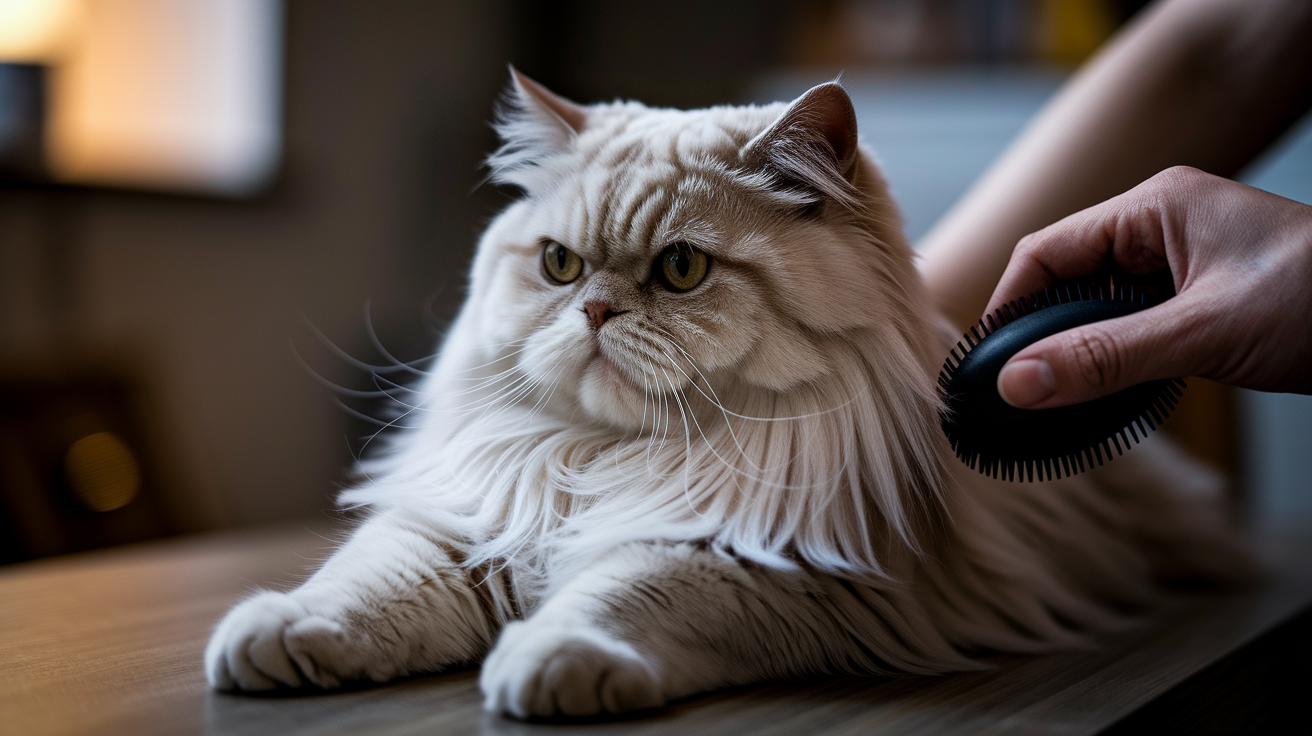
Persian cats have one of the most gorgeous coats you’ll ever see. Long, thick, silky. But that beauty? It’s a commitment. Their double-layered fur grows several inches long and tangles fast, especially in spots like the armpits, behind the ears, and around the collar. Short-haired cats can mostly handle their own grooming. Persians can’t. Without your help every single day, their fur mats within a few days and traps dirt, oil, and debris right against the skin.
Mats aren’t just ugly. They pull on skin, restrict movement, and create damp pockets where bacteria and fungi love to grow. You can end up with skin infections, irritation, and even pelting, where the whole coat felts into one solid mass. Persian faces add another layer of work. Those big round eyes and facial folds collect tears and discharge constantly. Skip daily cleaning and moisture builds up, staining the fur and sometimes causing bacterial issues or eye infections.
Regular grooming does way more than prevent problems. It spreads natural oils, pulls out dead undercoat before it ends up all over your couch, and gives you a chance to spot lumps, parasites, or skin changes early. A lot of Persian owners turn the daily grooming session into bonding time. A few calm minutes of brushing that your cat learns to expect and might even start to enjoy.
The time investment is real. You’re looking at 10 to 30 minutes every day for brushing and face care, plus a full bath every four to six weeks and nail trims every two to three weeks. Sounds like a lot because it is. But the alternative is severe matting, emergency grooming under sedation, or chronic skin trouble. Way more stress and money. The good news? Once you’ve got a system and the right tools, it becomes routine.
Essential Grooming Tools and Products for Persian Cats
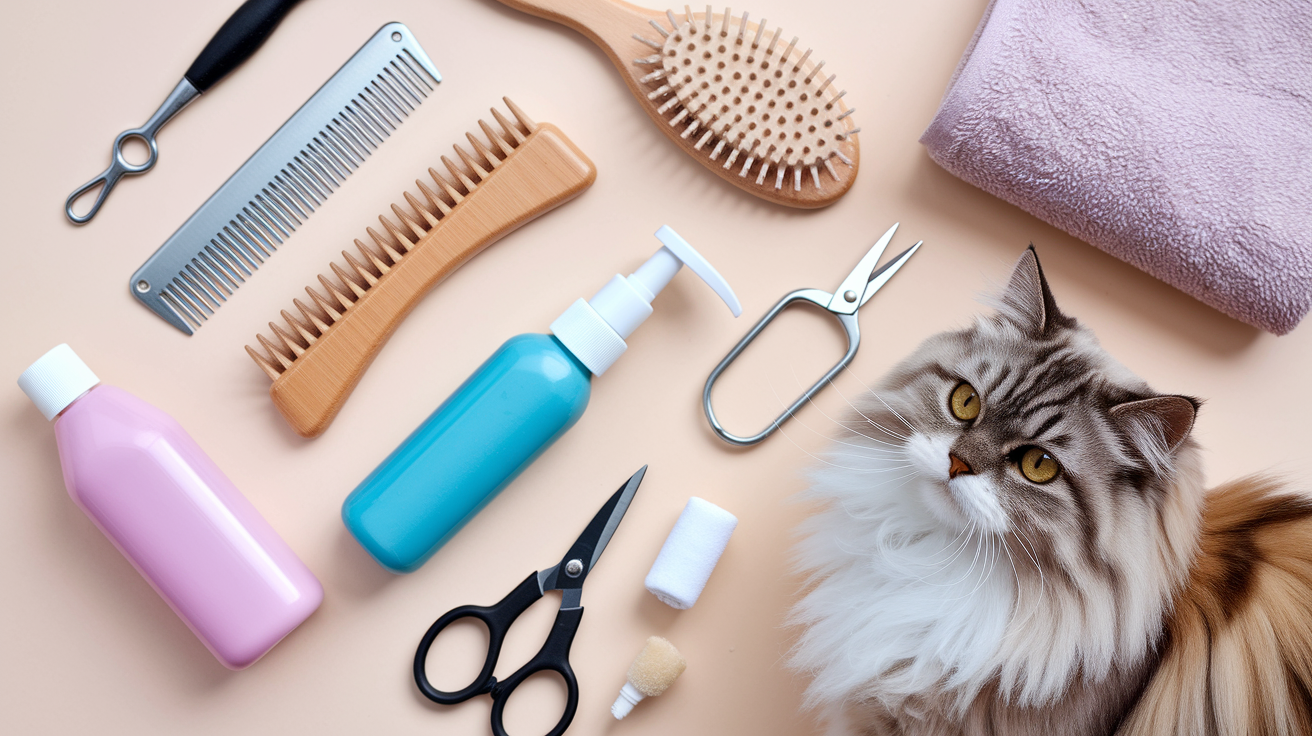
You can’t groom a Persian with random brushes. Their coat needs specific tools that reach through multiple inches of fur, detangle without ripping, and finish smooth.
Wide-tooth metal comb. This is your main tool. A static-free metal comb slides through the outer coat and catches hidden tangles near the skin. Use this first, every day, before mats get tight.
Slicker brush with good steel pins. After combing, a quality slicker brush removes loose undercoat and smooths the top layer. Look for fine, flexible pins that won’t scratch. Cheap slickers with stiff pins just skim the surface.
Large-tooth comb or dematting tool. For stubborn tangles. Work knots apart gently, from the skin outward, teasing the mat into smaller sections. Never yank.
Cat nail clippers. Persian nails grow fast and curve in. Standard human clippers won’t cut cleanly. Go with guillotine or scissor style clippers and keep styptic powder around in case you nick the quick.
Rounded-tip grooming scissors. For trimming sanitary areas and paw fur. Ball-tip or blunt-tip shears prevent accidental skin cuts. Cat skin tears easily, so sharp-pointed scissors near the body are a bad idea.
Bathing essentials. Rubber bath mat for traction, handheld sprayer or small cup for rinsing, absorbent towels. For shampoo, pick something moisturizing and cat-formulated. White Persians can use color-matching shampoos like Chris Christensen White on White. Dark Persians might like Chris Christensen Black on Black. For kittens or sensitive skin, go hypoallergenic, sulfate-free, paraben-free like PinkPawPal Hypoallergenic Shampoo.
Degreasing products. Persian coats get greasy between baths. Non-pumice Goop (white tub from the automotive aisle), PinkPawPal Degreasing Shampoo, or original blue Dawn work. Dawn strips oil fast but can dry things out if you use it weekly, so save it for deep cleans.
Conditioner. After shampooing, a nourishing conditioner like PinkPawPal Nourishing Conditioner adds moisture back and makes combing easier. Rinse until the coat feels squeaky clean.
Balancing powder. Optional finishing product that absorbs leftover moisture and adds shine. Mix per package directions and dust onto the coat after the final rinse.
Facial care supplies. Soft, damp cloths for daily eye and nose-fold cleaning (separate cloth for each eye), gentle baby shampoo diluted about 20% shampoo to 80% water, or a specialty tear-stain facial cleanser. A very soft baby toothbrush helps clean tight creases around the eyes. Finish with an approved eyewash like Opticlear.
Tear-stain treatment kit. For persistent staining, use a four-step sequence: antibacterial tear-stain solution, waffle-texture applicator pads for gentle exfoliation, absorbent tear-stain powder to repel moisture, and a small powder brush.
Ear cleanser. Cat-safe skin and ear cleanser, cotton pads or balls, and Q-tips for the outer ear only. Don’t stick anything into the ear canal.
Dryer. Human hair dryers run too hot and can burn delicate skin. Get an adjustable-heat pet dryer like a Flying Pig or Metro Force cage dryer. These let you dry the coat safely while combing it smooth.
Anti-static spray. After drying, a light grooming spray tames flyaways and conditions the coat during your final comb-through.
Start with these basics. As you learn your cat’s trouble spots, you can add specialty items.
Daily Grooming Routine: Brushing and Face Care
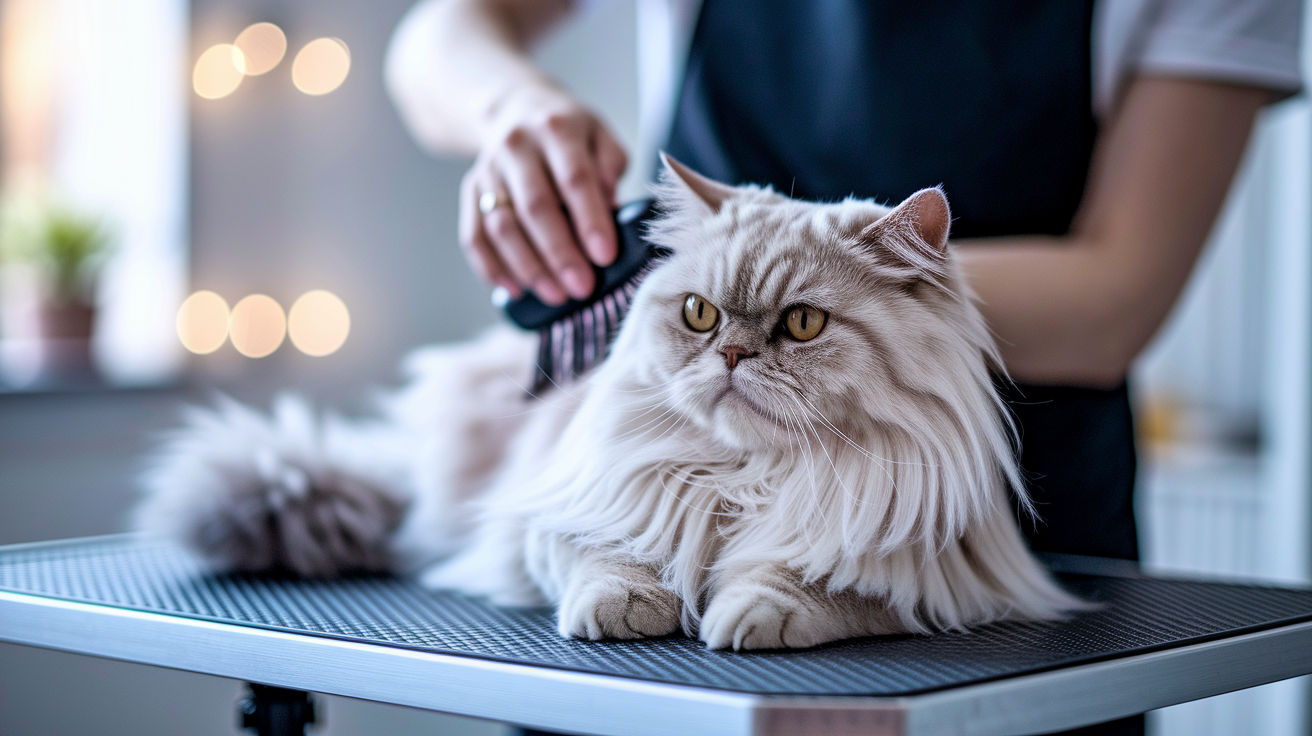
Daily grooming isn’t optional for Persian cats. Skip a day and small tangles turn into mats. Skip a week and you’re dealing with painful pelting and a groomer visit.
Set aside 10 to 30 minutes each day. Pick a time when your cat is calm. After a meal or play session works. Find a stable surface with good lighting so you can see what you’re doing.
Start with the wide-tooth metal comb. Comb through the entire coat in sections from head to tail. Comb in the direction of hair growth, then gently against the grain to lift the coat and check for hidden tangles near the skin. Pay attention to high-risk zones: under the front legs, around the collar and neck, behind the ears, and the sanitary region near the tail. These areas mat first because of friction and movement.
If you hit resistance, stop pulling. Switch to your large-tooth comb or dematting tool and tease the knot apart slowly, holding the fur close to the skin so you don’t tug. If a mat won’t budge or sits tight against the skin, leave it for a professional. Forcing it can tear skin or make your cat hate grooming forever.
Follow with the slicker brush. Once you’ve combed out tangles, use the slicker to remove loose undercoat and smooth the top layer. Brush deeply but gently. Press just enough that the pins reach the undercoat without scraping skin. Work in layers, lifting and brushing small sections at a time. The undercoat releases in soft clumps. This limits shedding around your home and prevents new mats.
Daily facial care matters just as much. Persian faces collect moisture, tears, and food particles in the folds around the eyes and nose. Use a soft, damp cloth (one for each eye) and gently wipe the inner corners where discharge builds up. Clean the nose folds with small circular motions, then dry thoroughly. Leftover moisture encourages bacterial growth and staining.
If your cat has visible tear stains, switch to diluted baby shampoo solution (about 20% shampoo, 80% water) or a specialty tear-stain facial cleanser. Apply with a very soft baby toothbrush, working carefully around the eyes. Rinse by sweeping water away from the nose to prevent inhalation, then pat dry. For persistent staining, follow the four-step tear-stain treatment: apply antibacterial solution, gently exfoliate with a waffle-texture pad, dust with absorbent powder, and use a small brush to work it in.
Keep sessions short and positive at first. If your cat is new to grooming, start with just a few minutes and gradually increase the time as they relax. Offer a small treat or calm praise after each session. Never force a frightened or aggressive cat. Build trust slowly. If grooming becomes a fight, your cat will resist for life.
One more thing. Groom only when the coat is dry or nearly dry. Wet fur stretches and tangles more easily, so combing a soaked cat can pull and hurt. Save the deep brushing for after baths, when the coat is almost dry and you can see every layer clearly.
Weekly and Monthly Grooming Schedule
Daily brushing handles the basics, but Persian cats need additional care on a weekly and monthly rhythm.
Nail trimming: every 2 to 3 weeks. Persian nails grow fast and curve inward. Overgrown nails can snag on carpet, catch in the coat, or even grow into the paw pad. Trim using cat clippers, cutting just the clear tip and avoiding the pink quick inside. If you’re not confident, ask your vet or a groomer to show you the first time. Always keep styptic powder nearby. If you accidentally nick the quick, a dab of powder stops the bleeding quickly.
Check nails before every bath. Long nails make it harder to handle your cat safely during washing and drying, and a scratch from a wet, stressed cat can be deeper than usual.
Bathing: every 4 to 6 weeks. Persian fur traps dirt, oil, and dander deep in the coat. Even with daily brushing, the coat will eventually feel greasy or look dull. Most Persian owners settle on a monthly bath schedule, but you can adjust based on your cat’s skin and activity level. If the coat starts feeling sticky or clumping between baths, move to every four weeks. If your cat has dry or sensitive skin, stretch to every six weeks and focus on moisturizing shampoo and conditioner.
Never bathe a cat with mats still in the coat. Water tightens tangles into rock-hard knots that are nearly impossible to remove without cutting. Always pre-brush and remove mats before the bath.
Paw and sanitary area check: weekly. Inspect between the toes for debris, litter clumps, or matted fur. Long fur between the pads tracks litter everywhere and can mat with moisture or waste. Trim excess paw fur carefully with ball-tip scissors, cutting parallel to the pads so you don’t accidentally nick the skin.
The sanitary region (around the anus and rear legs) collects waste if the fur is too long. Trim this area every few weeks using rounded-tip shears, working slowly and talking calmly. If your cat won’t tolerate this, ask a groomer to handle sanitary trims during professional appointments.
Ear inspection: weekly. Look inside the ears for wax buildup, redness, or foul odor. Light wax is normal, but black, crumbly debris or a strong smell can signal mites or infection. Clean the outer ear with a cotton pad soaked in cat-safe ear cleanser. Never insert Q-tips or anything else into the ear canal. You can rupture the eardrum or push debris deeper. If you see discharge, excessive scratching, or head shaking, schedule a vet visit.
Professional grooming: every 6 to 8 weeks, or as needed. Even careful home care benefits from a professional deep clean and sanitary trim. Professional groomers have high-velocity dryers, specialized dematting tools, and the skill to handle resistant cats. Schedule regular appointments every six to eight weeks, and increase frequency during heavy shedding seasons (spring and fall) or if your cat develops mats faster than you can manage.
If your Persian refuses home grooming, a professional groomer becomes necessary. Some cats tolerate grooming better in a neutral environment with a calm, experienced handler. Don’t feel guilty. Getting it done safely is more important than doing it yourself.
Step-by-Step Bathing Process for Persian Cats
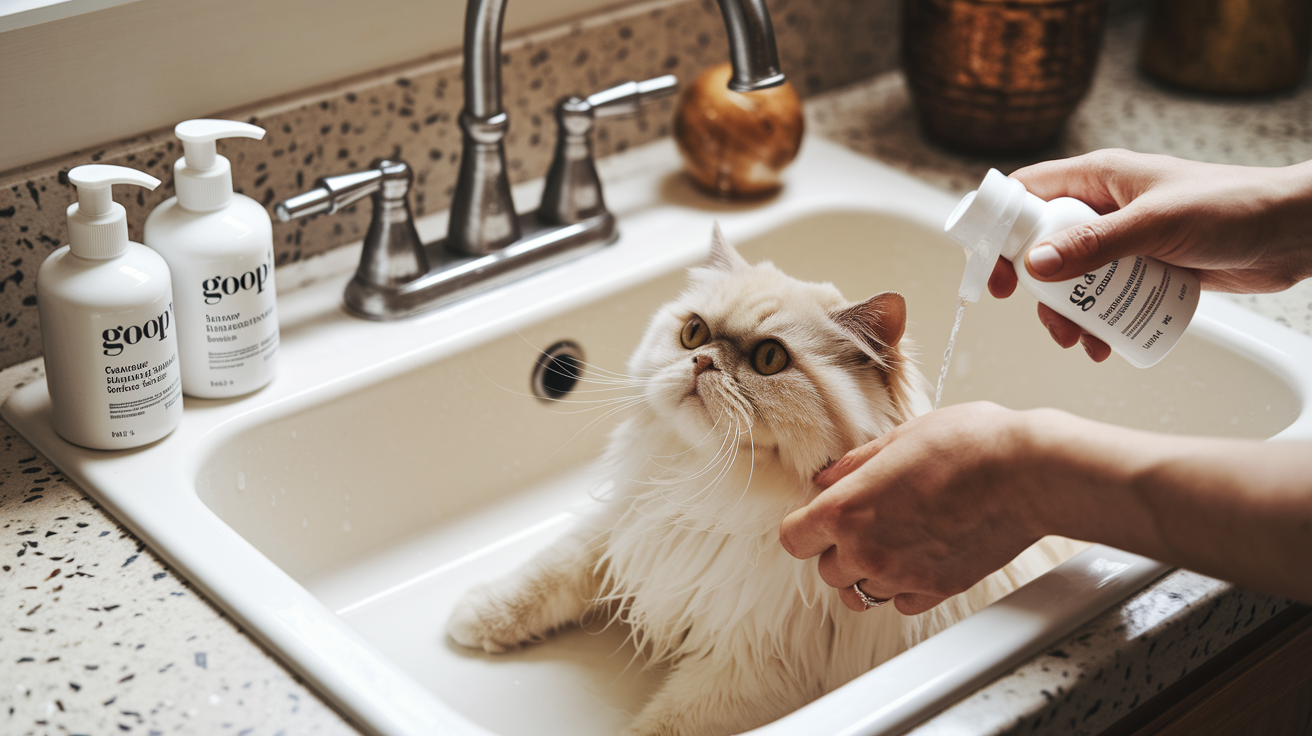
Bathing a Persian cat is a multi-step process. Rushing or skipping stages leaves the coat greasy, tangled, or irritated.
1. Remove all mats before the bath. Water turns mats into cement. Comb through the entire coat with your wide-tooth metal comb, then check high-risk areas with your large-tooth comb or mat splitter. If a mat is too tight or close to the skin, stop and seek professional help. Do not bathe until the coat is tangle-free.
2. Trim nails. Long nails make handling harder and increase the risk of scratches. Trim each nail, keeping styptic powder within reach in case you cut too short.
3. Set up your bathing station. Use a kitchen sink with a handheld sprayer, or a small tub if your cat is large. Place a rubber bath mat in the bottom for secure footing. Fill the sink with a few inches of lukewarm water. Not hot, not cold. Have all your products ready: degreaser, shampoo, conditioner, balancing powder, towels, eyewash, ear cleanser, and dryer.
4. Apply degreaser to the dry coat. Persian fur gets oily, especially around the base of the tail, chin, and chest. Choose one degreaser and follow its instructions:
Goop (non-pumice, white tub): Scoop a generous amount onto dry fur and work it through with your fingers. You may use an entire container on one adult cat. Add a small amount of water to lather, then rinse thoroughly.
PinkPawPal Degreasing Shampoo: Follow package directions.
Dawn original blue: Wet the coat lightly, apply a small amount of Dawn, lather, and rinse. Don’t use Dawn every week. It strips natural oils if overused.
5. First thorough rinse. Rinse until the water runs completely clear and the coat feels clean, not slippery. Leftover degreaser will interfere with shampoo and leave the coat greasy again within days.
6. Shampoo. Choose your shampoo based on coat color and skin sensitivity:
PinkPawPal Whitening & Silky Shampoo for white Persians.
PinkPawPal Hypoallergenic Shampoo for kittens, pregnant or nursing cats, and sensitive skin (paraben-free, sulfate-free, silicone-free).
PinkPawPal Skincare Shampoo for ringworm or skin issues.
Chris Christensen White on White or Black on Black to restore tone.
Any gentle, moisturizing cat shampoo for general use.
Apply shampoo and work it gently through the coat with your fingers, avoiding the face and eyes. Lather thoroughly, reaching all the way to the skin.
7. Second rinse. Rinse until the water runs clear again. If the coat is extremely dirty, shampoo a second time and rinse again.
8. Apply conditioner. Use a nourishing conditioner like PinkPawPal Nourishing Conditioner. Work it through the coat, leave it for a minute or two if the package suggests, then rinse until the coat feels squeaky clean. No slippery residue should remain.
9. Final rinse and eye flush. Rinse one more time, making sure no conditioner is left near the eyes or skin. Then flush the eyes gently with an approved eyewash like Opticlear to remove any stray soap or debris.
10. Apply balancing powder. Mix the balancing powder per package directions (usually comes with a free scoop) and dust it onto the wet coat. This product claims to remove residue, protect skin, reduce itching and shedding, and add gloss. It’s citrus-based with no antibiotic, alcohol, or preservative.
11. Clean the ears. Before drying, soak a cotton pad or ball with skin and ear cleanser and wipe the inside of each ear. Use Q-tips only on the outer ear. Never insert anything into the ear canal.
12. Drying. Squeeze excess water from the coat with your hands, then pat with towels. Dry the face thoroughly with a soft towel. Move your cat to a cage dryer or use a handheld pet dryer (like a Flying Pig with adjustable heat). Never use a human hair dryer. They run too hot and can burn sensitive skin. Set the dryer to low or medium heat and let it blow warm air over the coat. Comb the coat only when it’s almost dry to avoid pulling wet, stretched fur.
13. Final comb and anti-static spray. Once the coat is fully dry, comb through it one more time with your wide-tooth metal comb, then smooth with the slicker brush. Spritz a light grooming spray to remove static and add shine.
The whole process takes patience. If your cat becomes stressed or aggressive, stop and try again later, or schedule a professional bath. Forcing a bath on a terrified cat can cause injury and lasting fear.
Preventing and Removing Mats Safely
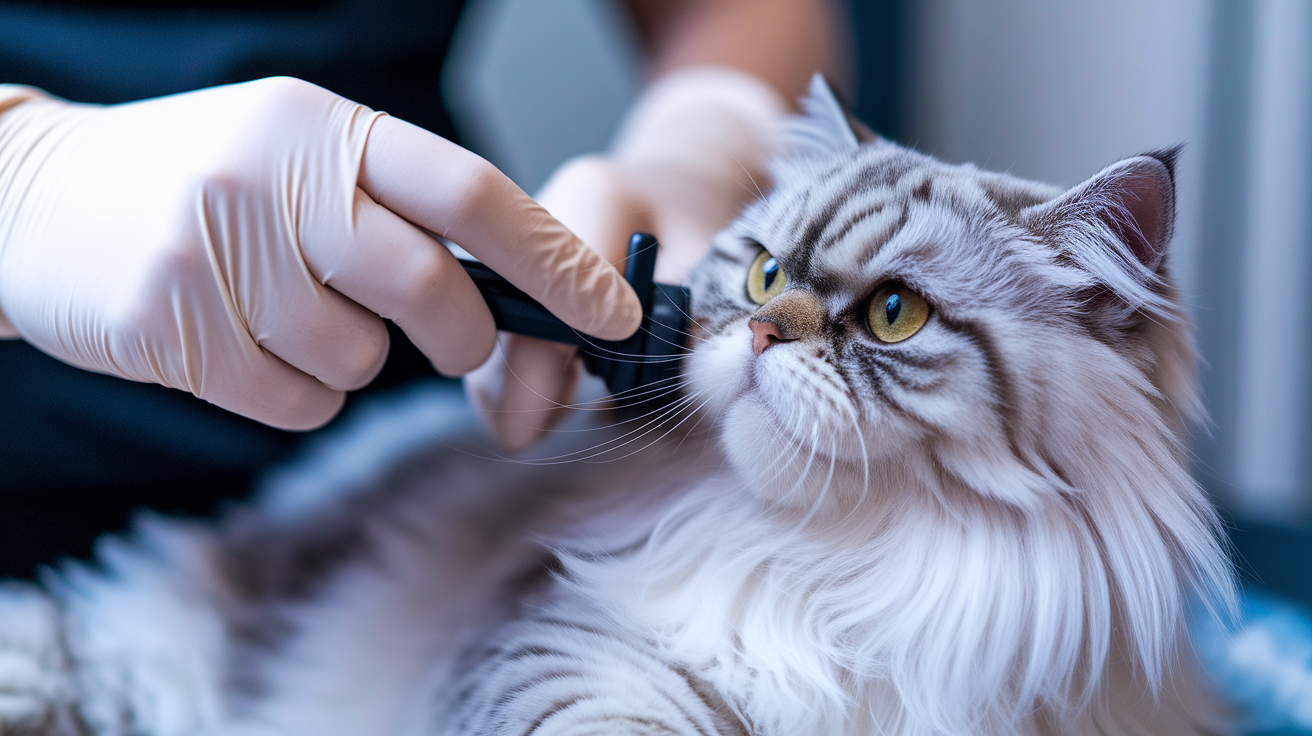
Mats are the enemy of Persian coat health. They form when loose undercoat tangles with the outer layer, trapping dirt, oil, and moisture against the skin. Left alone, mats tighten into painful pelts that pull on the skin, restrict movement, and create breeding grounds for bacteria and fungal infections.
Prevention starts with daily combing. Use your wide-tooth metal comb every single day, working through the entire coat in layers. Comb in the direction of hair growth, then gently lift and comb against the grain to check for tangles near the skin. Focus on high-risk zones: under the front legs, around the collar and neck, behind the ears, and the sanitary area near the tail. These spots experience the most friction and movement, so they mat first.
Catch mats early. If you feel a small tangle, stop and address it right away. Switch to your large-tooth comb or mat splitter. Hold the fur close to the skin with one hand to avoid pulling, then gently tease the mat apart with the comb, working from the outside of the knot inward toward the skin. Break large mats into smaller sections and work each section separately.
Never pull or yank. Ripping through a mat causes pain, tears skin, and teaches your cat to fear grooming. If gentle combing doesn’t release the mat within a minute or two, stop and reassess.
Avoid scissors near skin. It’s tempting to cut a stubborn mat, but cat skin is thin and tears easily. If you must use scissors, slide a comb between the mat and the skin as a guard, then cut the mat above the comb. Better yet, use ball-tip shears that can’t stab or slice. If the mat is large, tight, or close to a sensitive area (groin, armpits, face), leave it for a professional groomer.
Severe matting requires professional help. If mats cover large areas or have formed a solid pelt, don’t attempt removal at home. Professional groomers have high-powered clippers, safe sedation options (through a vet), and the skill to shave matted areas without injuring skin. In extreme cases, a “lion cut” (shaving the body while leaving the head, legs, and tail fluffed) may be the only humane option. Note: shaved Persians can’t be shown, but health and comfort come first.
What happens if mats are left untreated? The skin underneath becomes red, irritated, and sometimes infected. Mats pull constantly, causing chronic pain. Airflow to the skin stops, trapping heat and moisture. Fungal infections, hot spots, and bacterial dermatitis can follow. In severe cases, the entire coat felts into a single, immovable mass that must be shaved under anesthesia.
Use powder to ease stubborn tangles. If a mat resists gentle combing, dust the area lightly with baby powder or a grooming powder. The powder absorbs oil, loosens the fibers, and makes the mat easier to work apart. Apply a small amount, work it into the mat with your fingers, then try combing again.
Check between baths. Even cats on a strict daily grooming schedule can develop surprise mats, especially during shedding season or after a restless night of scratching. Run your hands through the coat weekly, feeling for lumps or tight spots you might have missed during brushing.
One more thing: if your cat develops mats frequently despite daily brushing, consider increasing bath frequency or switching to a lighter conditioner. Heavy conditioners can make the undercoat clump. Also, make sure your cat’s diet includes enough omega-3 and omega-6 fatty acids. Dry, brittle fur tangles faster than healthy, moisturized fur.
Managing Greasy Fur with Powder and Degreasing Shampoo
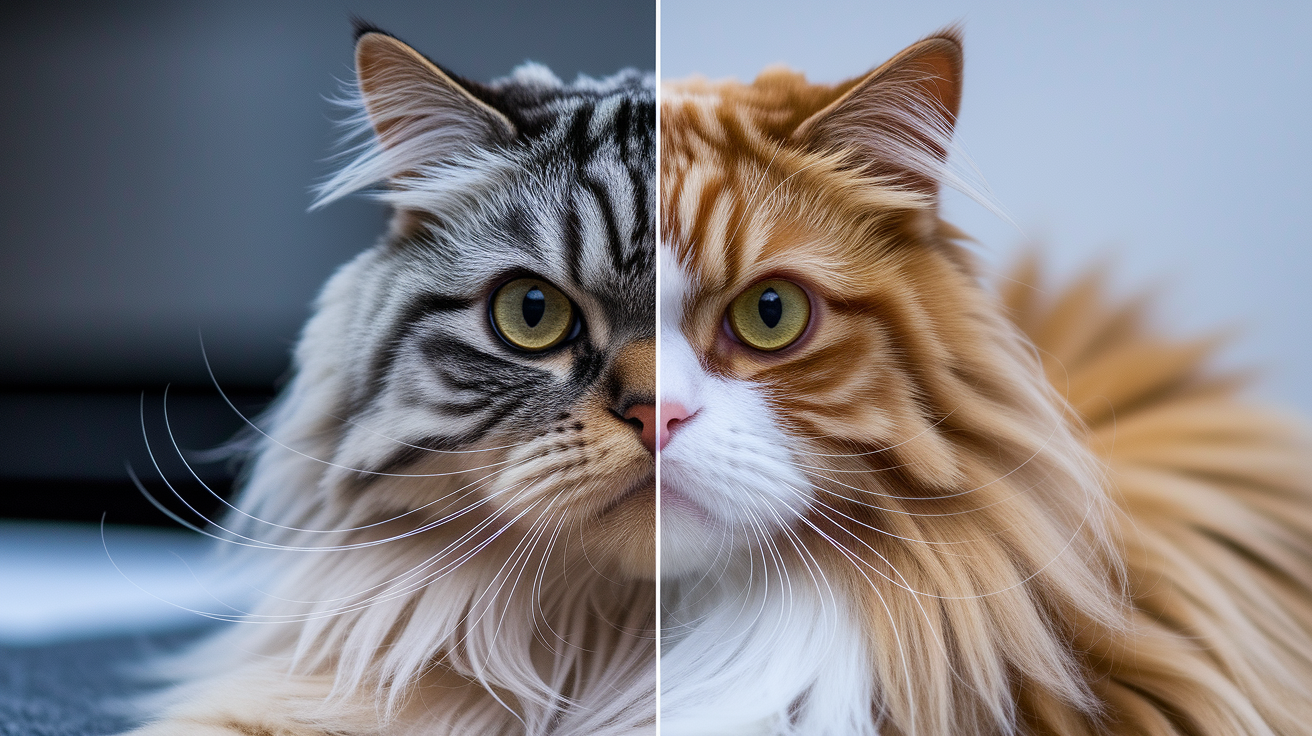
Persian cats have active sebaceous glands that produce oil to protect their skin and coat. In short-haired cats, this oil distributes evenly and keeps the coat sleek. In Persians, the long, dense fur traps oil close to the skin, creating greasy patches, especially around the base of the tail, chin, chest, and armpits.
If you notice the fur clumping, looking darker than usual, or feeling sticky to the touch, your cat’s coat has become greasy. This happens faster in intact males, cats with hormone imbalances, and cats on high-fat diets. Grease also attracts dirt and makes mats form faster.
Option 1: Baby powder for quick oil control between baths. Dust greasy areas lightly with plain baby powder (unscented, talc-free if possible). Work the powder into the fur with your fingers, let it sit for a few minutes to absorb the oil, then brush it out thoroughly with your slicker brush. The powder lifts oil from the coat and leaves the fur softer and easier to comb. Don’t overdo it. Too much powder can dry out the skin or create clumps if not brushed out completely.
Option 2: Degreasing shampoo during baths. Choose one of these proven degreasers:
Goop (non-pumice, white tub). This automotive hand cleaner is surprisingly effective on cat fur. Apply a generous amount to the dry coat before wetting your cat. Work it through with your fingers, focusing on the greasiest zones. You may use an entire small container on one adult Persian. Add a small amount of water to create a lather, then rinse thoroughly. Rinse until the water runs completely clear. Leftover Goop will make the coat feel worse.
PinkPawPal Degreasing Shampoo. Follow the package directions. This product is formulated for cats, so it’s gentler than Goop but still cuts through oil.
Dawn original blue dishwashing detergent. Wet the coat lightly, apply a small amount of Dawn, lather, and rinse. Dawn strips oil fast, which is why wildlife rescuers use it on oiled birds. But that same strength can dry and strip a cat’s coat if used weekly. Save Dawn for occasional deep cleans or extremely greasy coats, then follow with a moisturizing conditioner.
Always rinse multiple times. Degreasing products cling to fur. If you don’t rinse until the water runs clear, the coat will look clean for a day, then turn greasy and dirty again as residue attracts new oil and dirt.
Follow degreasing with shampoo and conditioner. Degreaser alone leaves the coat stripped. After the first thorough rinse, apply a gentle, moisturizing shampoo, lather, and rinse again. Then apply conditioner to restore moisture and make the coat easier to comb. Rinse the conditioner completely. Leftover conditioner also causes grease buildup.
Adjust diet if greasiness persists. Excessive oil production can signal a diet too high in fat or a deficiency in essential fatty acids. High-quality protein with balanced omega-3 and omega-6 fatty acids supports healthy skin and coat. Talk to your vet before adding supplements, but common beneficial nutrients include biotin and zinc, both of which support coat texture and oil regulation.
When to increase bath frequency. If your cat’s coat feels greasy within two weeks of a bath despite daily brushing and powder touch-ups, move from a six-week bath schedule to every four weeks. Some Persians simply produce more oil and need more frequent washing.
One caution: never bathe a cat with mats still in the coat. Grease makes mats worse, but water makes them impossible. Always comb out tangles before applying any degreaser or getting the cat wet.
Tear Stain Cleaning and Prevention
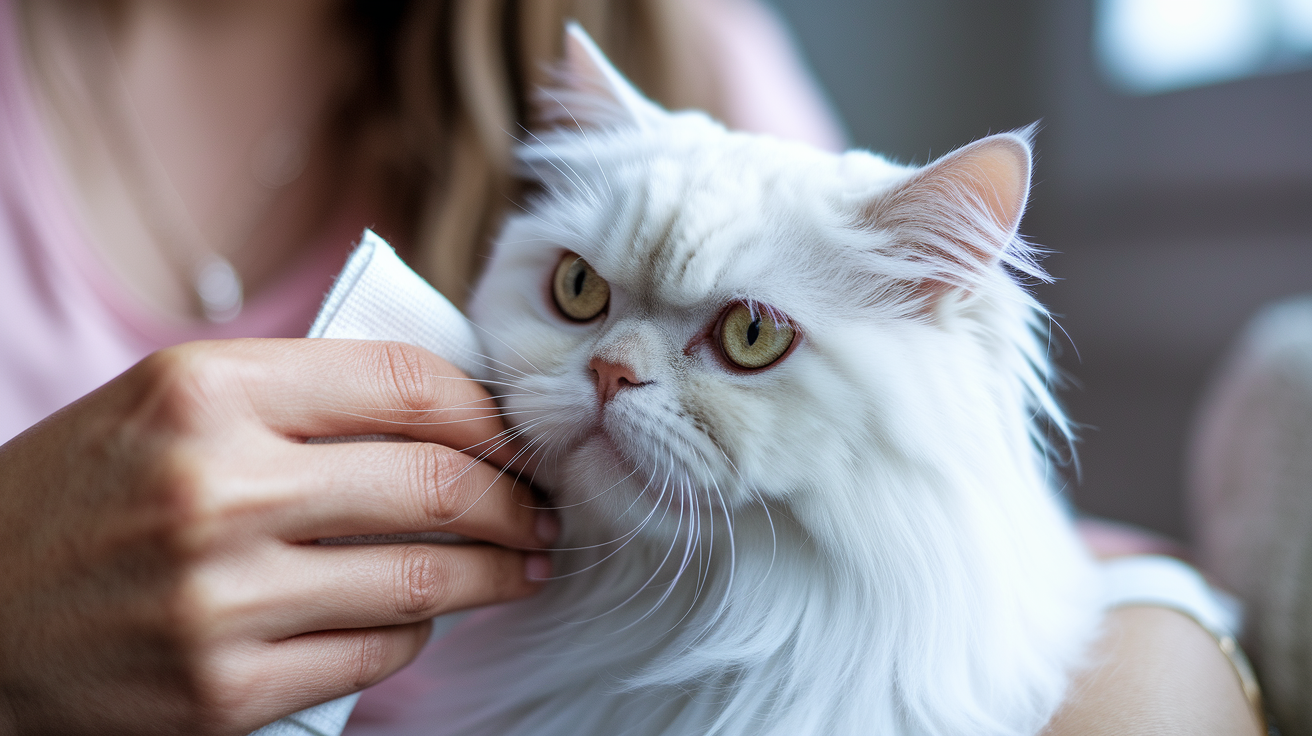
Persian cats are prone to tear staining because of their flat faces and large, round eyes. The shallow eye sockets don’t drain tears efficiently, so moisture overflows onto the fur and collects in the deep folds around the nose and inner eye corners. When tears sit on fur for hours, they oxidize and turn reddish-brown, staining white or light-colored coats.
Daily facial cleaning is the first line of defense. Use a soft, damp cloth (one for each eye) to gently wipe the inner corners where discharge builds up. Clean the nose folds with small, circular motions, then dry thoroughly with a clean section of cloth. Leftover moisture encourages bacterial growth and deeper staining.
For light staining, use diluted baby shampoo. Mix about 20% baby shampoo with 80% water. Dip a very soft baby toothbrush into the solution and gently scrub the stained areas around the eyes. Rinse by sweeping water away from the nose to prevent inhalation, then pat dry. This method works well for fresh stains and routine maintenance.
For persistent or heavy staining, follow a four-step treatment sequence:
Step 1: If there’s crusty debris, first wash the face with a facial cleanser designed for tear stains. Apply with a damp cloth or soft brush, working gently to loosen buildup.
Step 2: Apply an antibacterial tear-stain solution to treat the cause of staining. These solutions target the bacteria and yeast that turn tears dark. Follow product instructions for application frequency.
Step 3: Use a soft, waffle-textured applicator pad to gently exfoliate and remove residue. The textured surface lifts stain without scratching delicate skin.
Step 4: Finish with an absorbent tear-stain powder to repel moisture and prevent re-soaking into the fur. Dust the powder along the stained area with a small brush, working it into the fur close to the skin.
Repeat this sequence daily until the stain fades. Fresh tears will still appear, but consistent treatment prevents new staining and gradually lightens old discoloration.
Flush eyes after every bath. Use an approved eyewash like Opticlear to rinse away soap, shampoo, or debris. Never use products that advertise “gets the red out.” These contain vasoconstrictors that can irritate or damage delicate eye tissue.
Check for underlying causes. Excessive tearing can signal blocked tear ducts, eye infections, scratched corneas, or allergies. If your cat’s eyes water constantly, produce thick discharge, or look red and swollen, schedule a vet visit. Treating the root cause is more effective than managing stains alone.
Diet and hydration also play a role. Some tear staining is linked to food sensitivities or low-quality diets. High-quality protein and adequate hydration support healthy tear composition. Cats that drink enough water produce thinner, clearer tears that stain less. If your cat is a reluctant drinker, try a cat water fountain or add wet food to their diet.
Be patient. Tear stains don’t vanish overnight. Consistent daily cleaning, combined with the four-step treatment for stubborn stains, will show visible improvement within two to four weeks. Once the stain is gone, continue daily wipes to prevent recurrence.
One more thing: never scrub hard or use harsh chemicals near the eyes. The skin in this area is thin and sensitive, and the eyes themselves are easily damaged. Gentle, consistent care is safer and more effective than aggressive one-time treatments.
Trimming the Sanitary Area and Paw Fur
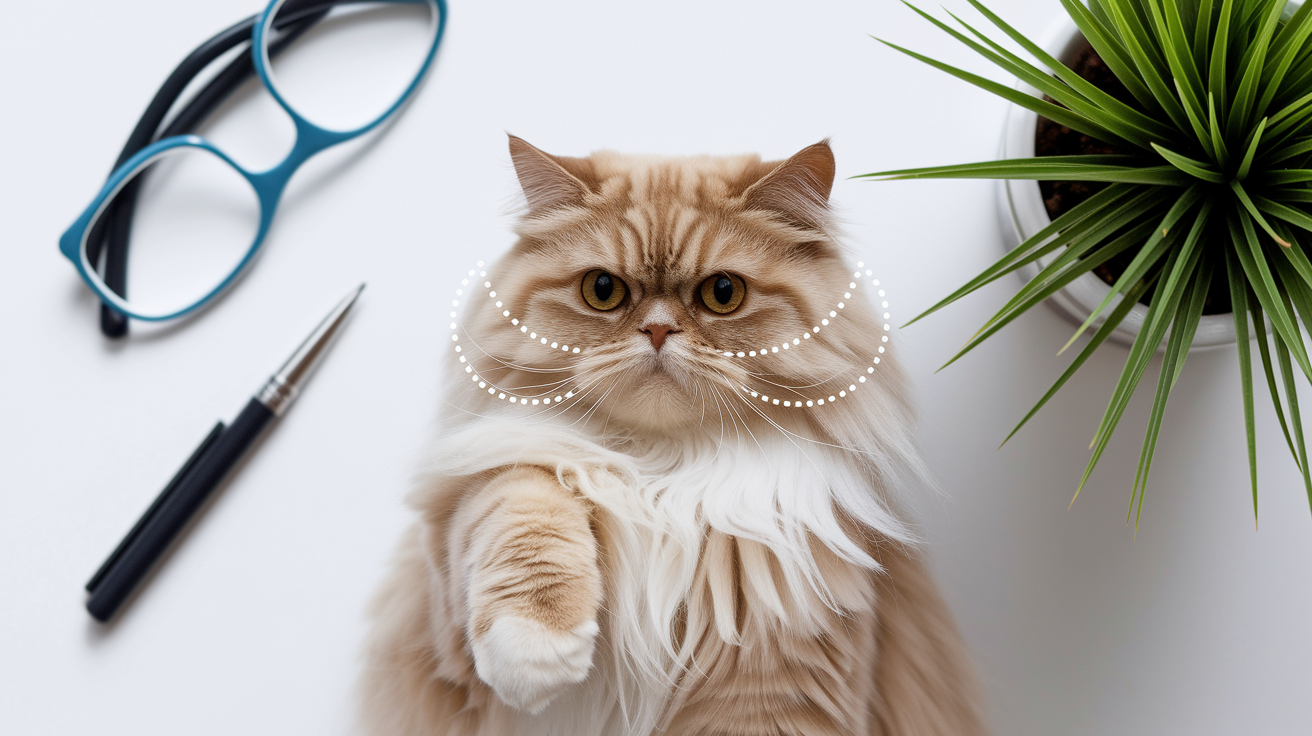
Long fur around the anus, rear legs, and between the toes isn’t just messy. It’s a hygiene and health issue. Feces can stick to sanitary fur, causing irritation, odor, and bacterial infections. Litter clumps in paw fur, then gets tracked through your home and can harden into painful mats between the pads.
Trimming the sanitary area keeps your Persian clean and comfortable.
Use rounded-tip grooming scissors. Ball-tip or blunt-tip shears are designed for sensitive areas. The rounded tips prevent accidental stabs or cuts if your cat moves suddenly. Never use sharp-pointed scissors near the skin. Cat skin is thin and tears easily.
Work when your cat is calm. Choose a time after a meal or play session when your cat is relaxed. Have a second person hold your cat gently if possible, or wrap them loosely in a towel with just the rear end exposed.
Lift the tail gently and examine the area. Long fur around the anus and the backs of the rear legs can mat with waste. Identify the areas that need trimming, usually a small circle around the anus and the fur along the inner thighs and backs of the legs.
Trim slowly and carefully. Hold the scissors parallel to the skin, not pointing toward it. Snip small amounts of fur at a time, working in the direction of hair growth. Talk calmly to your cat and pause if they squirm. If your cat becomes aggressive or terrified, stop and schedule a professional grooming appointment instead. Safety and trust matter more than finishing the job yourself.
Check and trim every few weeks. How often you need to trim depends on how fast your cat’s fur grows and how messy their litter box habits are. Most Persian owners trim the sanitary area every two to four weeks.
Trimming paw fur is just as important. Long fur between the toes collects litter, moisture, and debris. It can mat into hard lumps that press painfully against the pads, making walking uncomfortable.
Inspect the paws weekly. Look between each toe and around the pads for clumps of litter, matted fur, or stuck debris. If you find anything, remove it gently with your fingers or a comb.
Trim excess fur with ball-tip scissors. Hold the paw gently and spread the toes to expose the fur growing between the pads. Snip the fur level with the pads, cutting parallel to the pad surface. Don’t dig the scissors between the pads. Just trim what’s sticking out. If your cat pulls away or resists, do one paw per session and offer a treat afterward.
Clean the pads if they’re dirty. Wipe each pad with a damp cloth to remove litter dust, dirt, or oil. Dry thoroughly so your cat doesn’t slip on smooth floors.
If trimming at home is too stressful, ask your vet or groomer to handle sanitary and paw trims during regular appointments. Many groomers include these as part of a standard grooming package. Getting it done safely and calmly is more important than doing it yourself.
One caution: never shave the sanitary or paw areas with clippers unless you’re trained. Clippers can nick folds of skin or catch on mats, causing painful cuts. Scissors give you more control, especially in tight, sensitive areas.
Nail and Ear Care Basics
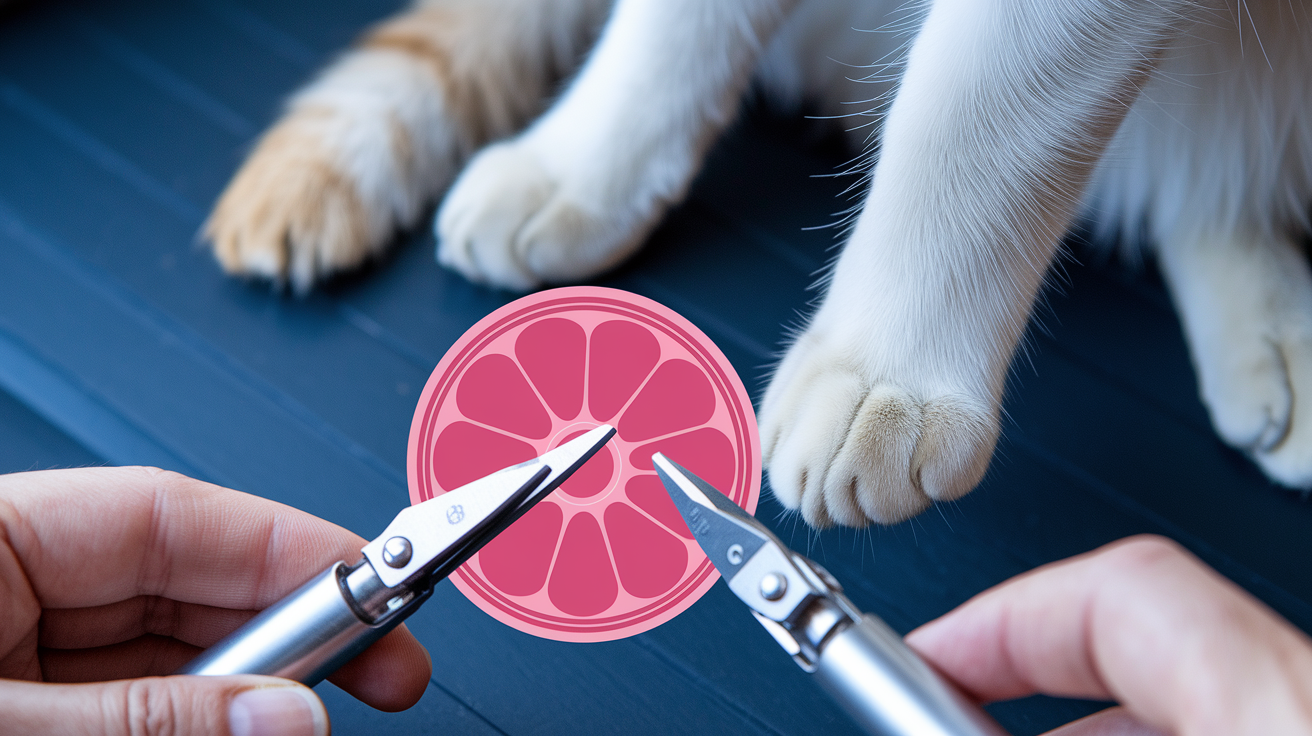
Nail trimming is simple once you know what to avoid. Persian nails grow quickly and curl inward. Overgrown nails can snag on fabric, scratch you during handling, or grow into the paw pad. Trim every two to three weeks to keep them short and healthy.
Use cat-specific nail clippers. Guillotine or scissor style clippers designed for cats cut cleanly and don’t crush the nail. Human clippers leave rough edges.
Identify the quick. Hold your cat’s paw gently and press the pad to extend the nail. The quick is the pink area inside the nail that contains blood vessels and nerves. The safe cutting zone is the clear, hook-shaped tip beyond the quick. If your cat has dark nails and you can’t see the quick, trim only the very tip and check after each cut.
Trim one nail at a time. Position the clipper perpendicular to the nail and snip quickly and cleanly. If your cat resists, do a few nails per session and offer a treat after each paw. Don’t force it. Building tolerance is more important than finishing all four paws in one sitting.
Keep styptic powder on hand. If you accidentally cut too short and the nail bleeds, dab a pinch of styptic powder onto the tip. It stops bleeding within seconds.
Final Words
Brush daily, clean the eyes and face, and remove small mats gently. Start with short sessions your cat tolerates.
These are the hands-on steps we covered: daily brushing, weekly combing and detangling, careful nail trims, ear and eye checks, and occasional baths.
Keep a simple routine and note changes like matting, skin redness, appetite, or energy. Reach out to your vet if anything worries you.
Follow this plan and you’ll get comfortable with how to groom a Persian cat, keeping the coat healthy and your bond strong.
FAQ
Q: Are Persian cats hard to groom and how many times should I bathe a Persian cat?
A: Persian cats can be hard to groom because their long, dense coats mat easily. Brush daily, clean face and eyes daily, and bathe every 4–6 weeks or as needed for oil or dirt.
Q: Is it okay to trim Persian cat hair and how do I remove matted fur from a Persian cat?
A: Trimming Persian cat hair is okay when done gently and safely. Use blunt-ended scissors or clippers, trim small sections, de-mat with conditioner and a dematting comb, and get a groomer or vet for tight mats.