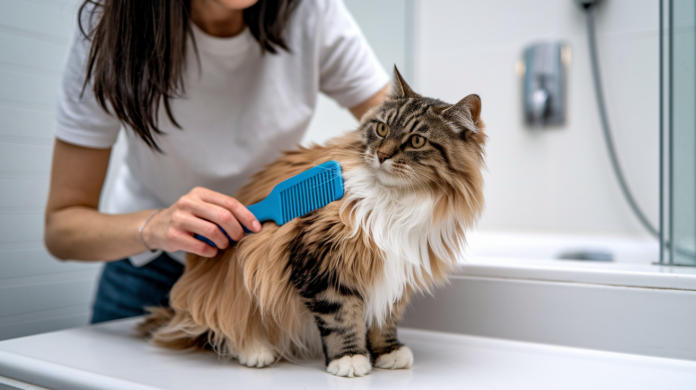

Think cutting a mat out with scissors will fix it?
It can nick thin cat skin, cause pain, and lead to infection.
This quick guide gives matted cat fur removal tips you can use at home safely.
You’ll learn how to check mat severity, which tools really help, step‑by‑step fixes for mild and moderate mats, and clear signs when you should stop and see a pro.
All steps are short and cat-friendly.
Immediate At‑Home Solutions for Removing Matted Cat Fur
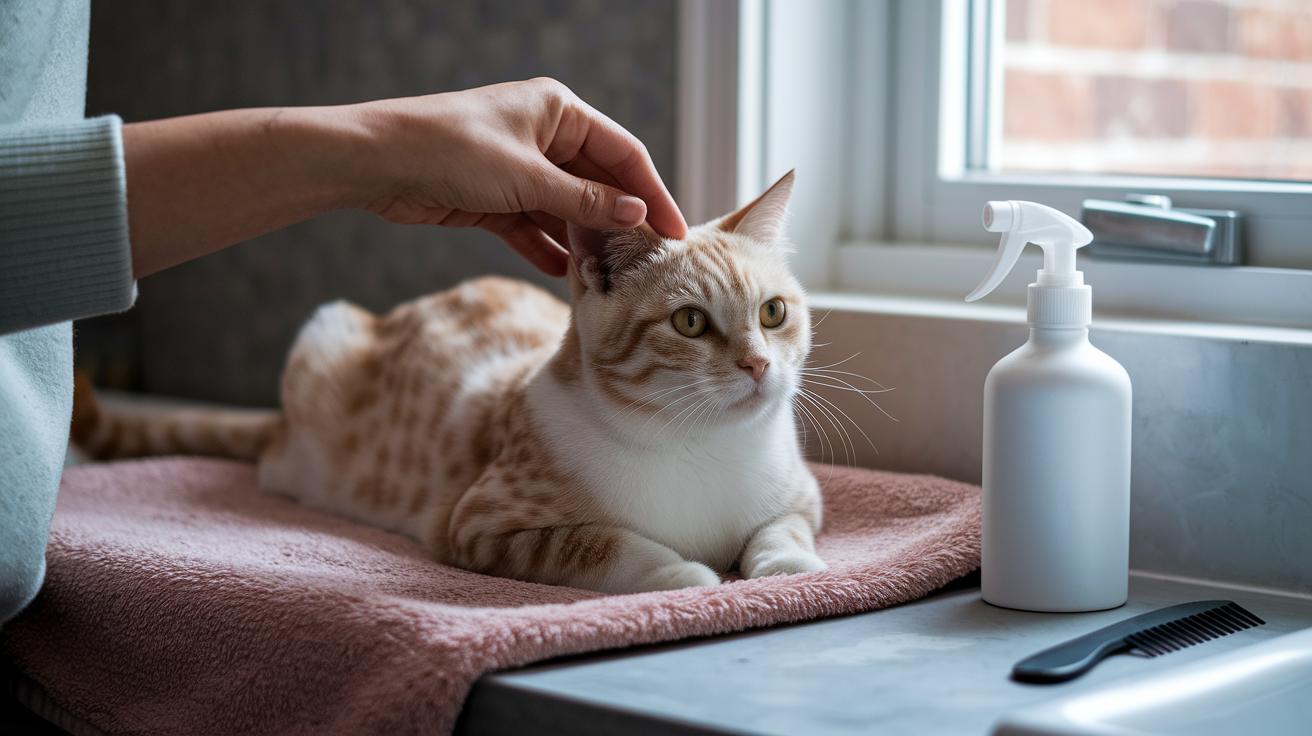
Start by checking where the mats are and how tight they feel. Run your hands along your cat’s body, focusing on high friction zones like the armpits, belly, behind the ears, and around the tail base. Gently lift the mat away from the skin with your fingers. If it moves easily and you can see skin underneath, it’s a mild mat. If the mat stays stuck but you can slide a comb between it and the skin with a little effort, it’s moderate. If the mat is rock hard, fused flat against the skin, or pulling the skin tight, stop and plan for professional help.
Before you touch a mat, get your cat calm and your workspace ready. Choose a quiet room with good lighting. Have treats, a towel for gentle wrapping if needed, and all your tools within reach. Trim your cat’s nails beforehand so a swipe doesn’t draw blood. Limit each session to 10 to 20 minutes. Cats lose patience fast, and a stressed cat makes dematting harder and less safe.
Your approach depends on mat severity. For loose mats, use your fingers and a detangling spray to gently tease apart the outer edges, then comb from tip to skin in short strokes. For moderate mats, apply detangler and let it sit 2 to 5 minutes, then use a dematting comb or mat splitter to slice the mat into smaller sections and comb each one out. For severe mats, those stuck tight to the skin or bigger than 2 inches across, skip the home attempt and book a groomer or vet. If you see open sores, smell something foul, or your cat cries out when you touch the mat, that’s a same day vet call.
Here’s a quick 5 step plan for a small mat you can handle at home:
- Spray a small amount of cat safe detangling spray on the mat and wait 2 to 5 minutes.
- Use your fingers to gently pull apart the outermost fibers without tugging the skin.
- Hold the skin taut with one hand and work a wide tooth comb through the mat from the ends toward the base in short, gentle strokes.
- If the mat resists, use a dematting tool to split it into thinner sections, then comb each section separately.
- Stop after 10 to 15 minutes or if your cat shows pain, and finish with a slicker brush to smooth the coat.
Essential Tools for Matted Cat Fur Removal at Home
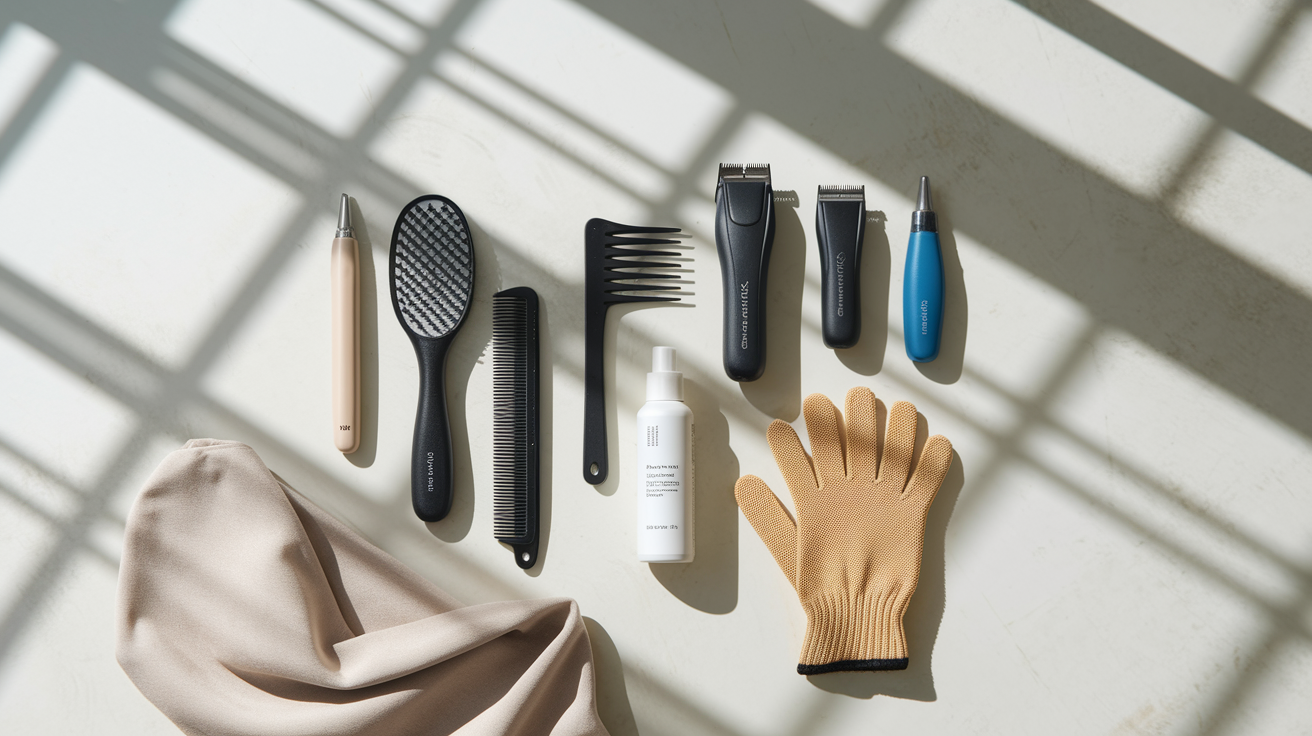
You don’t need a professional grooming kit to handle small and moderate mats at home, but the right tools make a real difference in speed and safety. Expect to spend between $30 and $100 for a basic home setup, more if you add clippers for severe cases. Each tool has a specific job, and using the wrong one can make mats worse or hurt your cat.
Stock your grooming kit with tools matched to the type of mats you’re likely to see. For light tangles and daily maintenance, a slicker brush and wide tooth comb will cover most needs. For tougher mats that don’t respond to combing alone, a dematting rake or mat splitter becomes essential. If you’re dealing with large or tight mats close to the skin, clippers are the safest choice over scissors.
Brushes and Combs
A slicker brush ($7 to $25) has fine, bent wire bristles that lift loose fur and break up surface tangles without pulling hard on the coat. Use it after you’ve loosened a mat to smooth the area and remove shed undercoat. A stainless steel wide tooth comb ($5 to $15) is your go to for working through partially loosened mats and checking that you’ve reached all the way down to the skin. Run the comb through the coat in sections. If it snags, you’ve found a mat or tangle that needs more work.
Specialty Dematting Tools and Clippers
A dematting comb or mat splitter ($10 to $30) has sharp, inward facing teeth that slice through matted fibers without cutting skin when used correctly. Work from the outer edge of the mat inward in short, controlled strokes. An undercoat rake ($10 to $35) pulls out dead undercoat during heavy shedding seasons and prevents new mats from forming in double coated breeds. Blunt tipped grooming scissors ($10 to $25) can trim hair around a mat if you absolutely must cut, but only after placing a comb flat against the skin as a barrier. Electric clippers ($40 to $150) with a 3 to 6 mm blade guard let you shave off severe mats safely. Clippers stay cooler and more controlled than scissors. A detangling spray or leave in conditioner (4 to 12 oz, $5 to $15) softens mats and reduces static, making combing easier and less painful.
Keep a stash of high value treats, a thick towel for gentle restraint, and a small bottle of saline solution for cleaning any nicks. Grooming gloves ($5 to $20) can help you feel for hidden mats during a quick body check.
Safe Techniques for Removing Cat Mats Without Injury
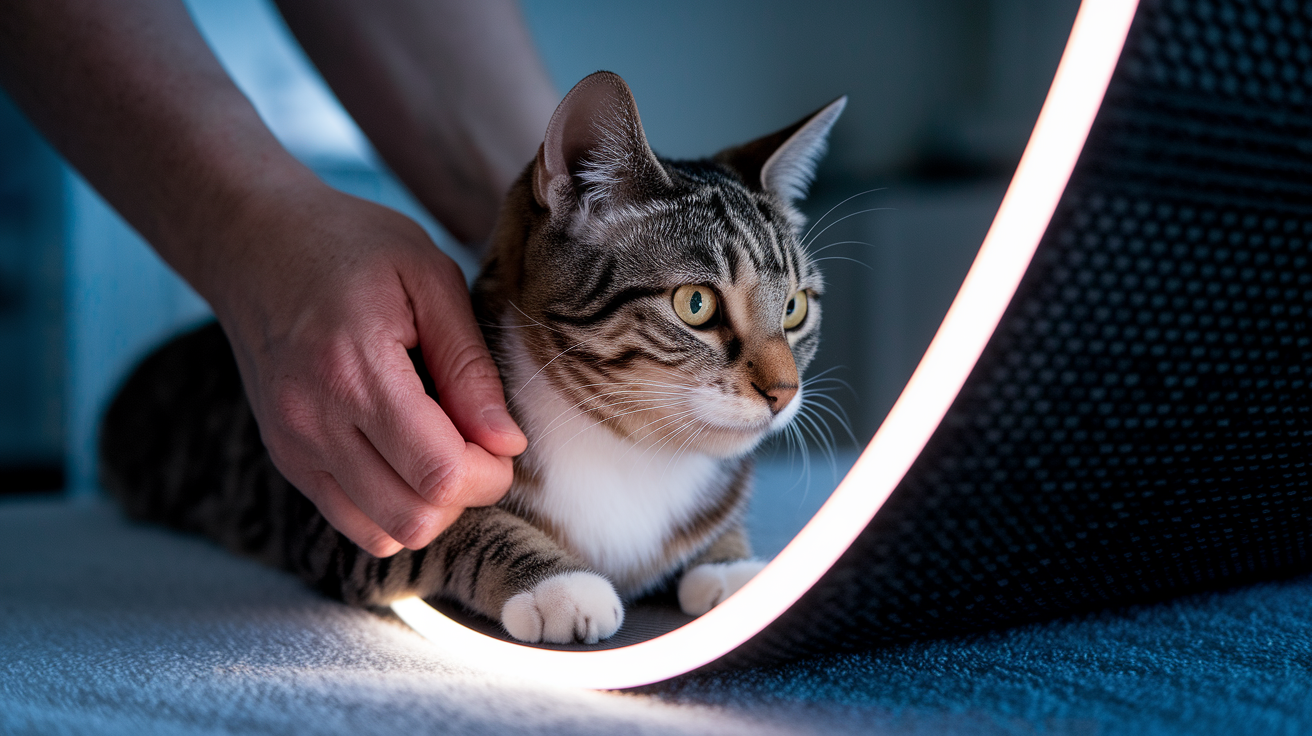
The biggest risk during mat removal is cutting or scraping your cat’s skin. Cat skin is thin, stretchy, and often folded or tented up inside a tight mat. What looks like fur might be skin pulled into the tangle. Always work in bright light. A desk lamp or headlamp helps you see exactly where the mat ends and the skin begins. If you can’t see clearly, stop and get better lighting or ask someone to hold a flashlight.
Position matters as much as tools. Sit your cat on a non slip mat on a table or your lap, facing away from you so you have a clear view of the mat. Hold the base of the mat between your fingers, pressing gently against the skin so your comb or tool pulls on your hand, not on your cat’s body. This “anchor and shield” method keeps the skin from stretching and tearing. For mats near sensitive areas like the belly, groin, or face, use only your fingers and a comb. Never scissors or clippers unless you’ve done it before and your cat stays completely still.
When you need to cut a mat, follow one rule without exception. Slide a wide tooth comb flat between the mat and the skin, teeth pointing away from the body, then cut the mat on the side of the comb farthest from the cat. Cut parallel to the skin, not downward into it. Make multiple small snips rather than one big cut. If the mat is less than 1 cm (about half an inch) away from the skin, or if you feel any resistance when you try to insert the comb, don’t cut. That mat is too close. Clippers with a guard or a professional groomer are the safer choice.
Here are six core safety rules:
- Never yank or pull a mat straight out. You’ll tear skin or cause bruising.
- Stop immediately if your cat vocalizes, hisses, tries to bite, or goes rigid.
- Keep sessions short, 10 to 20 minutes maximum, and split large jobs across multiple days.
- Check the clipper blade temperature every few passes. Metal heats up fast and can burn skin.
- Avoid grooming over sores, scabs, lumps, or irritated skin. See a vet first.
- If a mat covers an area larger than a credit card or wraps around a limb, book a professional. Home removal is too risky.
Handling Mild, Moderate, and Severe Mats Using Proven Methods
Mats fall into three practical categories based on how they feel and how much work they’ll take. Knowing which type you’re dealing with before you start saves time and keeps your cat comfortable.
Mild Mats: Loosening & Combing Method
Mild mats are loose tangles, usually at the surface of the coat, that you can lift away from the skin with your fingers. These form when shed fur wraps around guard hairs but hasn’t compacted yet. Spray a small amount of detangling product on the mat and wait 2 to 5 minutes for it to soak in. Use your fingertips to gently pull the outer fibers apart, working from the tip of the mat toward the base. Once you’ve loosened the edges, switch to a wide tooth comb and comb through the mat in short, downward strokes, always moving from the ends toward the skin. Hold the base of the mat with your other hand to keep tension off the skin. Expect to spend 5 to 15 minutes per small mat. Finish with a slicker brush to smooth the coat and pick up any loose fur.
Moderate Mats: Sectioning & Dematting Tools
Moderate mats are thicker and more compacted. You can still get a comb between the mat and the skin, but it takes effort. Apply detangler and let it sit for 5 to 10 minutes. Use a dematting comb or mat splitter to slice the mat vertically into two or three narrower sections. Work the tool in short, controlled passes from the outside edge toward the center, never forcing it. Once the mat is split, comb out each section separately with a wide tooth comb, starting at the tips and gradually working closer to the skin. Expect to spend 15 to 30 minutes per moderate mat. If you’ve been working for 20 minutes and the mat hasn’t loosened, stop and reassess. It may be more severe than it looks.
Severe Mats: When Clipping or Professional Care Is Required
Severe mats are tight, flat, and stuck directly to the skin. The mat feels hard, you can’t slide a comb underneath, and the skin may be red, folded, or pulled tight. These mats often cover large areas, like the entire belly or a back leg, and may hide sores or infections underneath. Don’t attempt to comb or cut these at home. Use clippers with a blade guard, holding the skin taut and shaving parallel to the body in the direction of hair growth. Keep the blade moving so it doesn’t overheat. If your cat won’t sit still, if the mat is near the genitals or face, or if you see or smell anything wrong under the mat, stop and schedule a groomer or vet visit. Severe matting often requires sedation for safe, complete removal.
Common mistakes that make mats worse:
- Wetting a mat without detangling it first. Water tightens mats.
- Using a slicker brush on a compacted mat. It just pulls and hurts.
- Cutting toward the skin instead of parallel to it.
- Trying to finish a severe mat in one session. Stress makes your cat harder to work with next time.
When to Seek a Professional Groomer or Veterinarian for Cat Mats
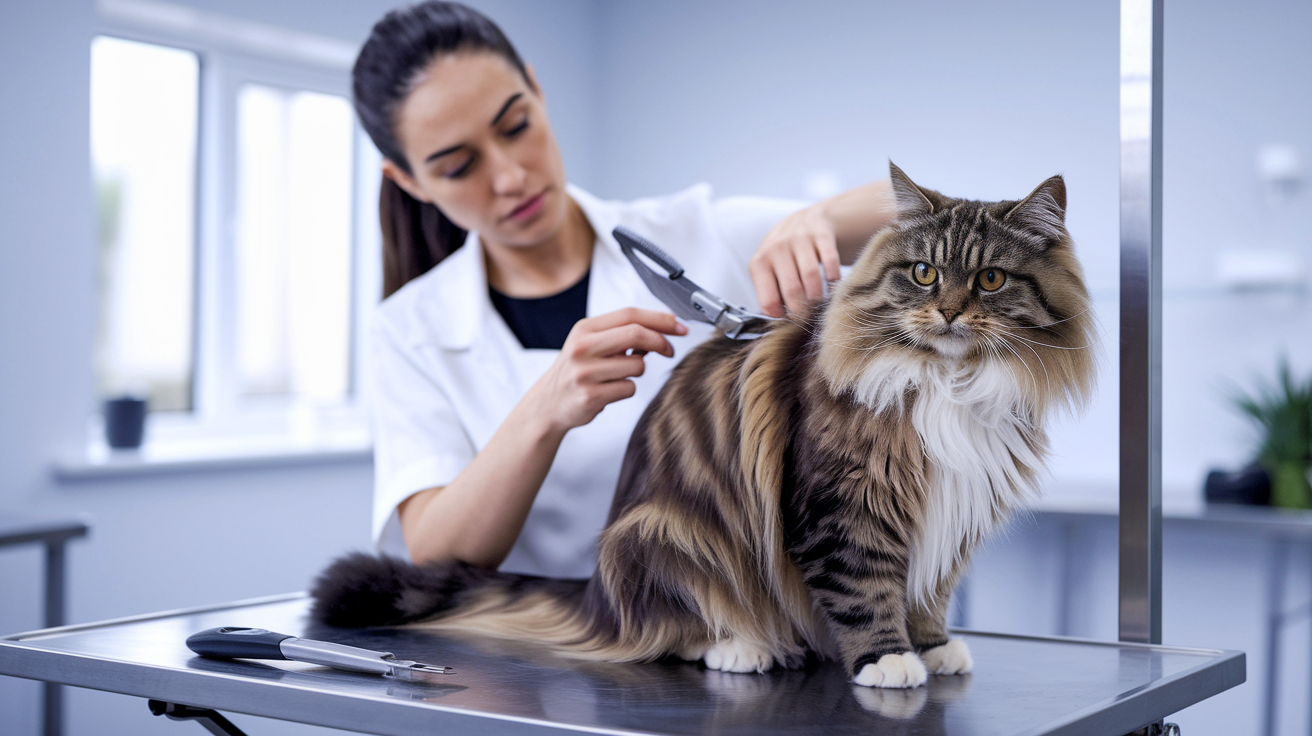
Some mats are beyond safe home removal. If the mat covers more than 25 percent of a body region, or if it’s fused to the skin so you can’t see where the fur ends and the skin begins, you need professional help. Other red flags include bleeding, open sores, foul odor, swelling, heat, or your cat crying out when you touch the area. These signs suggest skin damage or infection underneath the mat, and that requires veterinary attention within 24 to 48 hours.
Professional groomers have specialized clippers, tables with restraints, and experience handling fractious cats. A standard grooming session with mat removal typically costs $40 to $120 depending on your area and the cat’s size. Severe mat removal, especially full body shave downs, can run $100 to $300 or more because the work is slow and requires frequent breaks. If your cat is aggressive, extremely anxious, or in pain, sedation may be necessary. Veterinary sedation and examination usually cost $200 to $600 depending on the clinic, the type of sedation used, and any wound care needed afterward.
| Severity Level | Home Possible? | Professional Required? |
|---|---|---|
| Mild (loose, surface tangles) | Yes, with detangler and comb | No, unless cat is highly aggressive |
| Moderate (thicker, some skin contact) | Yes, with dematting tools and patience | Consider groomer if multiple mats or cat resists |
| Severe (fused to skin, large area, sores) | No, too high risk of injury | Yes, groomer or vet with possible sedation |
Sensitive areas like the groin, inner thighs, ears, and belly folds are especially risky. Skin in those zones is thinner and moves more, and cats often won’t tolerate the handling required. If a mat is in one of those spots and you can’t easily comb it out, let a professional do it.
Coat Type Specific Matted Fur Removal Strategies

Not all cat coats mat the same way or respond to the same tools. Tailoring your approach to your cat’s fur type makes dematting faster, safer, and less stressful for everyone.
Long Haired Breeds
Persian, Himalayan, and Maine Coon cats have thick, flowing coats that mat easily, especially in friction zones like the armpits, behind the front legs, under the collar, and around the tail base. Plan on brushing daily, 5 to 10 minutes per session. Use a slicker brush first to remove surface tangles and loose undercoat, then follow with a wide tooth comb to check for hidden mats close to the skin. If daily brushing isn’t realistic, schedule a professional trim every 6 to 12 weeks to keep the coat manageable. A “lion cut” or sanitary trim removes fur from high risk areas and reduces mat formation between grooming sessions.
Double Coated Breeds
Siberian, Norwegian Forest, and Ragdoll cats have a dense undercoat that sheds heavily in spring and fall. Mats form when dead undercoat wraps around the outer guard hairs and compacts. During shedding season, increase brushing to 2 to 3 times per week and use an undercoat rake or dematting tool to pull out loose fur before it tangles. Focus on the ruff around the neck, the “pants” on the back legs, and the chest. Don’t try to remove all the undercoat in one session. You’ll irritate the skin. Work in layers over several days.
Short Haired and Fine Coat Cats
Short haired breeds like American Shorthair or Siamese rarely develop mats unless they’re obese, elderly, arthritic, or have skin disease. When mats do appear, they’re usually small and located where the cat can’t groom, like the lower back near the tail or under the belly. Brush once a week and do a quick tactile check of hard to reach areas every few days. If mats form despite regular grooming, talk to your vet about underlying health issues that might be limiting your cat’s mobility or self grooming ability.
Preventing Matted Cat Fur With a Simple Home Routine
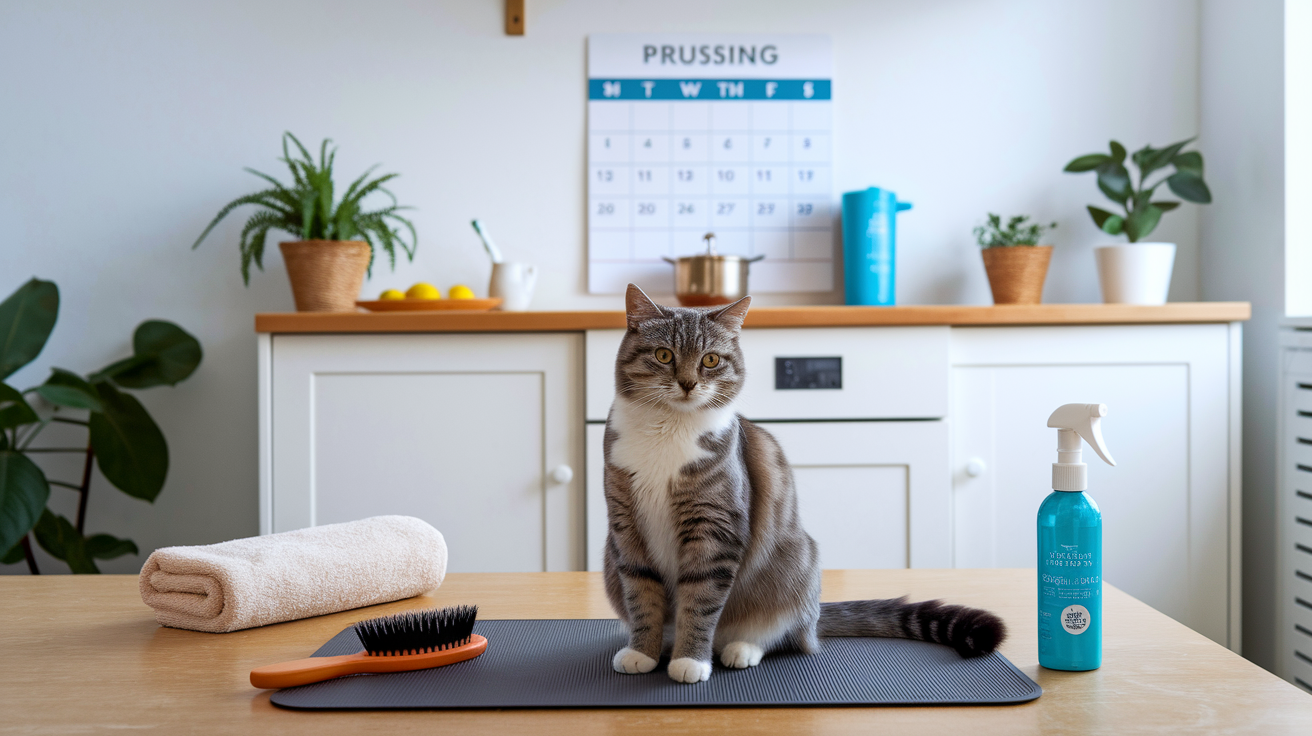
Prevention is faster, cheaper, and less stressful than dematting. A consistent grooming schedule matched to your cat’s coat type stops most mats before they start. Long haired cats need daily brushing, 5 to 10 minutes every day without exception. Semi long coats, like a domestic longhair mix, do well with 3 to 4 sessions per week. Short haired cats can go 7 to 14 days between grooming sessions, but still check friction zones weekly.
During spring and fall shedding seasons, double your grooming frequency. Cats shed more when daylight hours change, and that loose fur becomes mats if it isn’t brushed out. Bathe your cat every 4 to 8 weeks if they tolerate it, always using a cat safe conditioner, and brush immediately after drying to prevent tangles. Between baths, a light mist of detangling spray before brushing reduces static and makes the coat easier to comb. Trim problem areas, like the fur around the anus, the armpits, and under the tail, by 5 to 10 mm once a month to cut down on trapped debris and friction.
Your prevention checklist:
- Brush on a fixed schedule and track it in a calendar or app so you don’t skip days.
- Check behind the ears, armpits, groin, and under the collar every single session. Mats start in those spots.
- Feed a balanced diet with omega 3 fatty acids to support healthy skin and coat. Dry, brittle fur mats faster.
- Keep your cat at a healthy weight. Obesity makes grooming harder and creates new friction zones.
- Treat fleas and skin conditions promptly. Scratching and licking damage the coat and create tangles.
- Introduce grooming to kittens early, even if they don’t need it yet, so it becomes routine before adolescence.
Consistency beats intensity. A few minutes every day prevents the kind of severe matting that takes hours to fix or requires a vet visit. If you’ve been brushing regularly and mats still appear in the same spot, consider a small trim in that area to eliminate the problem long term.
Behavioral and Restraint Tips for Stress Free Matt Removal
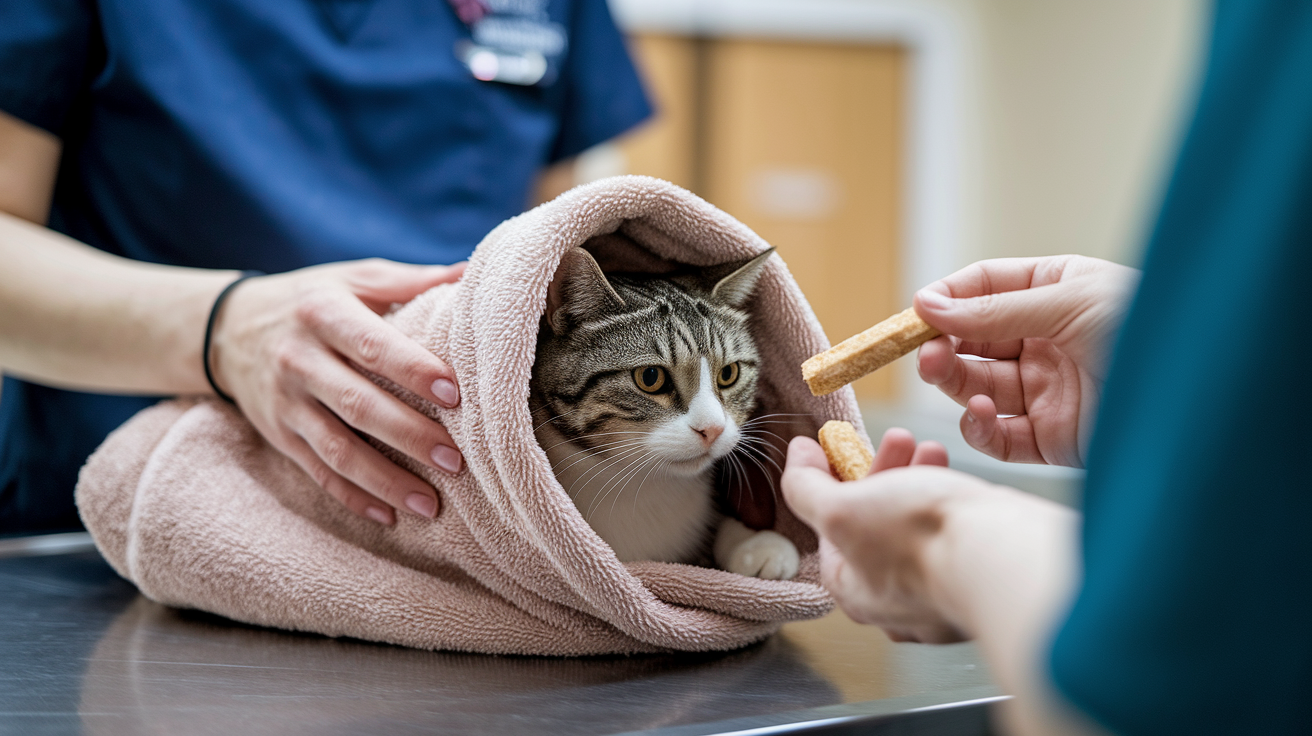
Even a calm cat can become anxious or aggressive when you’re pulling at painful mats. Start slow, especially if your cat isn’t used to grooming. Spend 3 to 7 days doing short, positive sessions of 1 to 3 minutes where you simply touch and stroke your cat with a brush, then immediately offer a treat. Gradually increase the session length as your cat relaxes.
When it’s time to work on a mat, pick a quiet room without other pets or distractions. Trim your cat’s claws beforehand so a defensive swipe doesn’t break skin. If your cat squirms, wrap them gently in a thick towel, leaving only the matted area exposed. This “purrito” method provides security and limits movement without hurting the cat. Never use a muzzle that covers the nose or restricts breathing. If your vet recommends it, a pheromone diffuser plugged in 30 minutes before grooming can take the edge off anxiety.
Five practical restraint and calming techniques:
- Sit the cat on your lap facing away from you, one arm loosely around their chest for gentle control.
- Have a second person offer treats and head scratches while you work on the mat. Distraction helps.
- Take a break every 5 minutes. Let the cat walk around, drink water, or use the litter box.
- Stop immediately if your cat hisses, growls, flattens their ears, or tries to bite. Pushing through will make future sessions harder.
- For cats that won’t tolerate any restraint, ask your vet about a mild sedative or refer to a groomer experienced with difficult cats.
Watch for signs of stress like dilated pupils, rapid breathing, a twitching tail, or a tense, crouched posture. If you see these, pause and give your cat space. A stressed cat will remember the experience and fight harder next time.
Aftercare and Skin Recovery Following Dematting
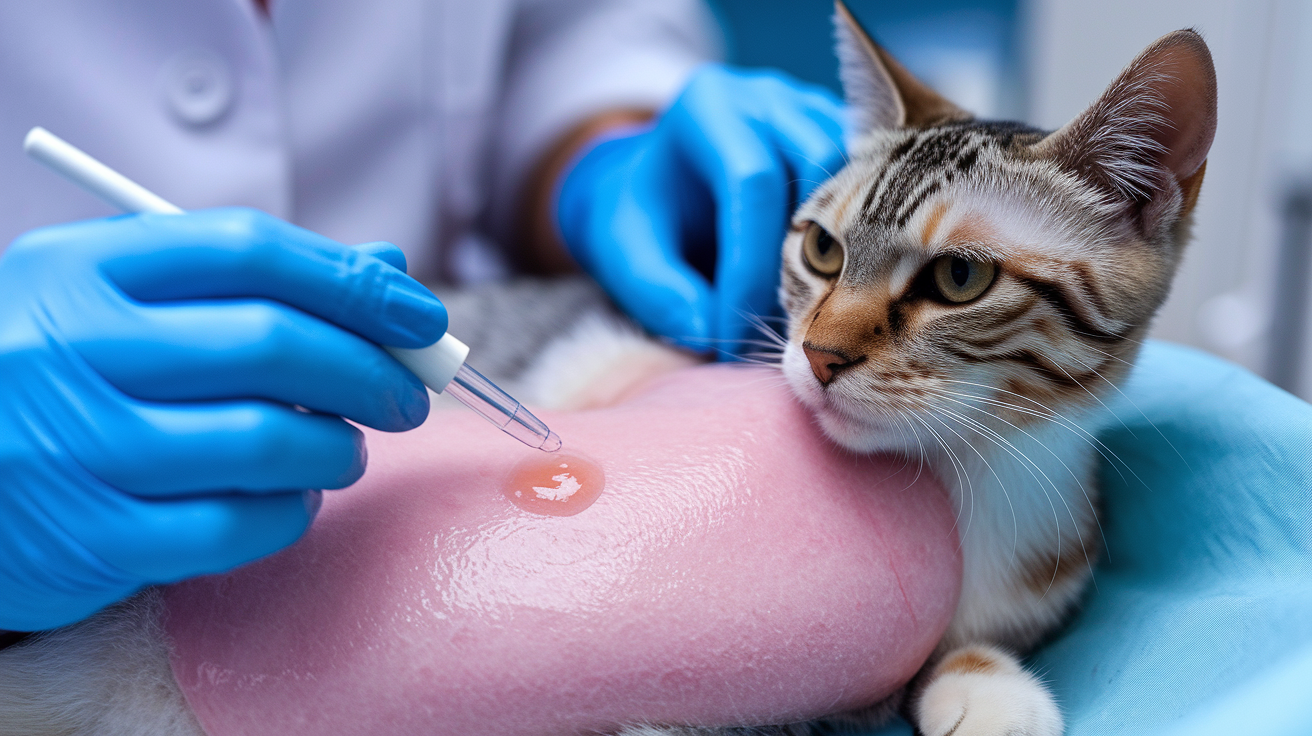
Once the mat is out, check the skin underneath. It’s normal to see some redness or light irritation, especially if the mat was tight or had been there for a while. Clean the area gently with saline solution (the kind sold for contact lenses or wound care) on a soft cloth. Pat dry, don’t rub. If the skin looks pink but not raw, and there’s no swelling or discharge, it should heal on its own within 24 to 48 hours.
Monitor the spot daily for the next two days. Mild redness that fades, light flaking, or your cat licking the area once or twice is expected. If the irritation gets worse, if you see oozing, a bad smell, or your cat obsessively licking or scratching the spot, call your vet. Matted fur can trap moisture, bacteria, and parasites against the skin, and infections can develop quickly once the mat is removed. Open wounds, bleeding, swelling, heat to the touch, or your cat acting lethargic or feverish are reasons to get veterinary care the same day.
Three warning signs that need a vet:
- Open sores, cuts, or raw patches larger than a dime.
- Pus, crust, or a foul odor coming from the skin.
- Your cat stops eating, hides, or cries when you touch the area. All signs of pain or infection.
Final Words
Jump right in, check mat severity (loose, moderate, severe), look at high-risk areas, and plan a short 10-20 minute session with a comb barrier and detangler ready. Prepare tools and a calm spot, use gentle, severity-based techniques, and stop if skin lifts, sores appear, or the cat shows pain.
Use these matted cat fur removal tips as your quick routine, and jot what worked in your journal. With steady short sessions most cats improve. You’re doing the right thing.
FAQ
Q: How to remove severely matted cat fur, and should I cut it out?
A: Removing severely matted cat fur often requires careful clipping by a pro; you should only cut mats at home if you can lift the skin, use blunt scissors, and the mat isn’t stuck or causing pain.
Q: What is the best home remedy for matted cat hair?
A: The best home remedy for matted cat hair is a pet-safe detangler plus gentle finger teasing and a wide-tooth comb in short sessions; apply a little conditioner or oil if the mat loosens.
Q: How to naturally sedate a cat for grooming?
A: You should not attempt to sedate a cat at home; to calm a cat naturally use short acclimation sessions, pheromone spray, soothing music, treats, towel wrapping, and ask your vet for safe options if needed.