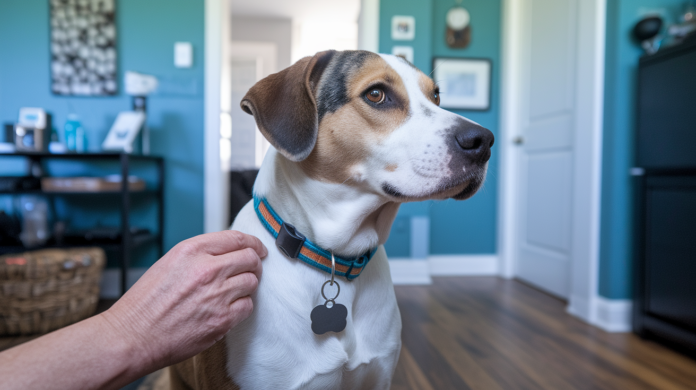

Think a pet tag only needs updating once a year?
If your phone number, address, owner name, or your dog’s medical status changes, update the tag right away.
Outdated tags can leave a lost pet in a shelter for days while someone scrambles to find you.
This post shows the exact moments to replace or re-engrave ID—new numbers, moves, adoption, medical alerts, travel, and wear-and-tear—
plus a simple schedule you can follow so your pet’s tag actually helps when it matters most.
Key Moments That Require Updating Pet Tags
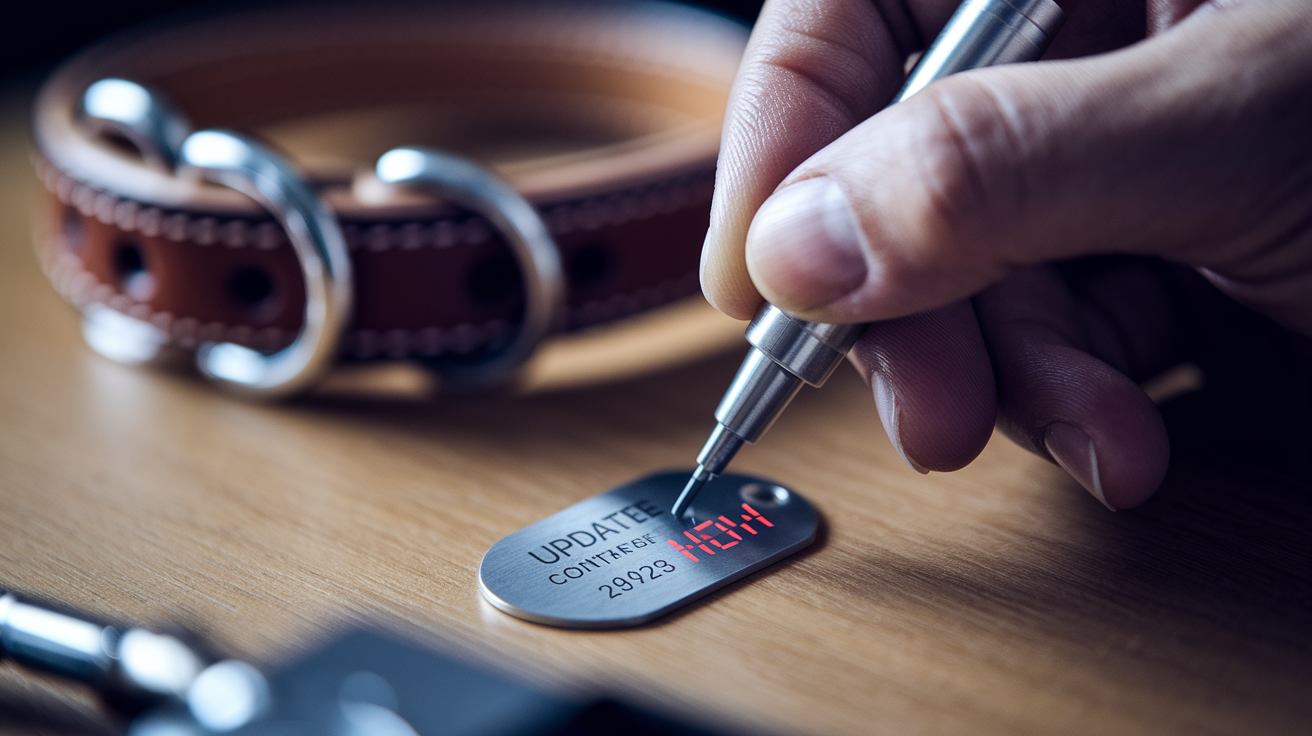
Pet tags need to be updated the moment something changes. Not next week. Not when you remember. Right away.
Waiting a few days can be the difference between getting your dog back in an hour versus having them sit in a shelter while someone tries to scan a microchip. Outdated tags slow everything down. A finder who calls a disconnected number might just assume the tag’s useless and drive straight to animal control instead of reaching you. Emergency responders, neighbors, strangers who find your dog loose on the street—they all need accurate info in real time, especially if your pet has a medical issue that needs immediate attention.
Keeping contact details current isn’t something you do when it’s convenient. It’s a safety requirement.
Update your pet’s tag immediately in these situations:
- New phone number – Switched carriers, moved states, changed your main line? Get a new tag engraved that same day.
- New address or move – Update tags before or during your move, not after. Include your new city and state if there’s room.
- Adoption or ownership transfer – New owners need to swap tags with their own name and contact info as soon as the pet comes home.
- Medical alerts – If your dog gets diagnosed with diabetes, epilepsy, severe allergies, or anything that requires immediate action, add it to the tag.
- Name changes – Renamed an adopted dog or switched to a nickname they actually respond to? Update the tag so finders can use the right name.
- Temporary travel contacts – Before long trips, boarding, or relocation, add a secondary contact or temp local number on a travel tag.
If your tag doesn’t work anymore, it’s the same as having no tag at all.
Preparing for Smooth Pet Tag Updates and Staying Proactive
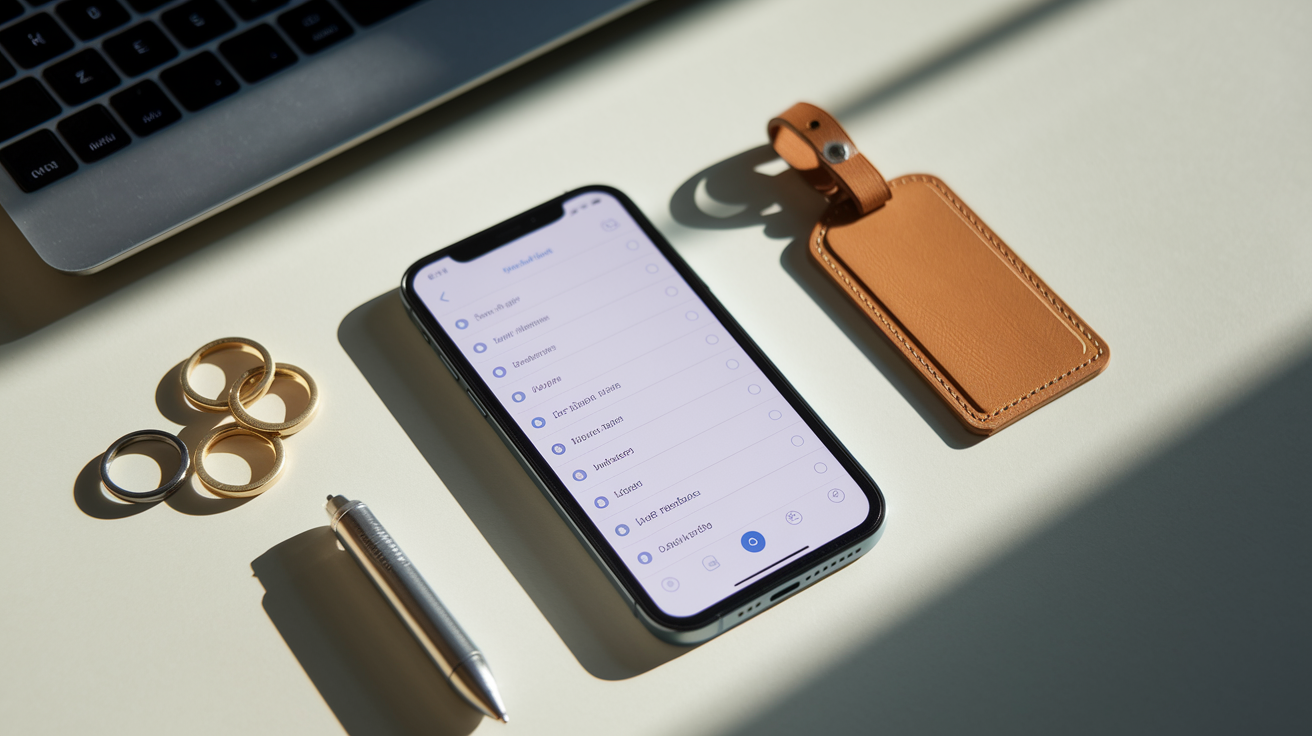
Getting ahead of tag updates makes the whole thing painless. Keep a digital list of your current contact info, backup numbers, and any medical alerts that belong on your pet’s tag. Stash it in your phone’s notes, a password manager, wherever you’ll actually look at it. That way you can order a replacement tag in under two minutes without hunting through old vet records or trying to remember someone’s phone number.
Planning ahead also means you won’t forget to update tags after something big happens. Set reminders for seasonal tag checks, link reviews to annual vet visits, and keep a spare blank tag and split ring in your pet supply kit so you can swap hardware immediately if something breaks.
If you travel a lot or you’re planning to move, order temp travel tags in advance with a secondary contact already engraved.
Follow these steps to stay ready:
- Keep a current contact sheet – List your primary phone, secondary phone, current address, vet clinic name and number, and any medical conditions that need immediate action.
- Review emergency contacts twice a year – Make sure backup contacts are still reachable and willing to help. Update the list and tags if anyone moves or changes their number.
- Order tags ahead for planned changes – Moving next month? Switching carriers? Place the engraving order now so the new tag shows up before the change happens.
- Keep tag blanks and hardware on hand – Store a spare stainless steel tag, a few split rings, and a small tool for opening rings in your pet supply drawer.
- Prep travel tags before trips – Engrave a temporary tag with your hotel contact, a local friend’s number, or your cell plus a backup before boarding or long trips.
Being proactive keeps your dog’s ID accurate even when life gets busy.
The Pet Tag Update Timeline and Recommended Schedule
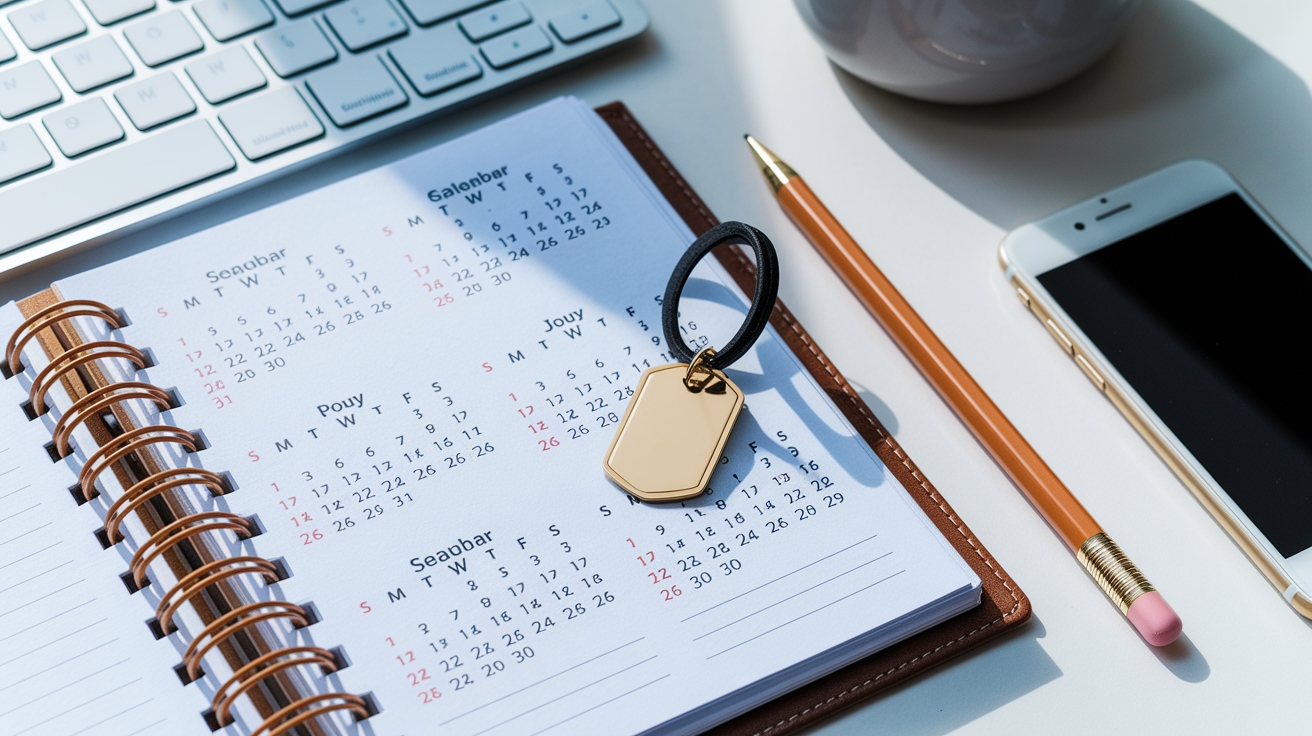
Check your dog’s tags every three to six months, even if the engraving still looks fine. A lot of pet owners line up tag replacement with annual rabies shots or routine vet exams, which creates a built-in reminder that keeps ID accuracy on track.
Puppies and really active dogs need more frequent checks. Puppies might need updated tags multiple times during their first year as contact info, addresses, or collar sizes change. Dogs who swim a lot or spend time outdoors wear through tags faster than indoor pets.
Senior dogs with stable routines and durable stainless steel tags can go longer between checks, but any dog should get an immediate inspection after heavy outdoor use, saltwater exposure, or rough play that could mess up engraving or attachment hardware. Seasonal safety checks at the start of summer and winter are practical checkpoints that line up with other pet care routines like flea prevention and coat maintenance.
Use these four timeline checkpoints:
- Seasonal safety checks (spring and fall) – Inspect tags at the start of each major season. Look for fading, rust, or bent rings and replace any worn hardware before peak outdoor activity or holiday travel.
- Annual vet exam or rabies renewal – Review tags during your dog’s yearly visit. Update engraving if contact info has changed and confirm microchip registry details match current phone and address.
- Post-travel or boarding review – Check tags after coming back from trips, boarding, or daycare. Rough handling, tag stacking with facility tags, or exposure to chlorine and saltwater can speed up wear.
- Pre-holiday or major event prep – Inspect and update tags before Thanksgiving, Christmas, Fourth of July, or any event that ups the chance of escape due to fireworks, guests, or outdoor gatherings.
A clear schedule takes the guesswork out of it.
Wear and Tear Signs That Mean Your Pet Tag Needs Replacing
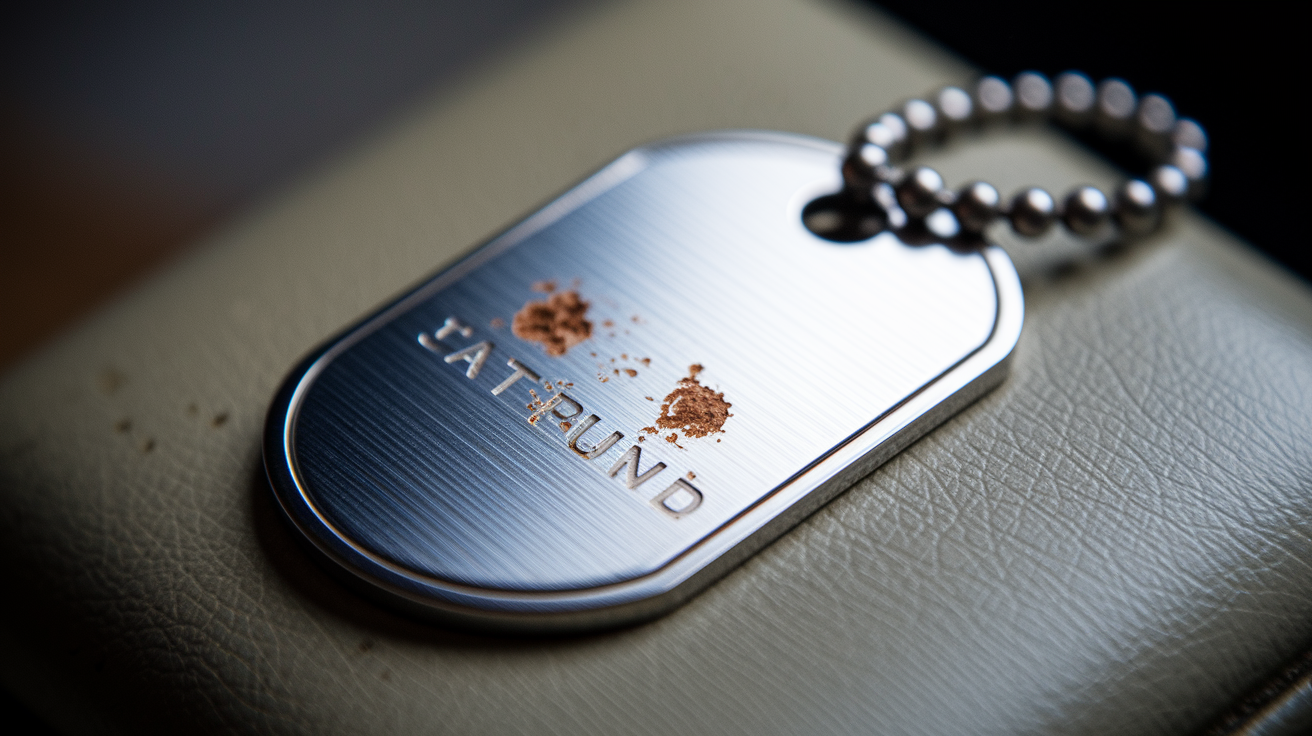
Physical damage to a tag makes it harder for a finder to contact you quickly. Even minor scratches can hide digits in a phone number, and fading that looks “mostly okay” in good light becomes unreadable at dusk or under stress. A tag that needs close inspection or tilting toward a light is already too worn to work reliably in an emergency.
Use a 30-second check during routine care. Hold the tag at arm’s length and try to read the phone number without squinting. If you can’t read it easily, neither can a stranger who finds your dog. Run your finger over the engraving—deep engraving should feel distinct, not smooth. Gently pull the tag to test the ring. It shouldn’t flex, open, or show rust. Look for visible cracks, bent edges, or corrosion around the attachment hole.
Replace your dog’s tag immediately if you see any of these:
- Faded or illegible text – Engraving you can’t read at arm’s length in natural light, or text that needs tilting to catch reflection, isn’t functional anymore.
- Deep scratches across phone numbers or names – Scratches that cut through engraving or hide digits make contact info unreliable.
- Rust, corrosion, or green patina – Rust on steel tags or heavy patina on brass/copper covering engraving means the tag’s done.
- Bent, warped, or cracked tags – Physical damage or cracks in plastic tags hurt durability and increase the chance of breakage.
- Loose or open attachment rings – Split rings that don’t close fully, S-hooks that have bent open, or attachment points pulling away from the tag are immediate safety risks.
- Noise or friction damage from tag stacking – Tags that jingle constantly or rub against rabies tags and license tags might show sped-up wear on engraving and edges.
- Text that feels smooth to touch – Engraving worn down to the point where you can’t feel the letters or numbers has lost depth and will fade completely soon.
An unreadable tag offers no protection. If the info can’t be read quickly and clearly by someone who’s never seen your dog before, the tag isn’t doing its job.
Considering Pet Growth and Age When Updating Tags
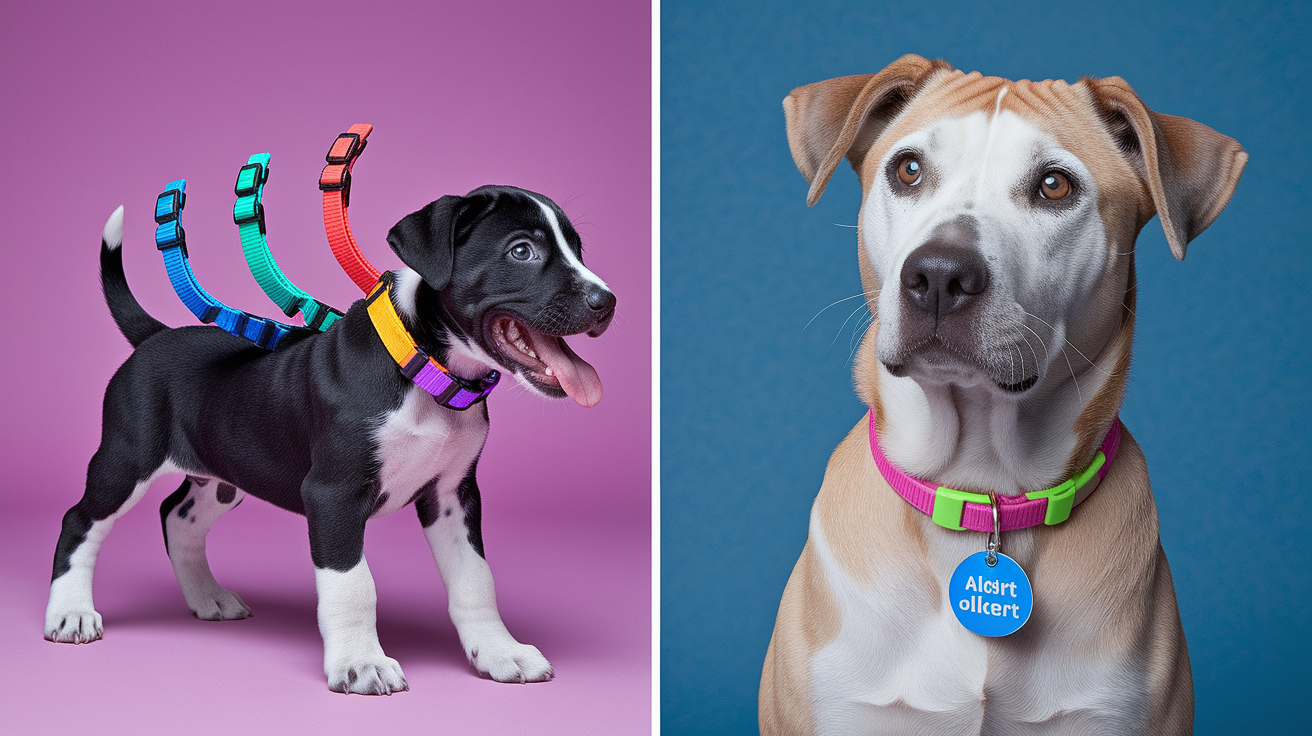
Puppies need frequent tag updates during their first year because of rapid changes in size, household routines, and owner contact info. A puppy adopted at eight weeks might go through three collar sizes, two addresses, and a new vet clinic before hitting six months old. Each transition requires a tag inspection and potential replacement.
Check puppy tags weekly during growth spurts to make sure the collar fit stays right—two fingers should fit comfortably between the collar and neck—and that contact info reflects any recent changes.
Senior dogs often need updated tags to reflect new medical conditions or changes in mobility and routine. A dog diagnosed with diabetes, epilepsy, heart disease, or severe arthritis should carry a tag noting the condition and any critical medication or care instructions a finder or emergency responder must know. Senior pets also benefit from updated tags if their hearing or vision declines, since finders might need extra guidance on safely approaching and handling an older dog who startles easily.
Update tags based on age and life stage in these situations:
- Puppy adoption and growth – Replace tags as collar size changes, contact info updates, or the puppy moves to a new home or training program.
- Senior medical diagnoses – Add or update medical-alert tags when a dog is diagnosed with a chronic condition needing immediate action or medication.
- Weight and size changes – If your dog gains or loses significant weight, reassess collar fit and tag weight. Heavy tags on small breeds can cause discomfort and need lighter replacements.
- Behavior or mobility changes – Update tags if a senior dog develops hearing loss, vision impairment, or mobility issues a finder should know about when approaching or transporting the pet.
Age-related updates keep tags accurate and relevant to your dog’s current health and safety needs.
Material Lifespan and Durability: When Each Tag Type Needs Updating

Different tag materials wear out at different rates. Knowing the expected lifespan of each type helps you plan proactive replacements before engraving becomes unreadable.
Plastic tags are lightweight and cheap but fade fast under UV exposure and crack easily in cold weather or after impacts. They work for short-term use or temporary travel tags but not for year-round reliability. Aluminum tags offer a middle ground—light enough for small dogs but prone to scratching and denting with heavy outdoor activity—and typically need replacement within 12 to 18 months.
Stainless steel tags provide the longest lifespan, often staying legible for two to three years or more, especially when engraved with deep laser etching rather than surface printing. Brass and copper tags can last multiple years if deeply engraved, but they develop a natural patina over time that might hide shallow engraving. Regular cleaning with mild soap extends readability. Silicone and rubber tags are flexible and quiet but wear out faster if chewed or stretched, and their printed text fades more quickly than engraved metal.
Deep laser engraving significantly extends tag life compared to printed or lightly etched text. Exposure to water, saltwater, chlorine, sand, and dirt speeds up wear on all materials, so dogs who swim frequently or spend time on beaches need more frequent inspections and earlier replacements.
| Material | Typical Lifespan | Common Failure Signs | Replacement Priority |
|---|---|---|---|
| Plastic | 6–12 months | Fading, cracking, UV damage, text wear | High – Inspect every 3–6 months |
| Aluminum | 12–18 months | Scratches, dents, engraving wear from friction | Moderate – Inspect every 6 months |
| Stainless Steel | 2–3 years or longer | Rust (rare), deep scratches, worn attachment holes | Low – Inspect annually or biannually |
| Brass/Copper | Several years (with deep engraving) | Patina obscuring shallow text, corrosion around holes | Low to Moderate – Clean regularly and inspect engraving depth |
| Silicone/Rubber | Variable, often shorter if chewed | Stretching, tearing, printed text fading or peeling | High – Inspect every 3–6 months or after any chewing |
Pick materials based on your dog’s activity level and environment, and plan replacement timing accordingly. Stainless steel with deep laser engraving offers the best balance of durability and long-term readability for most dogs.
Hardware, Collars, and How Attachments Influence Update Frequency
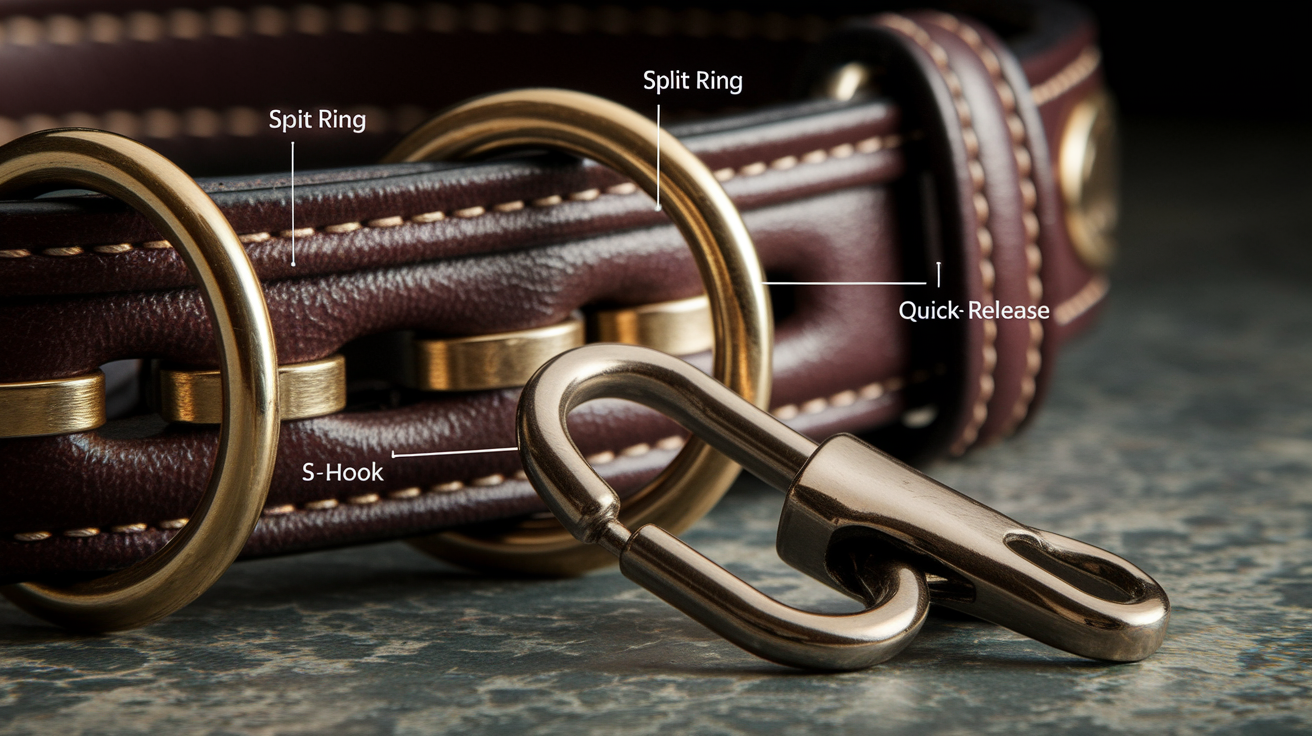
Tag hardware fails more often than the tags themselves. A loose or broken attachment ring can cause a perfectly good tag to fall off and disappear during routine activity.
Split rings (small metal loops similar to key rings) are more secure than S-hooks, which can bend open under tension or catch on objects and pull free. Quick-release collar clips and buckles need regular inspection to make sure springs still engage properly and plastic parts haven’t cracked or weakened. A collar replaced every one to two years means transferring tags to new hardware, and each transfer is a chance to inspect rings, test attachment strength, and replace any worn components before they fail.
Puppies need weekly fit checks during growth spurts, and each collar change requires moving tags to the new collar and confirming the attachment hardware is secure. Dogs who pull on leash, wrestle with other dogs, or explore heavy brush put extra strain on D-rings and tag attachments, increasing the chance of hardware fatigue and breakage.
Check these four hardware risks during every tag inspection:
- Split ring integrity – Gently pull the tag. The ring shouldn’t flex open or show gaps. Replace any ring that feels loose or has visible separation at the seam.
- S-hook deformation – S-hooks bend easily. Check that both ends stay closed and that the hook hasn’t stretched or opened. Replace with a split ring for better security.
- Quick-release clip springs – Press and release the buckle several times. It should click firmly every time without sticking or failing to engage. Replace collars with weak or unreliable clips.
- D-ring attachment to collar – Inspect the stitching or rivets holding the D-ring to the collar. Fraying, rust, or loose rivets mean the collar needs replacement, which also triggers a tag transfer and hardware check.
Always transfer tags carefully when switching collars, and use the chance to inspect both the tag and the new collar’s hardware before putting it back on your dog.
Updating Pet Tags When Traveling or Boarding
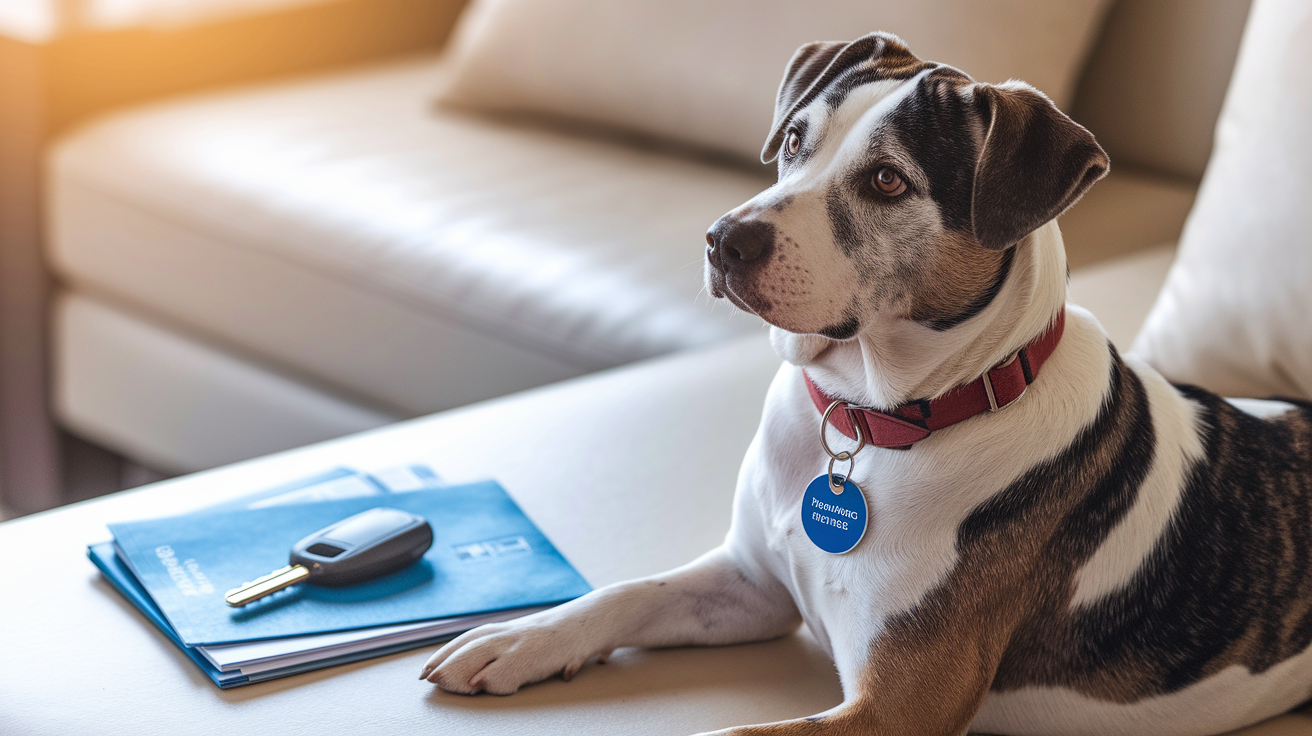
Travel and boarding create situations where your regular contact info might not be immediately reachable. A dog who escapes from a vacation rental, hotel, or boarding facility needs a tag with a phone number you’ll answer in real time, not a home number where messages sit unchecked for days. Add a secondary contact (a local friend, family member, or the boarding facility’s phone number) so finders have an immediate backup if your primary line is unavailable.
Interstate moves, long road trips, and air travel all increase the chance of separation. Outdated tags listing a previous address or disconnected phone number leave finders with no immediate way to reach you. Boarding facilities and daycare programs often require proof of current ID and vaccination records, and airlines might require visible identification tags in addition to carrier labels and microchip documentation.
Update tags or add temporary contact info in these travel situations:
- Interstate or cross-country moves – Order new tags with your destination address and phone number before you leave. Keep the old tags on until the new ones arrive, then switch them during the move.
- Vacation or extended travel – Engrave a temporary tag with your cell number plus a local contact or hotel phone number. Attach it to the collar alongside your permanent tag.
- Holiday boarding or daycare stays – Confirm that your primary tag is current and legible before drop-off. Add a secondary emergency contact if you’ll be traveling or out of cell range during the stay.
- Airline travel and pet transport – Attach a travel tag to your dog’s collar and carrier with your cell number, destination address, and flight information. Airlines might require visible ID even if your pet is microchipped.
Temporary tags give you peace of mind during transitions and make sure anyone who finds your dog can reach you or a trusted contact immediately, no matter where you are.
Microchips and Pet Tags: Updating Both Systems Together
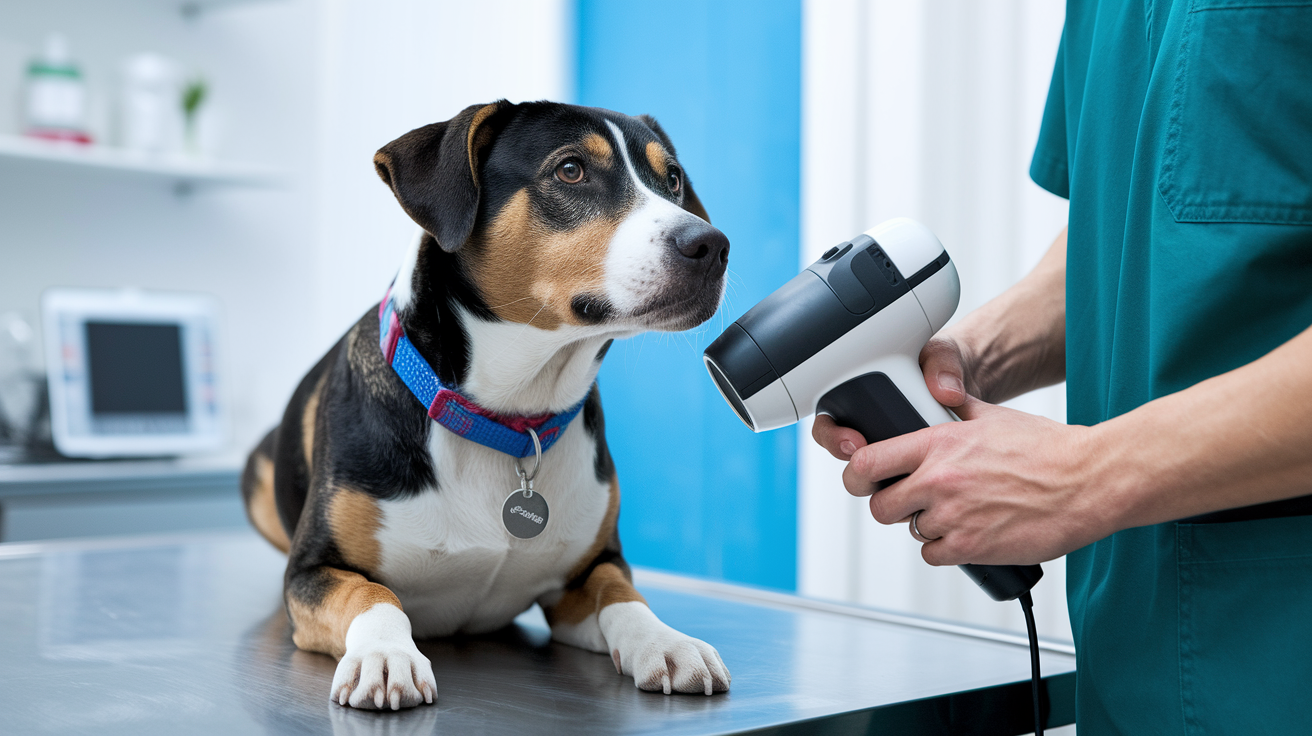
Microchips need a scanner and up-to-date registry info to be useful. They provide permanent identification but not immediate contact for finders who lack scanning equipment. Visible tags let anyone with a phone call you on the spot, while microchips serve as a permanent backup if the collar and tag are lost. Both systems must be updated whenever your contact info changes. Outdated microchip data delays recovery and forces finders to rely on animal control or vet clinics to access registry databases.
Update your microchip registry immediately after any move, phone number change, or ownership transfer. Most registries allow online updates, but some charge a fee or require processing time, so plan ahead and confirm that changes have been saved. Check your registry account at least once a year to make sure all contact details stay current and that your email, phone, and address match what appears on your pet’s visible tag.
Keep a record of your pet’s microchip number, the name of the registry, and login credentials in a secure location (your phone’s notes app, a password manager, or a printed sheet in your pet’s records folder) so you can update info quickly without searching for paperwork. If you adopt a pet, confirm that the microchip is registered in your name and that the previous owner’s contact info has been removed from the database.
Microchips and tags work together, not in place of each other. A microchip ensures permanent identification even if a collar is lost, but a visible tag provides immediate contact that speeds reunification and reduces stress for both the pet and owner. Update both systems at the same time to maintain complete and accurate identification in all situations.
Maintaining Tag Accuracy Year Round
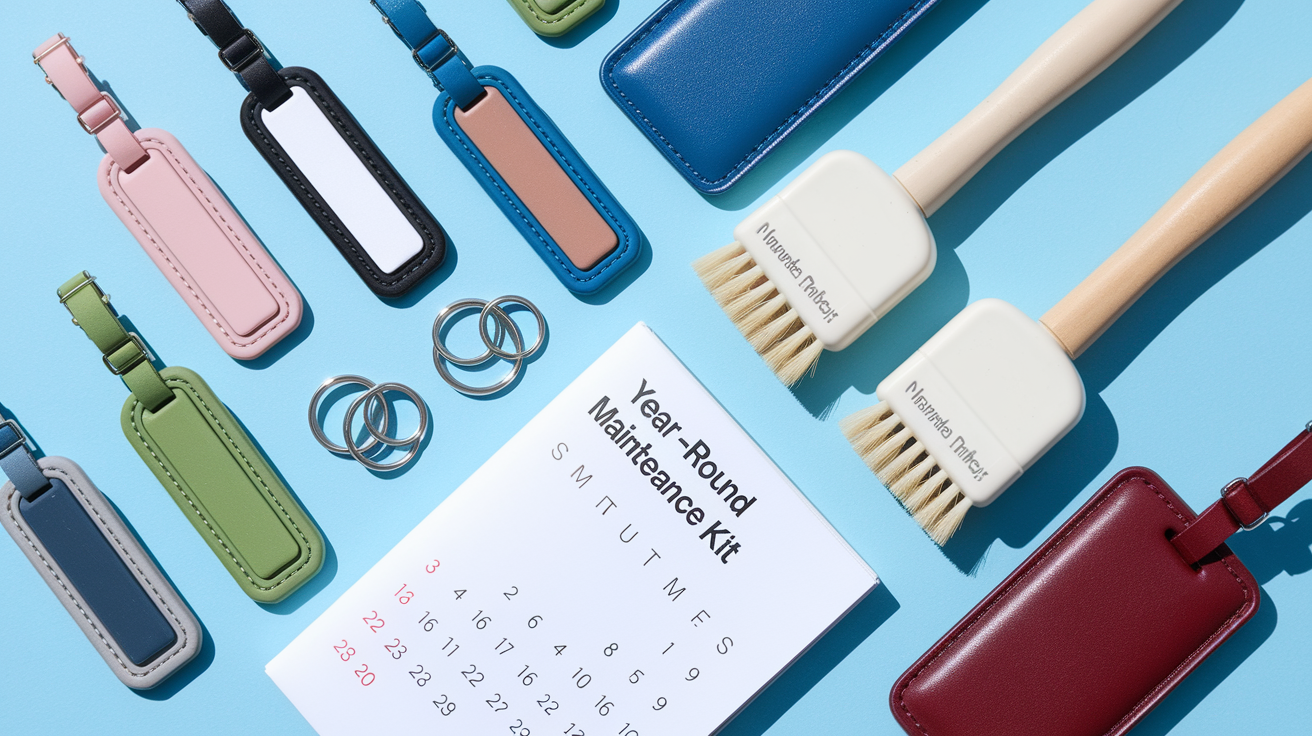
Year-round accuracy requires consistent inspection, proactive cleaning, and lining up tag updates with existing pet care routines. Seasonal inspections at the start of summer and winter make sure tags stay legible before peak outdoor activity and holiday travel, when the risk of escape and separation is highest.
Clean tags with mild soap and warm water during monthly collar washes to remove dirt, salt, and oils that can hide engraving and speed up corrosion. Protective covers and silent tag holders reduce friction and noise but should be inspected regularly to make sure they haven’t trapped moisture or hidden damage to the underlying tag.
Deep engraving extends lifespan significantly, often lasting two to three years on stainless steel compared to six to twelve months for printed or lightly etched tags. Line up tag reviews with annual vaccinations, rabies renewals, or other routine vet visits so you never forget to check readability and update info when necessary.
Build tag maintenance into your existing schedule so it becomes a habit. Order replacement tags when you schedule your dog’s next wellness exam, inspect hardware every time you bathe your dog, and keep a spare tag and attachment ring in your pet supply kit for immediate replacement if a tag cracks or a ring opens.
Follow these three seasonal reminders:
- Spring prep – Inspect tags before increased outdoor activity, hiking season, and warm-weather travel. Replace any tags showing winter wear or corrosion from salt and moisture.
- Fall and winter readiness – Check tags before holiday gatherings, fireworks season, and cold weather that can make plastic tags brittle. Make sure contact info is current before Thanksgiving, Christmas, and New Year’s events.
- Annual vet visit alignment – Schedule tag inspection during yearly wellness exams, rabies vaccinations, or dental cleanings. Confirm microchip data matches tag info and replace any worn tags before leaving the clinic.
Consistent routines and proactive inspections keep your dog’s ID accurate, legible, and ready to perform when it matters most.
Final Words
Update tags immediately after any life change – new phone, new address, adoption, medical alerts, or travel. Outdated tags delay reunification and can miss medical warnings.
This post covered key moments that require updates, how to prepare information, a simple inspection schedule, material and hardware tips, and keeping microchip records current. You also got quick wear signs and seasonal check ideas.
Use the checklist and set reminders so you never wonder when to update pet tags. Small updates now save time and keep your pet safer.
FAQ
Q: What should you not put on a dog tag?
A: You should not put your full home address, Social Security or bank details, or other sensitive personal IDs on a dog tag. Use the pet’s name, a partial location, and a phone or emergency contact instead.
Q: What is the 2026 rabies tag?
A: The 2026 rabies tag is a metal or plastic license showing a rabies vaccination given for 2026. It usually includes the year, a registration or license number, and the issuing town or vet contact.
Q: Is the date on a rabies tag the expiration date?
A: The date on a rabies tag usually shows the vaccination year, not a precise expiration. Rules vary by locality, so check your vet or local licensing office for the exact expiry and renewal timing.
Q: What must legally be on a dog tag?
A: What must legally be on a dog tag depends on local law; most places require the rabies year and a license or registration number, and some also require owner contact information or city/town identifiers.